Front Headlock Position Fundamentals
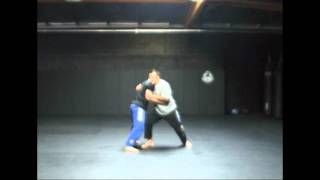
The front headlock's effectiveness depends on proper elbow positioning rather than grip strength. The controlling elbow should be positioned high toward the hip rather than low across the opponent's chin, as a low elbow position allows the opponent to execute drag escapes. With correct elbow height, the practitioner's lat muscle provides superior leverage against the opponent's pectoral muscle during drag attempts.
Upper Body Control and Shoulder Placement
The second arm should control the opponent's bicep or tricep area to complete the upper body grip. Shoulder blade placement is critical—the front deltoid should contact the area between the opponent's shoulder blades rather than too far forward on the neck or back toward the lumbar spine. Proper shoulder positioning combined with an upward elbow pull creates direct, consistent pressure.
Lower Body Mechanics and Weight Distribution
Effective pressure requires the practitioner to come off the rear knee into a more athletic position while driving the front leg forward into the opponent. The rear knee remaining on the floor reduces pressure application and creates a vulnerable position. Maintaining weight-forward mechanics ensures consistent shoulder blade pressure throughout the hold.
Countering Four-Point Escapes
When the opponent attempts to escape to four-point position by placing hands on the mat, the practitioner should use the controlling elbow to buckle the opponent's arm inward. This arm-buckling technique differs from reckless white-belt elbow strikes; instead, the practitioner grips the tricep and cups the arm to fold the elbow back toward the floor. Successfully knocking the elbow down prevents the opponent from achieving an extended, athletic position.
Transitioning to Back Control
Once the opponent's knee returns to the mat, the practitioner executes a circular motion to move the head across the opponent's back. The practitioner then secures the far-side leg by gripping toward the adductor region on the inside of the leg. Maintaining heavy weight on the opponent's head while squaring the hips and running forward creates a high-pressure position that prevents escape.
Weight Distribution Over the Far Arm
The practitioner consolidates control by placing all body weight over the opponent's far arm rather than spreading pressure across both legs. This concentrated weight distribution proves effective regardless of relative body types or strength levels. The technique remains difficult for the opponent to escape even when they attempt to prop up into a higher four-point position.
Elbow Strike Application from Top Position
As the opponent props onto their hands in four-point position, the practitioner cuts the controlling elbow downward and inward. This movement applies additional pressure while increasing weight distribution on the opponent's near side. The combined effect of elbow pressure and shifted weight makes the position significantly more difficult to escape.
Front Headlock Attack System Your Coach Wont Show You
Key Takeaways
- •Front Headlock Position Fundamentals
- •Upper Body Control and Shoulder Placement
- •Lower Body Mechanics and Weight Distribution
- •Countering Four-Point Escapes
✅ 31 Ways In 31 Days to get better faster: https://hpucoaching.aweb.page/p/6f685b31-b49d-44c5-acbe-25c700054224 ✅Systemise your learning to become a confident competitor and leader on the mats without overwhelm or confusion : https://Yourbjjgame.com #bjj #jiujitsu #grappling .
Related Techniques
Frequently Asked Questions
What does this video teach about standard front headlock?
This video covers front headlock position fundamentals, upper body control and shoulder placement, lower body mechanics and weight distribution. It provides detailed instruction from Josh Saunders .
How long does it take to learn standard front headlock?
The basic mechanics can be understood in a single session, but developing reliable execution requires consistent drilling over weeks of practice. This 7-part breakdown helps structure your training by isolating each phase of the technique.
What are the key details for finishing standard front headlock?
The practitioner consolidates control by placing all body weight over the opponent's far arm rather than spreading pressure across both legs. This concentrated weight distribution proves effective regardless of relative body types or strength levels. The technique remains difficult for the opponent to escape even when they attempt to prop up into a higher four-point position.
Related videos
Safe And Effective Football Front Headlock From 2x NCAA Champ
Earn Your Gold Medal
Guillotine/Marcelotine vs front headlock/sprawl
JM Modern Jiu Jitsu
Sit Out Spin vs Front Headlock, Guillotine from Front Headlock
Just Train
L6S1_The Clinch
SundarJiuJitsu
JiuJitsu Magazine: Technique Takedowns Working the Clinch
JiuJitsuMag