Initial Setup from Sprawl Position
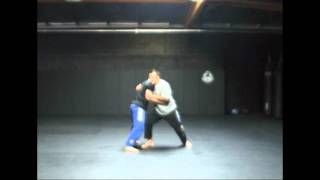
When a wrestler sprawls against an opponent's takedown attempt, they may find themselves in a front headlock position. The top wrestler must immediately recognize this vulnerable position and take steps to protect themselves. Establishing control of the opponent's arm and maintaining a solid base are critical to escaping safely.
Clearing the Opponent's Arms from the Neck
The wrestler in the front headlock uses both arms to push the opponent's grip away from their neck. Both elbows should remain tightly closed to the body to prevent the opponent from securing a tight hold. The hand placement should remain on the mat side to maintain base and stability.
Establishing Base and Hip Positioning
The wrestler uses their elbows to base and keeps one leg positioned across the opponent's body while the other leg remains ready for movement. The positioning should transition by turning the face toward the opponent's head rather than toward their legs. This adjustment creates distance and prevents the opponent from advancing their position.
Step-by-Step Escape Sequence
One hand presses on the opponent's shoulder while the other controls their feet. The wrestler steps the knee on the same side as the controlled arm, then stretches their leg between the opponent's legs. The movement concludes by turning toward the opponent's head to establish a more dominant position.
Evaluating Neck Accessibility for Submission
Once positioned in control, the wrestler applies moderate pressure to the headlock while assessing the available space around the opponent's neck. If sufficient space exists between the jaw and neck, the wrestler can proceed to transition into a submission attempt. If the space is too tight, continued pressure may prevent escape without advancing to the next technique.
Transitioning to Guillotine Choke Setup
The wrestler removes one hand from the armpit and connects both hands clasped together at the opponent's shoulder area. One hand is positioned on top of the other, creating a stacked grip for maximum control. The head must remain secured between both elbows throughout the transition.
Applying the Guillotine Choke
With both hands connected and the opponent's head trapped between the elbows, the wrestler pulls their wrists upward against the opponent's neck with steady, controlled pressure. The pressure should be applied gradually rather than explosively, as this allows for better control and prevents injury. The opponent's head should be centered directly under the wrestler's body to maximize the choke's effectiveness.
Finishing Pressure and Squeeze
The final phase involves squeezing the headlock while maintaining upward pressure through the wrists against the neck. The wrestler's elbows stay in tight to the body, and the opponent's head remains locked between them. Sustained pressure in this position completes the submission technique.
Sit Out Spin vs Front Headlock, Guillotine from Front Headlock
Key Takeaways
- •Initial Setup from Sprawl Position
- •Clearing the Opponent's Arms from the Neck
- •Establishing Base and Hip Positioning
- •Step-by-Step Escape Sequence
Related Techniques
Frequently Asked Questions
What does this video teach about sprawl front headlock?
This video covers initial setup from sprawl position, clearing the opponent's arms from the neck, establishing base and hip positioning. It provides detailed instruction from Just Train.
How long does it take to learn sprawl front headlock?
The basic mechanics can be understood in a single session, but developing reliable execution requires consistent drilling over weeks of practice. This 8-part breakdown helps structure your training by isolating each phase of the technique.
What are the key details for finishing sprawl front headlock?
With both hands connected and the opponent's head trapped between the elbows, the wrestler pulls their wrists upward against the opponent's neck with steady, controlled pressure. The pressure should be applied gradually rather than explosively, as this allows for better control and prevents injury. The opponent's head should be centered directly under the wrestler's body to maximize the choke's effectiveness.
Related videos
Guillotine/Marcelotine vs front headlock/sprawl
JM Modern Jiu Jitsu
Front Headlock Attack System Your Coach Wont Show You
Josh Saunders
Safe And Effective Football Front Headlock From 2x NCAA Champ
Earn Your Gold Medal
L6S1_The Clinch
SundarJiuJitsu
JiuJitsu Magazine: Technique Takedowns Working the Clinch
JiuJitsuMag