Introduction to Shuto Jodan Uke
This instructional segment explores the practical application of Shuto Jodan Uke, a high knife-hand block fundamental to traditional karate defense. The technique demonstrates how to effectively intercept overhead attacks while maintaining proper body mechanics and positioning.
Guard Position and Stance Setup
The instructor establishes a stable foundation by positioning the feet shoulder-width apart in a ready stance. Proper weight distribution between both legs ensures mobility and the ability to generate power from the ground up during the blocking motion.
Chamber and Execution
The blocking arm chambers near the solar plexus before extending upward at a forty-five degree angle across the body. The knife-hand edge makes contact with the incoming attack, using the defender's structural alignment rather than muscular force alone.
Defensive Positioning and Follow-Through
Upon successful block execution, the defender maintains an elevated guard position to protect the head and upper body. The non-blocking arm remains ready to execute an immediate counter-strike or secondary defense.
Practical Application and Bunkai Principles
This bunkai demonstrates how Shuto Jodan Uke functions as both a defensive and transitional technique in combat scenarios. The block's execution creates optimal positioning for effective counterattacking while neutralizing the opponent's offensive momentum.
One Minute Bunkai: Jodan Uke #3
Key Takeaways
- •Introduction to Shuto Jodan Uke
- •Guard Position and Stance Setup
- •Chamber and Execution
- •Defensive Positioning and Follow-Through
Jodan Uke or “upper level block” is commonly used against a straight punch to the face, but there are other uses for this powerful lifting motion. The main lesson of this bunkai is to illustrate that things often times may be preceded by another technique or movement, in this case the “Jodan Uke” is executed as a secondary move (not the primary move) to uplift and dislodge the opponent’s balance/body. You deal with the attack by “receiving it” and parrying it while you execute a reverse punch, here we have chosen to use an “ippon ken” or single knuckle punch delivered to the ribcage, solar plex, or any other target of opportunity that reveals itself at the moment. The follow-up using the Jodan Uke is augmented by picking up the opponent’s leg to deny him the use of it and to enforce the unbalancing which follows. The Jodan Uke is delivered not in a straight up and down vertical direction but in a forward “rising” diagonal adjusted to your opponents size/height.
Related Techniques
Frequently Asked Questions
What does this video teach about shuto jodan uke?
This video covers introduction to shuto jodan uke, guard position and stance setup, chamber and execution. It provides detailed instruction from Oneminutebunkai.
How long does it take to learn shuto jodan uke?
The basic mechanics can be understood in a single session, but developing reliable execution requires consistent drilling over weeks of practice. This 5-part breakdown helps structure your training by isolating each phase of the technique.
What are the key details for finishing shuto jodan uke?
Upon successful block execution, the defender maintains an elevated guard position to protect the head and upper body. The non-blocking arm remains ready to execute an immediate counter-strike or secondary defense.
Related videos
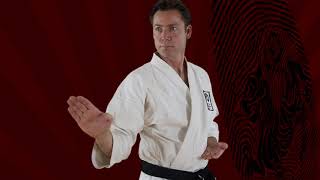
Shuto uke - Basic - Online education - Shotokan Karate-Do JKA
ShotokanTV
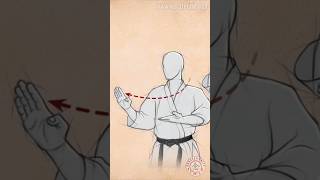
Shuto Uke Knife Hand Application #shorts #karate #martialarts
Karate Unity
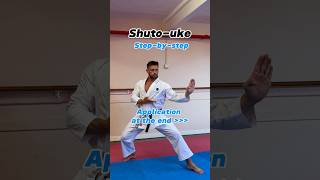
Shuto-uke step-by-step + application #karate #shotokan #martialarts #stepbystep
John Gardiner

How To Block a Punch with One Arm
BOXR
Quick Boxing (only) Block When All Else Fails
THE ARENA