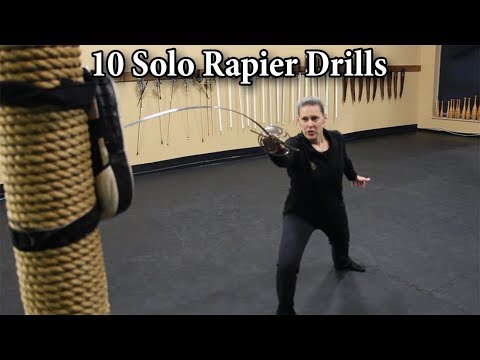
10 Solo Rapier Drills in 5 minutes
0
Terza Guard·Blood and Iron HEMA
Sometimes it can be difficult to find the time to work with a group, so here are 10 solo drills you can do with a Rapier…
Translation: terza guard
Terza (third guard) positions the hand with the palm facing to the right (half-supinated), the blade extended along the centreline to threaten the opponent's chest or face. [1] Terza is the most neutral and commonly adopted guard in Italian rapier, providing balanced protection of both high and low lines while maintaining a direct threat. [1],[2] Capoferro's preferred fighting stance places the sword arm in Terza, making it the default position for initiating attacks. [2],[3]
Terza was described by Italian rapier masters as one of the four fundamental guard positions. [1]
Terza is commonly used in HEMA rapier and longsword competition. [1]
No images yet for this technique.
Sign in to suggest an image.
Sometimes it can be difficult to find the time to work with a group, so here are 10 solo drills you can do with a Rapier…
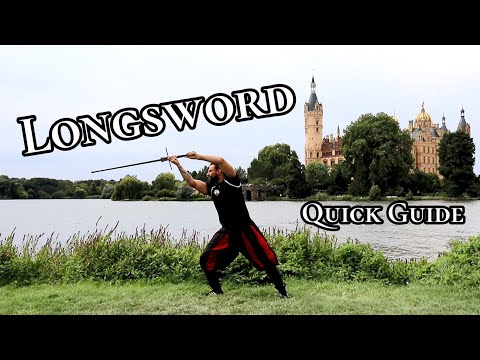
Knowing the guards in the long sword, knowing which techniques and concepts to apply from each posture, and being able t…
A year ago, I went out to Teylingen castle in 32 degrees of heat, to record all of Figueyredo's simple rules for the mon…
Terza guard is a rapier guard position discussed within the broader context of Renaissance fencing systems, though the provided instructional transcripts focus primarily on longsword and greatsword techniques rather than rapier-specific guards. Blood and Iron HEMA's Nicole Smith briefly references 'third guard position' (terza) as a starting point for rapier cutting combinations, specifically mentioning its use before executing thrusts and cuts in sequence during solo drills. Smith demonstrates terza as an intermediate guard from which practitioners can transition into offensive actions, though she provides minimal technical detail about the guard's mechanics or defensive properties. The transcript mentions terza in functional context—as a platform for launching cut-and-thrust combinations—but does not elaborate on hand position, blade angle, or distance considerations that would fully characterize the guard. Notably, Björn Rüther's comprehensive longsword guard taxonomy and Virtual Fechtschule's greatsword methodology make no explicit mention of terza, suggesting this guard may be more specifically associated with rapier systems than the broader longsword tradition. The scarcity of dedicated instruction on terza in these materials indicates that more specialized rapier sources would be necessary for comprehensive encyclopedia coverage of this particular guard position.
Synthesized from 1 instructor
No instructional courses yet for this technique.
Sign in to suggest a course.
Risk of injury to the person this technique is applied to
Edged weapons cause fatal lacerations; historical battlefield mortality rates >30% (Amberger 1999)
Skill level needed to execute this technique reliably
Whether this technique is allowed under major competition rule sets
The Art of Fencing (Luigi Barbasetti, 1932)
Alias sources — [1] The Sword and the Centuries (Castle, 1901) [2] Classical Fencing (Rogers, 2014) [3] Classical Fencing (Rogers, 2014)
Effectiveness sources — [1] The Martial Arts of Renaissance Europe (Anglo, 2000) [2] The Swordsman's Companion (Windsor, 2004)
Mixed Japanese-Western terminology — combines traditional Japanese terms with katakana loanwords
Alias sources — [1] The Sword and the Centuries (Castle, 1901) [2] Classical Fencing (Rogers, 2014) [3] Classical Fencing (Rogers, 2014)
Effectiveness sources — [1] The Martial Arts of Renaissance Europe (Anglo, 2000) [2] The Swordsman's Companion (Windsor, 2004)
wrist control for edge alignment, grip endurance, footwork precision
quick wrists, strong forearms, good posture
forearm extensors/flexors, deltoids, core, calves
Changing your guard without intention or purpose gives your opponent more options to attack openings while you're repositioning yourself. According to Björn Rüther, you should always have a clear tactical idea before shifting guards.
According to Björn Rüther's instruction on guard positions, you should study what to fence from a given posture and what concepts to apply. The guard is particularly effective for executing crooked hoos (hook cuts).
Terza (third guard) positions the hand with the palm facing to the right (half-supinated), the blade extended along the centreline to threaten the opponent's chest or face. Terza is the most neutral and commonly adopted guard in Italian rapier, providing balanced protection of both high and low lines while maintaining a direct threat.
Terza is described by Capoferro in Gran Simulacro (1610) as the ideal fighting posture for the rapier, and many Italian masters consider it the most versatile of the four guards. It is the direct ancestor of the modern fencing en garde position in tierce.
Traditional martial arts: legal — Practiced in traditional kata/forms and weapon-specific competition under var…; IWUF: legal — Legal in wushu taolu if applicable; HEMA: legal — Legal in applicable historical weapon categories
Danger rating 9/10. Extreme — edged weapons cause fatal lacerations; historical battlefield mortality rates >30% (Amberger 1999)
The standard setup chain: Assume Guard (Kamae/Hut) → Measure Distance (Ma-ai) → Initiate Cut/Thrust → Follow Through (Zanshin).
Standard counters include: Parry (Absetzen) — deflect the incoming blade with a counter-displacement / Void (Step Back) — withdraw from measure to avoid the cutting arc / Counter-Cut (Nachreisen) — strike into the opponent's opening during their attack.
Common variants: Standard cut (primary cutting angle from the ready stance); Thrust (tsuki) (straight thrust targeting the throat, chest, or face); Rising cut (kiri-age) (upward diagonal cut from low to high); Diagonal cut (kesa-giri) (downward diagonal cut following the kimono line).
Terza is commonly used in HEMA rapier and longsword competition.
Top errors to watch for: Holding the hand in the wrong position — the thumb must be on top for proper Terza (neutral rotation) / Not covering the inside line — Terza specifically defends the inside; the blade must be positioned to cover that line / Holding Terza passively — the point must threaten the opponent's chest or face / Not transitioning from Terza when the opponent changes their angle of attack — adapt the guard to their actions.
The Terza Guard is also known as Terutsa Kamae, Terza, Third Guard, Guardia di Terza.