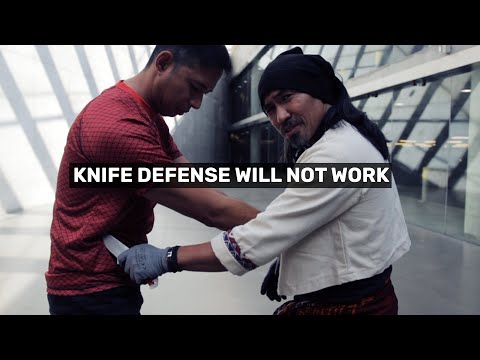
Knife Defense Won't Work Against A Skilled Attacker
0
Men Cut·Budo Brothers
Learn More About The Filipino Martial Art Pintados: https://budobrothers.tv/pages/pintados There are many self-defense …
Translation: Face/Head Strike
The Men Cut is a descending vertical or slightly diagonal cut to the top of the opponent's head, the most fundamental and frequently practised technique in Japanese swordsmanship. [1] A correct men cut requires raising the sword above the head, driving it downward with snap of the wrists (tenouchi), and in kendō executing fumikomi with the right foot and passing through the opponent — all unified with a spirited kiai. [1],[2] The men cut is the first technique taught to beginners in both kenjutsu and kendō and the most commonly scored ippon in competition at all levels. [2],[3]
The descending head cut is the most fundamental sword technique across all Japanese sword arts, embodying the kenjutsu principle that the direct centreline attack is the most efficient and decisive path to victory. [1] Kendō pedagogy has placed men-uchi at the centre of training since the art's formalisation in the eighteenth century. [2],[3]
Men (head cut) is the most important strike in kendo — a clean men strike is considered the purest expression of correct technique, combining proper posture, spirit (kiai), footwork (fumikomi-ashi), and follow-through (zanshin). [1] The AJKF defines ippon (valid point) in kendo as requiring the simultaneous manifestation of ki-ken-tai-ichi (spirit-sword-body as one), and men strikes most clearly demonstrate this principle. [2]
Men targeting descends from the shomen-uchi and yokomen-uchi of classical kenjutsu, adapted for kendo's protective equipment (bogu) beginning in the 18th century. [1] The Ono-ha Itto-ryu school's emphasis on the decisive single downward cut (kiri-otoshi) is the primary technical ancestor of the kendo men strike. [2]
Men strikes consistently account for the highest percentage of ippon scored in kendo competition. Analysis of All Japan Kendo Championship matches shows men comprising approximately 45–55% of all scored points. [1]
No images yet for this technique.
Sign in to suggest an image.
Learn More About The Filipino Martial Art Pintados: https://budobrothers.tv/pages/pintados There are many self-defense …
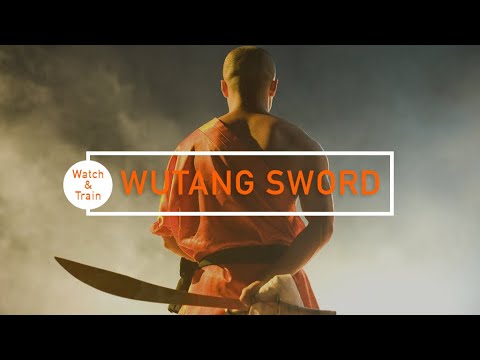
WUTANG SWORD PLAY! In China the sword is one of the three essential weapons - MJ takes your through the basics and expla…
If you liked this, join our private FB group where you get exclusive access to more great videos like this Get Your 15 …
The three instructors address distinctly different weapon systems and contexts, making direct synthesis challenging. Budo Brothers focuses on knife fighting fundamentals, emphasizing grip transitions (reverse to normal hold), realistic deployment angles, and release techniques when an opponent grabs the weapon—stressing that multiple blocking defenses often fail in practice. The Kung Fu Fam provides structured Wu-Tang sword basics including striking (drive forward as extension), slicing (incorporating stance and wrist rotation), defensive movements (inside and outside blocks with follow-up strikes), and advanced combinations like jumping slice to jab and sweeping arcs. They emphasize relaxed grip control through thumb and fingers to enable smooth, fast rotation, and grounding power through hip movement. FightFast addresses pressure-point striking as a separate self-defense methodology, targeting specific anatomical locations (stomach 9, triple warmer 17) using focused hand techniques to overload the nervous system and incapacitate opponents, with emphasis on combining pressure points with locks when targets attempt escape. While Budo Brothers and The Kung Fu Fam both discuss slashing/cutting motions and defensive postures with weapons, they operate in fundamentally different frameworks—close-quarters knife work versus traditional form-based sword training. FightFast's pressure-point system operates independently from weapon technique entirely. Agreement exists on the principle of hand/grip relaxation enabling weapon control, but applications and contexts diverge significantly.
Synthesized from 3 instructors
No instructional courses yet for this technique.
Sign in to suggest a course.
Risk of injury to the person this technique is applied to
Edged weapons cause fatal lacerations; historical battlefield mortality rates >30% (Amberger 1999)
Skill level needed to execute this technique reliably
Whether this technique is allowed under major competition rule sets
The Book of Five Rings (Miyamoto Musashi, 1645)
Alias sources — [1] Japanese Swordsmanship (Warner & Draeger, 1982) [2] Japanese Swordsmanship (Warner & Draeger, 1982) [3] Japanese Swordsmanship (Warner & Draeger, 1982)
Effectiveness sources — [1] All Japan Kendo Federation, Kendo Official Manual (AJKF) [2] Warner, G. & Draeger, D., Japanese Swordsmanship: Technique and Practice (Weatherhill, 1982)
Established Japanese martial arts naming convention — native Japanese term (和語/漢語)
Alias sources — [1] Japanese Swordsmanship (Warner & Draeger, 1982) [2] Japanese Swordsmanship (Warner & Draeger, 1982) [3] Japanese Swordsmanship (Warner & Draeger, 1982)
Effectiveness sources — [1] All Japan Kendo Federation, Kendo Official Manual (AJKF) [2] Warner, G. & Draeger, D., Japanese Swordsmanship: Technique and Practice (Weatherhill, 1982)
wrist control for edge alignment, grip endurance, footwork precision
quick wrists, strong forearms, good posture
forearm extensors/flexors, deltoids, core, calves
Every move, in any martial art, shares a few universal traits. Mix and match below to pinpoint the right tool — or compare equivalents across styles.
You need to combine the pressure point with a lock or freeze that prevents them from getting away. FightFast emphasizes that pressure points only work for control if the opponent is frozen or locked in place, so you must prevent their escape.
You can test pressure points on yourself to find their location, though you won't feel the same intensity you'd cause on someone else. FightFast notes that this self-testing method helps you learn the technique before applying it in practice.
The Men Cut is a descending vertical or slightly diagonal cut to the top of the opponent's head, the most fundamental and frequently practised technique in Japanese swordsmanship. A correct men cut requires raising the sword above the head, driving it downward with snap of the wrists (tenouchi), and in kendō executing fumikomi with the right foot and passing through the opponent — all unified with a spirited kiai.
The descending head cut is the most fundamental sword technique across all Japanese sword arts, embodying the kenjutsu principle that the direct centreline attack is the most efficient and decisive path to victory. Kendō pedagogy has placed men-uchi at the centre of training since the art's formalisation in the eighteenth century.
FIK Kendo: legal — Legal, valid strike requires correct form (datotsu-bu), spirit (kiai), and fo…
Danger rating 9/10. Extreme — edged weapons cause fatal lacerations; historical battlefield mortality rates >30% (Amberger 1999)
The standard setup chain: Assume Guard (Kamae/Hut) → Measure Distance (Ma-ai) → Initiate Cut/Thrust → Follow Through (Zanshin).
Standard counters include: Parry (Absetzen) — deflect the incoming blade with a counter-displacement / Void (Step Back) — withdraw from measure to avoid the cutting arc / Counter-Cut (Nachreisen) — strike into the opponent's opening during their attack.
Common variants: Standard cut (primary cutting angle from the ready stance); Thrust (tsuki) (straight thrust targeting the throat, chest, or face); Rising cut (kiri-age) (upward diagonal cut from low to high); Diagonal cut (kesa-giri) (downward diagonal cut following the kimono line).
Men strikes consistently account for the highest percentage of ippon scored in kendo competition. Analysis of All Japan Kendo Championship matches shows men comprising approximately 45–55% of all scored points.
Top errors to watch for: Cutting with the arms without hip engagement — the men cut requires hip rotation and forward momentum / Not squeezing (tenouchi) at the moment of impact — the grip must tighten sharply for the cut to be effective / Raising the sword too high — the preparation should be sufficient but not excessive / Cutting too far forward past the target — the cut should stop at the men (head) with proper distance control.
The Men Cut is also known as Men, Head Strike, Shomen Uchi.