Versetzen and Absetzen: Longsword Lesson 16
0
Absetzen·Sword Carolina
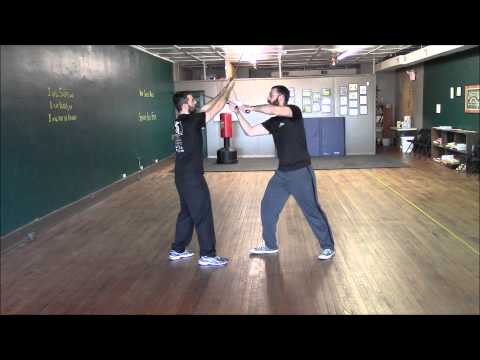
A pair of techniques this week from MS 3227a, or the Döbringer manuscript. While other masters go into more detail in t…
Translation: setting aside (simultaneous parry and counter-thrust)
Absetzen (Setting Aside) is a HEMA longsword counter-technique where the fighter simultaneously parries an incoming cut and delivers a thrust in a single motion. [1] Rather than blocking first and then attacking (two separate actions), Absetzen displaces the opponent's blade while extending the point into the opponent's body — defense and offense occur at the same time. [1] It is one of the core defensive concepts in the Liechtenauer tradition, embodying the principle that the best defense is one that also attacks. [1] The technique is typically performed from Pflug (plow) or Ochs (ox) guard. [1]
Absetzen is one of the fundamental counter-techniques in the Liechtenauer German longsword tradition. [1] It embodies the core principle of Indes (meanwhile) — acting simultaneously in defense and offense rather than sequentially. The concept appears in multiple medieval Fechtbücher and remains central to modern HEMA longsword practice. [1]
Extremely effective because it combines defense and attack into a single action — the opponent's committed cut creates the opening for the counter-thrust. [1] It follows the principle that a fighter who must defend twice (block then attack) is always slower than one who defends and attacks simultaneously. [1]
German longsword lineage: Johannes Liechtenauer (14th century) → transmitted through the Gesellschaft Liechtenauers (Society of Liechtenauer) → documented in Fechtbücher by Sigmund Ringeck (c. 1440), Peter von Danzig (1452), Hans Talhoffer (1459), and Paulus Kal (1470). Reconstructed in modern HEMA from manuscript study beginning in the 1990s–2000s. [1]
Used in modern HEMA longsword tournaments sanctioned by HEMAA, HEMA Alliance, and regional federations. Scoring varies by ruleset (afterblow, first-touch, or exchange-based). [1]
No images yet for this technique.
Sign in to suggest an image.
A pair of techniques this week from MS 3227a, or the Döbringer manuscript. While other masters go into more detail in t…
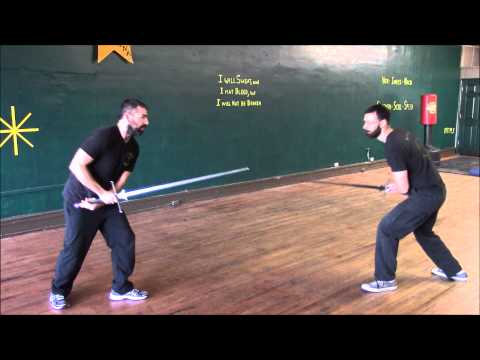
One of the best things about Historical European Martial Arts is the amount of variety they contain. Here are two more …
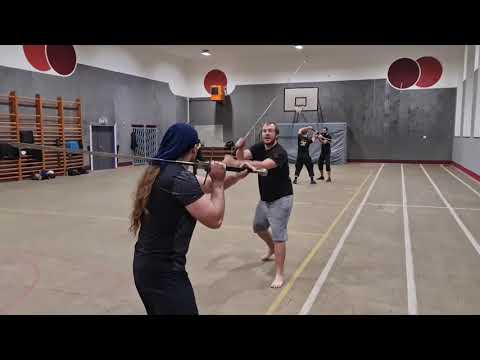
a short insight into our master class, how do we practice an advanced level of zufechten and defence during handarbeit.
Absetzen is an advanced longsword counter-technique that combines defense and immediate counter-attack into a single continuous motion, as distinguished from the related Versetzen. According to Sword Carolina's analysis of the Dobringer manuscript, Absetzen differs from Versetzen in that it consolidates what would normally be two separate actions—cutting to block and then thrusting—into one fluid response to an opponent's attack. The fundamental principle involves moving the hands first before the feet to collect the opponent's sword and control range, allowing the practitioner to determine appropriate distance and maintain the initiative. Absetzen can be executed against thrust attacks, as when an opponent thrusts from plow and the defender responds with a simultaneous thrust while collecting the opponent's blade. Against cutting attacks, such as an opponent's Oberhau, the defender can counter with an Unterhau while immediately thrusting, ensuring adequate height for protection while achieving line superiority. Sword Carolina emphasizes that proper execution requires full winding into a secure hanging position with cross-guard protection to prevent the opponent's blade from sliding over the defender's sword. The technique represents an application of timing-based counter-offense prioritized in the Dobringer tradition, contrasting with the more guard-focused approaches found in later manuscripts like von Danzig and Ringeck.
Synthesized from 3 instructors
No instructional courses yet for this technique.
Sign in to suggest a course.
Risk of injury to the person this technique is applied to
The counter-thrust targets the body while the opponent is committed to their cut.
Skill level needed to execute this technique reliably
Whether this technique is allowed under major competition rule sets
Clements, J. Medieval Swordsmanship. Paladin Press.
[1] Clements, Medieval Swordsmanship, Counter-Techniques chapter
[1] Clements, Medieval Swordsmanship, Counter-Techniques chapter
precise blade angle control, distance judgment, timing
forearms (blade control), core (stability during step), shoulders (extension for thrust)
Absetzen (setting aside) embodies the Liechtenauer principle of Indes (meanwhile) — defense and offense in one tempo. Clements' Medieval Swordsmanship documents it as a core counter-technique where the fighter deflects an incoming cut while simultaneously thrusting. (Clements, Medieval Swordsmanship; Tobler, Secrets of German Medieval Swordsmanship)
Versetzen is a two-part process where you cut and then thrust, while Absetzen tries to put everything into one action—cutting and thrusting simultaneously. According to Sword Carolina, Dobringer favored the thrust-focused approach of Absetzen.
Moving your hands first allows you to collect your opponent's sword and set the range before committing to footwork. As Sword Carolina explains, this lets you see what distance you need and adjust your step accordingly, rather than being locked into a predetermined distance.
Make sure to come up high enough with your cut to protect yourself while thrusting, and perform a full wind into your rocks as you cut the Underhow so your cross guard protects your hands and the sword doesn't hit you in the head.
Yes—according to Sword Carolina, you want to already be on line when immediately thrusting as you cut, so you don't have to do any work in the bind to get your point positioned.
Absetzen (Setting Aside) is a HEMA longsword counter-technique where the fighter simultaneously parries an incoming cut and delivers a thrust in a single motion. Rather than blocking first and then attacking (two separate actions), Absetzen displaces the opponent's blade while extending the point into the opponent's body — defense and offense occur at the same time.
Absetzen is one of the fundamental counter-techniques in the Liechtenauer German longsword tradition. It embodies the core principle of Indes (meanwhile) — acting simultaneously in defense and offense rather than sequentially.
HEMA tournaments: Legal: legal — standard technique in longsword competition; SCA Heavy Combat: Legal: legal — permitted in armored combat; HEMAA/HEMA Alliance: Legal: legal — recognized in all affiliated tournaments
Danger rating 8/10. Very High — the counter-thrust targets the body while the opponent is committed to their cut.
The standard setup chain: Hold Pflug → opponent cuts diagonally → Absetzen counter-thrust to body → Feint a cut to draw their attack → Absetzen their counter → From bind → opponent pushes → yield and Absetzen from the new angle.
Standard counters include: Feint the cut — draw the Absetzen then change to a different attack / Cut short — don't fully commit to the cut that gets set aside / Duplieren — if the set-aside succeeds, double the attack from the bind.
Common variants: Absetzen from Pflug (setting aside from the plow guard); Absetzen from Ochs (setting aside from the ox guard); Absetzen against Oberhau (countering an overhead cut); Absetzen against Unterhau (countering a rising cut).
Used in modern HEMA longsword tournaments sanctioned by HEMAA, HEMA Alliance, and regional federations. Scoring varies by ruleset (afterblow, first-touch, or exchange-based).
Top errors to watch for: Separating the defense and attack into two motions — must be simultaneous / Using the weak of the blade (near the tip) to parry — too fragile, gets pushed through / Not stepping offline — staying in the path of a partially deflected cut / Focusing on the parry and forgetting the thrust.
The Absetzen is also known as Abusettsen, Setting Aside, Absetzen Counter, Displacement with Thrust.