Panantukan: Going From Hubud to Hitting
0
Standard Panantukan·Coach Kurt
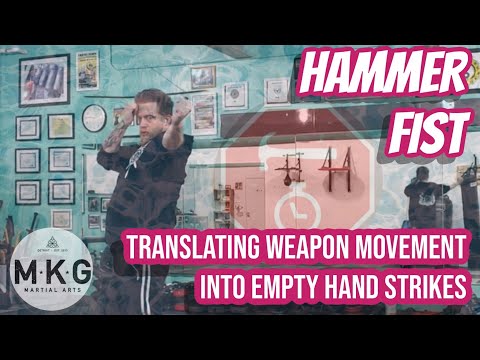
This video of classroom content (hence the suboptimal audio) features MKG Detroit Head Coach Kurt Cornwell showing stude…
Translation: standard panantukan
Standard Panantukan encompasses the core techniques of Filipino boxing: the gunting (scissoring destruction to the opponent's attacking limb), the hubud-lubud (tie-and-untie sensitivity drill), the low hammer fist, the shoulder bump, the forearm strike, and combinations flowing between these tools using the numbered angle system. [1] Standard panantukan training follows the Filipino martial arts methodology of drilling: partner-based flow drills build reflexes, then practitioners learn to break the pattern and insert live techniques. [1],[2] The system's emphasis on limb destructions — striking the bicep, forearm, or hand of the attacking limb to cause pain and dysfunction — is its most distinctive contribution to striking arts. [2],[3]
Standard panantukan techniques have been transmitted through Filipino martial arts lineages for generations, with modern systematisation credited to practitioners like Dan Inosanto, Rick Young, and other internationally recognised Filipino martial arts instructors. [1] The art continues to evolve through cross-training with MMA, JKD, and self-defence systems. [2],[3]
Panantukan (Filipino boxing / dirty boxing) applies the angles and biomechanics of FMA weapon striking to empty-hand combat, including limb destruction (gunting), elbows, headbutts, and takedowns. [1] Its effectiveness in MMA and self-defence contexts comes from its emphasis on trapping, limb attacks, and seamless transitions between striking and clinch ranges. [2]
Standard panantukan techniques are demonstrated at FMA events and seminars worldwide. [1]
No images yet for this technique.
Sign in to suggest an image.
This video of classroom content (hence the suboptimal audio) features MKG Detroit Head Coach Kurt Cornwell showing stude…
In Filipino Martial Art, the weapon “informs” the hand. This means the FMA Practitioner learns to use the weapon right a…
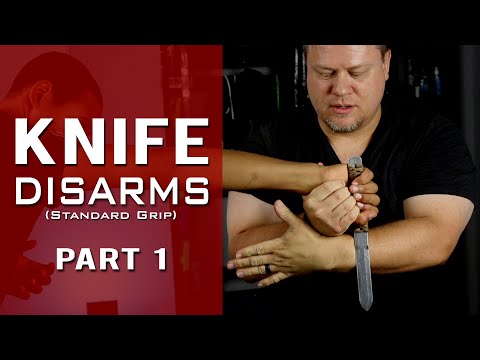
This is a comprehensive lesson on the technical method of a standard grip Knife disarm. We will explore the various type…
Standard Panantukan represents a foundational empty-hand combat methodology within Filipino martial arts that emphasizes transitional control and striking mechanics derived from weapon systems. Coach Kurt demonstrates the technique's core mechanics through a systematic progression: practitioners establish control via hubud (circular hand exchanges), then integrate directional shifts and body positioning to move offline from incoming attacks. The method employs cross-body wrenching motions where the near-side arm circles to control an opponent's limb while the defender pivots the torso, creating leverage that transitions from defensive capture into offensive striking combinations. Kurt emphasizes the "lung hinge"—a hip rotation initiated by foot pivoting—as the mechanical engine generating power in strikes including hammer fists, elbows, and hand strikes delivered from multiple angles (vertical, diagonal, ascending, descending). The technique incorporates weapon-derived mechanics: forehand and backhand motions that translate stick-work principles (such as "lob tick" slashing and snapping retractions) into empty-hand applications. Panantukan chains multiple strikes along consistent lines of attack, alternating between forehand and backhand deliveries while maintaining defensive coverage. Sean Elders from Pinnacle Combat Arts contextualizes standard grip disarm principles as extensions of panantukan's control methodology, highlighting how eye strikes and hand strikes create openings for limb manipulation and weapon removal. All instructors agree on the integration of body mechanics, sequential striking, and adaptive responses to opponent resistance.
Synthesized from 3 instructors
No instructional courses yet for this technique.
Sign in to suggest a course.
Risk of injury to the person this technique is applied to
Arnis/Escrima/Kali stick and blade techniques; designed for close-range lethality
Skill level needed to execute this technique reliably
Whether this technique is allowed under major competition rule sets
Bubishi: The Classic Manual of Combat (Patrick McCarthy, 2008)
Alias sources — [1] Filipino Martial Arts (Wiley, 1994) [2] Filipino Martial Arts (Wiley, 1994) [3] Filipino Martial Arts (Wiley, 1994)
Effectiveness sources — [1] Wiley, M., Filipino Martial Arts (Charles E. Tuttle, 1994) [2] Inosanto, D., The Filipino Martial Arts (Know Now Publishing, 1980)
Standard katakana transliteration of Western martial arts terminology (外来語) — used in Japanese MMA, boxing, and BJJ communities
Alias sources — [1] Filipino Martial Arts (Wiley, 1994) [2] Filipino Martial Arts (Wiley, 1994) [3] Filipino Martial Arts (Wiley, 1994)
Effectiveness sources — [1] Wiley, M., Filipino Martial Arts (Charles E. Tuttle, 1994) [2] Inosanto, D., The Filipino Martial Arts (Know Now Publishing, 1980)
grip strength, wrist control, weapon-specific conditioning
strong forearms and wrists, good hand-eye coordination
forearms, wrists, shoulders, core
Coach Kurt teaches that if you miss your shot, you should go to position and keep your guard out while holding the pad, maintaining control until the next opportunity presents itself.
Coach Kurt emphasizes using counter rotation of the hip facilitated by pivoting on the ball of the foot, which generates more distance and snap to your strikes while maintaining proper body angulation.
Once you peel the guard, you can follow up with a strike, knee strike, or kick depending on your opponent's positioning and what techniques are available in the moment.
Standard Panantukan encompasses the core techniques of Filipino boxing: the gunting (scissoring destruction to the opponent's attacking limb), the hubud-lubud (tie-and-untie sensitivity drill), the low hammer fist, the shoulder bump, the forearm strike, and combinations flowing between these tools using the numbered angle system. Standard panantukan training follows the Filipino martial arts methodology of drilling: partner-based flow drills build reflexes, then practitioners learn to break the pattern and insert live techniques.
Standard panantukan techniques have been transmitted through Filipino martial arts lineages for generations, with modern systematisation credited to practitioners like Dan Inosanto, Rick Young, and other internationally recognised Filipino martial arts instructors. The art continues to evolve through cross-training with MMA, JKD, and self-defence systems.
WEKAF: legal — Legal in padded stick competition; HEMA: legal — Legal in applicable weapon categories
Danger rating 8/10. Very High — Arnis/Escrima/Kali stick and blade techniques; designed for close-range lethality
The standard setup chain: Ready Position → Distance Control → Execute Technique → Return to Guard.
Standard counters include: Guard Position — return to a defensive ready stance / Distance Management — control the measure to avoid being in range / Counter-Attack — strike during the opponent's recovery or between movements.
Common variants: Standard technique (primary execution from the most common grip and stance); Competition variation (adapted for sport-specific rules and scoring); Traditional variation (classical execution as taught in the traditional art); Combination variation (chained with preceding or following techniques in a flow).
Standard panantukan techniques are demonstrated at FMA events and seminars worldwide.
Top errors to watch for: Throwing punches without setting up traps — every punch should either score or create a trapping opportunity / Not closing distance after the gunting — the gunting creates an opening that must be exploited immediately with follo… / Dropping the checking hand after trapping — maintain control of the trapped arm while striking with the other hand / Using too much power on the gunting — the destruction needs accuracy on the nerve point, not maximum force.
The Standard Panantukan is also known as Sutandādo Panantukan, Basic Panantukan Combination, Suntukan Drill, Filipino Boxing Combination.