How to Fight with Chinese Broadsword 22- Direct Attack
0
Direct Attack·Taoist In Black
In this video we talk about the mechanics of throwing a direct attack whether from the original ready position, or as a …
Translation: direct attack
The Direct Attack is the simplest offensive action in foil, consisting of a straight thrust delivered in the same line as the fencer's blade engagement, without any change of line or blade deception. [1] The direct attack is executed by extending the arm fully while maintaining the blade in its current line position, then delivering the touch with a lunge, advance-lunge, or fleche. [1],[2] Despite its simplicity, the direct attack is highly effective when the opponent's blade is not covering the line of the attack, and it forms the foundation upon which all other foil attacks are built. [2],[3]
The direct attack (coup droit) is the most fundamental fencing action, present in every historical fencing tradition from the earliest treatises. [1] It is the first attack taught to beginning fencers and remains effective at all levels of competition when executed with proper timing and distance. [2],[3]
The direct attack is the foundational offensive action in all fencing traditions, taught as the first attack in every fencing school. [1]
Direct attacks are common in all three Olympic fencing weapons, particularly effective in sabre where speed overcomes defensive reactions. [1]
No images yet for this technique.
Sign in to suggest an image.
In this video we talk about the mechanics of throwing a direct attack whether from the original ready position, or as a …
JKD 5 Ways of Attack - Sample, Direct Effective Dawadah's JKD Training
Learn The Filipino Martial Art Pakamut: https://bit.ly/3b16ZDX Using a sword or a machete is foreign to most people. Bu…
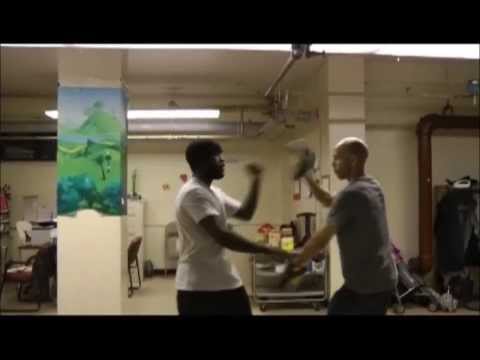
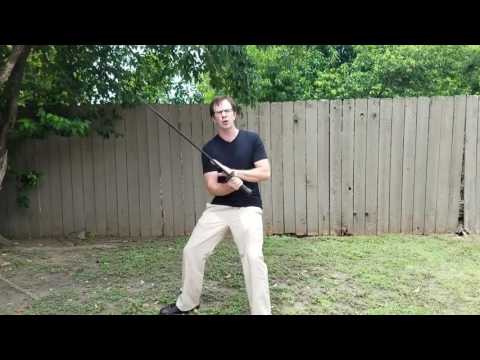
Direct attack in weapons practice refers to the initiation of an offensive technique without prior defensive engagement. Taoist In Black emphasizes that direct attacks with the broadsword begin from the waist as the power source, with wrist control directing the cut along various angles and lines. The instructor stresses economy of motion through smaller circular movements—preferring wrist-driven circles over larger shoulder or elbow circles—to maximize speed and efficiency. Maintenance of a tight elbow position near the body allows rapid return to defensive stance if the attack is parried or missed. Importantly, the instructor cautions against "chasing the hit," where attackers continue pursuing a target without responding to the opponent's defensive or counter-offensive movements. Budo Brothers presents direct attack within a six-count flow drill using machete and sword, demonstrating alternating strikes and defensive responses that train practitioners to recognize when an attack has landed or been blocked, then flow into the next offensive or defensive action. Both instructors agree that direct attacks require immediate readiness to defend or adapt based on opponent response, rather than committing entirely to a single offensive trajectory. The emphasis across instruction is on controlled, efficient motion driven from the body's center with limb-based directional refinement.
Synthesized from 3 instructors
No instructional courses yet for this technique.
Sign in to suggest a course.
Risk of injury to the person this technique is applied to
Modern sport fencing uses blunted weapons and full protective gear; injury rate ~2.5 per 1000 exposures (Harmer 2008)
Skill level needed to execute this technique reliably
Whether this technique is allowed under major competition rule sets
The Art of Fencing (Luigi Barbasetti, 1932)
Alias sources — [1] FIE Rules of Competition [2] Classical Fencing (Rogers, 2014) [3] Classical Fencing (Rogers, 2014)
Effectiveness sources — [1] The Art and Science of Fencing (Evangelista, 1996) [2] FIE coaching manuals
Mixed Japanese-Western terminology — combines traditional Japanese terms with katakana loanwords
Alias sources — [1] FIE Rules of Competition [2] Classical Fencing (Rogers, 2014) [3] Classical Fencing (Rogers, 2014)
Effectiveness sources — [1] The Art and Science of Fencing (Evangelista, 1996) [2] FIE coaching manuals
explosive lunge speed, finger/wrist dexterity, cardiovascular endurance
long reach (tall, long arms), fast-twitch legs
quadriceps (lunge), calves, forearm/finger flexors, core
Lead the motion from your waist to generate force, then control the cut from your wrist. This approach prioritizes economy of motion and speed, since smaller circles from the wrist are faster and more effective than larger circles from the shoulder or elbow.
Continue attacking and press your advantage by maintaining circular momentum with your cuts. Keep your elbow tight to your body and use your waist to pull the sword into other cuts, rather than chasing a single hit.
A sharp object cuts most effectively when pulled rather than struck flat with pure impact. By keeping an angle to the blade and striking while drawing through, you maximize cutting efficiency, especially with curved blades like the dao.
After you attack, you must be ready to defend if your opponent counter-attacks, then return with your own attack. Chasing hits without defending leaves you vulnerable, since both you and your opponent can end up struck—an ineffective approach in sword fighting.
The Direct Attack is the simplest offensive action in foil, consisting of a straight thrust delivered in the same line as the fencer's blade engagement, without any change of line or blade deception. The direct attack is executed by extending the arm fully while maintaining the blade in its current line position, then delivering the touch with a lunge, advance-lunge, or fleche.
The direct attack (coup droit) is the most fundamental fencing action, present in every historical fencing tradition from the earliest treatises. It is the first attack taught to beginning fencers and remains effective at all levels of competition when executed with proper timing and distance.
FIE: legal — Legal fencing technique — governed by FIE rules for foil, épée, and sabre; HEMA: legal — Legal in historical fencing competition
Danger rating 2/10. Low — modern sport fencing uses blunted weapons and full protective gear; injury rate ~2.5 per 1000 exposures (Harmer 2008)
The standard setup chain: En Garde → Advance/Lunge Preparation → Attack → Recovery.
Standard counters include: Parry (Absetzen) — deflect the incoming blade with a counter-displacement / Void (Step Back) — withdraw from measure to avoid the cutting arc / Counter-Cut (Nachreisen) — strike into the opponent's opening during their attack.
Common variants: Simple attack (single blade action (disengage, beat, or direct) to score); Compound attack (multiple blade actions (feint then disengage) to create a…); Riposte (immediate counter after a successful parry); Counter-attack (attacking into the opponent's attack with priority or rig…).
Direct attacks are common in all three Olympic fencing weapons, particularly effective in sabre where speed overcomes defensive reactions.
Top errors to watch for: Attacking when the line is closed — the direct attack requires an open line; if blocked, use disengage or beat / Not extending the arm before lunging — the arm extension establishes right of way and maximizes reach / Aiming at a specific spot too precisely — the target is the torso; over-aiming causes hesitation / Using the direct attack predictably — if always used first, the opponent will anticipate and parry.
The Direct Attack is also known as Direkuto Kōgeki, Coup Droit, Straight Thrust, Direct Thrust.