How to throw defensive opponents in Judo and BJJ
0
Double Under-the-Legs Defense to Sweep·Shintaro Higashi
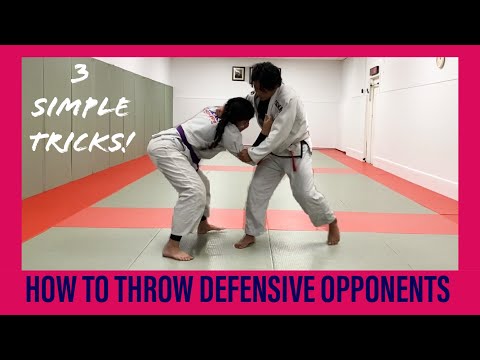
How to throw defensive opponents in Judo and BJJ For more detailed and structured instruction, please visit my Judofana…
Translation: double under-the-legs defense to sweep
The Double Under-the-Legs Defense to Sweep converts a defensive position (when the opponent has both legs stacked) into an offensive sweep by timing a hip escape and roll. [1]
The Double Under-the-Legs Defense to Sweep is a guard sweep detailed in Saulo Ribeiro's systematic BJJ approach. [1]
Effective guard sweep technique. [1]
Brazilian Jiu-Jitsu guard methodology. [1]
Used in UFC and professional MMA competition
No images yet for this technique.
Sign in to suggest an image.
Not yet documented
How to throw defensive opponents in Judo and BJJ For more detailed and structured instruction, please visit my Judofana…
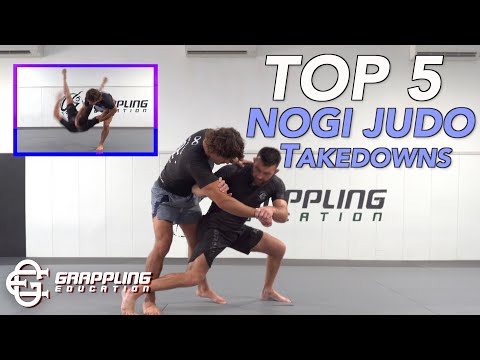
Keller Locke-Sodhi and Rhys Allan teach FIVE of their favourite Judo takedowns adapted for NoGi grappling/ Brazilian Jiu…
The double under-the-legs defense to sweep is a counter-technique employed when an opponent attempts a takedown targeting the legs while the defender is in a strong base position. Shintaro Higashi emphasizes the critical importance of controlling posture and grip before engaging in leg-targeting exchanges, advocating a two-handed grip control strategy (sleeve and lapel) to dominate the opponent's posture while preventing them from controlling the defender's own posture. He stresses that once superior grip position and hand placement are established, the defender can transition into sweeping attacks, ankle picks, or turns with significantly reduced risk. Grappling Education (featuring Rhys Allen) approaches leg-based sweeps from a no-gi perspective, demonstrating how to force an opponent's weight distribution onto a single leg through collar tie and tricep control, then executing an outside leg sweep. Both instructors agree that balance disruption (kuzushi) and proximity control are foundational: the defender must either break the attacker's balance or force weight commitment to a single leg before executing the sweep. Higashi focuses on grip-fighting methodology and sequential hand adjustments in gi settings, while Grappling Education emphasizes weight distribution manipulation and timing the sweep to a reactive moment when the opponent attempts to regain posture.
Synthesized from 2 instructors
No instructional courses yet for this technique.
Sign in to suggest a course.
Risk of injury to the person this technique is applied to
Positional reversal technique
Skill level needed to execute this technique reliably
Whether this technique is allowed under major competition rule sets
Jiu-Jitsu University (Ribeiro & Howell, 2008)
description, historyOrigin: sourced from Ribeiro, S
description, historyOrigin: sourced from Ribeiro, S
Hip mobility
Timing
Core strength
A specific Krav Maga or self-defense technique — defending against a double-leg takedown by sprawling and using the leg position to sweep the attacker. Combines takedown defense with counter-offense. (Self-defense and MMA training manuals)
According to Grappling Education, as your opponent pops up and their weight transfers to their lead leg, you should capitalize immediately by attacking with a throw like taitoshi. Time your attack to coincide with their pop-up motion, and extend your leg to create additional power through the throw.
Controlling the grip is super important—as a rule, never let your opponent's hand touch your hip, according to Grappling Education. Maintaining this hand position prevents them from establishing control that would allow them to counter your technique.
Grappling Education explains that if your Whizzer is too deep, it limits your hip movement and makes it very difficult to execute techniques like an Uchimada effectively.
The Double Under-the-Legs Defense to Sweep converts a defensive position (when the opponent has both legs stacked) into an offensive sweep by timing a hip escape and roll.
The Double Under-the-Legs Defense to Sweep is a guard sweep detailed in Saulo Ribeiro's systematic BJJ approach.
IJF: legal — Legal throwing technique; IBJJF: legal — Legal at all belt levels; UWW: restricted — Legal in freestyle, banned in Greco-Roman (no leg attacks below waist); Unified MMA: legal — Legal throwing technique; ADCC: legal — Legal; FIAS Sport Sambo: legal — Legal; FIAS Combat Sambo: legal — Legal
Danger rating 2/10. Positional reversal technique
The standard setup chain: Guard control → Break balance → Double Under-the-Legs Defense to Sweep → Achieve top position.
Standard counters include: Base out / Post with the hand / Pressure pass.
Used in UFC and professional MMA competition
Top errors to watch for: Poor timing / Not breaking the opponent's base first.
The Double Under-the-Legs Defense to Sweep is also known as Double Under-the-Legs Defense to Sweep, Double Under Sweep, Stack Defense Sweep.