Yoko Wakare
0
Yoko Wakare·Wahadachi Judo
Wahadachi Judo's lesson on Yoko Wakare
Translation: side separation
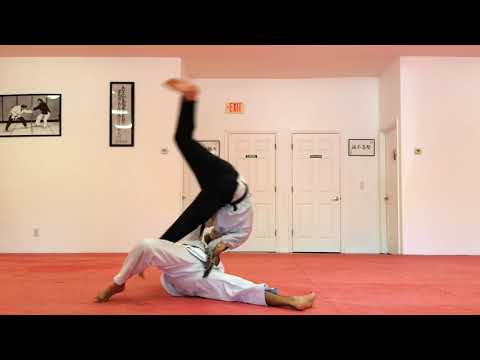
Yoko Wakare, the side separation throw, is a sacrifice technique in which tori drops to one side while maintaining a strong grip on uke, using the sudden separation of tori's body from the standing position to pull uke laterally off balance and over tori's body. [1],[2] The 'wakare' (separation) refers to the splitting action as tori's body drops away from uke while the arms maintain the connection. [1],[3] Yoko wakare is effective against opponents who resist lateral movement and can be applied as a counter to hip throws when tori is being attacked. [3]
Yoko wakare (side separation) sacrifices to the side while pulling the opponent across the body, creating a lateral roll. [1]
Yoko wakare is part of the Kodokan judo yoko-sutemi-waza syllabus. [1]
Yoko wakare is occasionally scored in IJF competition. [1]
No images yet for this technique.
Sign in to suggest an image.
Wahadachi Judo's lesson on Yoko Wakare
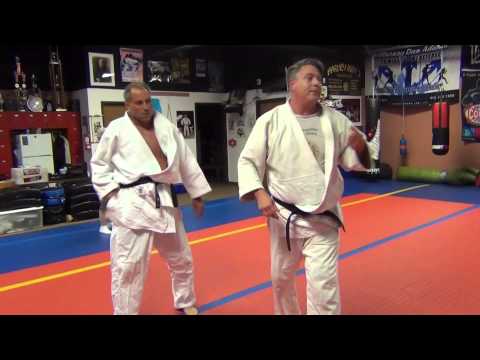
As a follow up to the uki-waza segment (last two videos) the class now shifted to a discussion on the formal execution o…
No instructional courses yet for this technique.
Sign in to suggest a course.
Risk of injury to the person this technique is applied to
Yoko-Sutemi-Waza; lateral falling sacrifice; shoulder/rib impact risk
Skill level needed to execute this technique reliably
Whether this technique is allowed under major competition rule sets
Kodokan Judo — Official Nage-waza Classification
Traditional Judo throwing technique terminology (Kodokan Institute)
Official Kodokan ground technique classification system
Standard Japanese martial arts terminology (kanji/hiragana)
Established Japanese martial arts naming convention — native Japanese term (和語/漢語)
Traditional Judo throwing technique terminology (Kodokan Institute)
hip rotation speed, core strength, lower back stability
strong hips and core, good flexibility for turning entry
hip rotators, core, quadriceps, latissimus dorsi
Every move, in any martial art, shares a few universal traits. Mix and match below to pinpoint the right tool — or compare equivalents across styles.
Staying flexible and using arm extension makes the technique significantly easier. Wahadachi Judo emphasizes that pressing with extended arms reduces the effort needed.
You need to ensure your opponent's balance is truly broken and that you have proper rotation control. Jukido Academy stresses that foot positioning and breaking balance are critical to executing the technique effectively.
In Yoko Wakare, your legs should remain in front of you and in the game, whereas Ukiwaza offers less positional security if not executed well. Jukido Academy notes that this positioning advantage in Yoko Wakare allows you to continue working even if something goes wrong.
Yoko Wakare, the side separation throw, is a sacrifice technique in which tori drops to one side while maintaining a strong grip on uke, using the sudden separation of tori's body from the standing position to pull uke laterally off balance and over tori's body. The 'wakare' (separation) refers to the splitting action as tori's body drops away from uke while the arms maintain the connection.
Yoko wakare is part of the traditional Kodokan yoko sutemi waza classification and has been practised since the early 20th century. The technique is less commonly seen in modern competition compared to tani otoshi but remains an important part of the judo technical canon.
IJF: legal — Legal throwing technique; IBJJF: legal — Legal at all belt levels; UWW: legal — Legal in both freestyle and Greco-Roman; Unified MMA: legal — Legal throwing technique; ADCC: legal — Legal; FIAS Sport Sambo: legal — Legal; FIAS Combat Sambo: legal — Legal
Danger rating 6/10. High — Yoko-Sutemi-Waza; lateral falling sacrifice; shoulder/rib impact risk
The standard setup chain: Grip Setup (Kumi-kata) → Off-Balance (Kuzushi) → Entry (Tsukuri) → Execution (Kake) → Fall (Sutemi).
Standard counters include: Lower Centre of Gravity — bend knees and drop hips to make the throw harder to execute / Block the Hip — post hand on the thrower's hip to prevent loading / Step Around — circle away from the throw direction to avoid being loaded / Grip Break — deny the thrower their preferred gripping configuration.
Common variants: Standard hip throw (full turn-in with hip below the opponent's centre of gravity); No-gi hip throw (adapted without gi grips, using overhook and collar tie); Drop hip throw (dropping to one knee to lower the fulcrum point); Combination hip throw (chaining from a failed foot technique or hand technique).
Yoko wakare is occasionally scored in IJF competition.
Top errors to watch for: Turning in and falling without pulling uke — you end up on the ground with uke standing / Not turning in far enough — the entry must be deep enough that uke is loaded before you sacrifice / Falling straight sideways instead of across uke's path — your body must block their movement / Releasing the grips during the transition from turn-in to sacrifice — maintain continuous tension.
The Yoko Wakare is also known as Side Separation, Lateral Separation Throw, Yoko Wakare.