Judo: Ashi Waza - Foot Sweep Biomechanics
0
Standard Harai Tsurikomi Ashi·Kaze Uta Budo Kai / Windsong Dojo
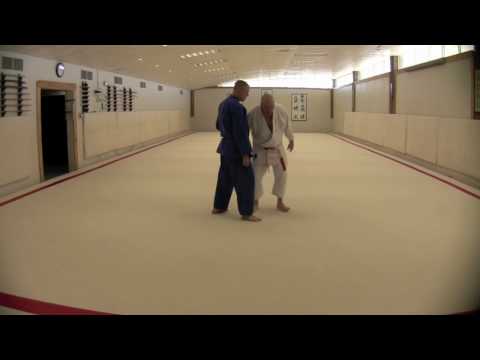
Nick Lowry and Kyle Sloan talk about the biomechanics of a judo foot sweep. Nick explains the basic biomechanics of how/…
Translation: sweeping drawing ankle
Standard Harai Tsurikomi Ashi executes the classical lifting-pulling foot sweep where the thrower lifts the opponent onto their toes with the tsurite hand, pulls laterally with the hikite, and sweeps the loaded foot with the sole in a sideways arc. [1] The sweep contacts the opponent's ankle or lower shin and brushes it in the direction of the pull, toppling the opponent over the swept support. [1],[2] Proper execution requires the thrower to coordinate the lifting hand action with the sweep so that the opponent is maximally loaded on the target foot at the moment of contact. [2],[3]
Harai tsurikomi ashi is effective because it combines active hand manipulation (tsurikomi) with the foot sweep, giving the thrower more control over the opponent's balance than a pure timing-dependent sweep. [1] The lifting-pulling action loads weight onto the target foot, making the sweep more reliable. [2]
Harai tsurikomi ashi was classified in the Kodokan gokyo as a second-set technique, reflecting its position as a more advanced application of foot sweep mechanics combined with active hand control. [1]
The standard harai tsurikomi ashi is a regular technique in IJF competition. [1]
No images yet for this technique.
Sign in to suggest an image.
Nick Lowry and Kyle Sloan talk about the biomechanics of a judo foot sweep. Nick explains the basic biomechanics of how/…
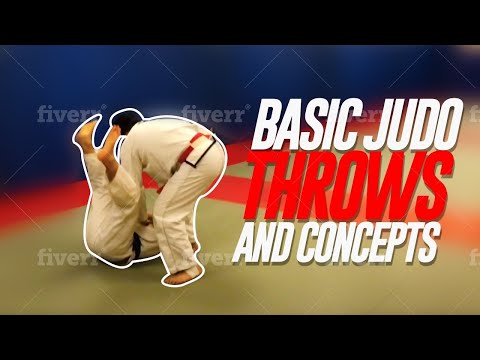
Judo Basics. Here we cover the basic Judo positions and some basic throws and combinations. Osoto 1:24 Taio 1:30 Kenkay…
Standard Harai Tsurikomi Ashi combines a foot sweep with a lifting action, and its effective execution depends critically on proper biomechanical sequencing. Kaze Uta Budo Kai emphasizes that the common error among learners is firing muscle groups in the wrong order—typically engaging the hip and knee before the ankle and toes—which severely limits the technique's applicability and power delivery. The correct sequence involves engaging the toes and ankle first, then the knee, and finally the hip, allowing the practitioner to generate force even when the opponent's weight is fully committed to the swept foot. This biomechanical approach, achieved through conscious practice, transforms the technique from one requiring perfect timing into a tool deployable across a wider range of situations and defensive postures. Shintaro Higashi provides complementary instruction on grip and body positioning fundamentals, emphasizing lapel control high on the collar to prevent the opponent from escaping underneath, combined with sleeve control to pin and dominate the arm. Both instructors underscore the importance of controlling posture and positioning before initiating the sweep, though Kaze Uta Budo Kai focuses specifically on the mechanical firing sequence that defines successful execution regardless of weight distribution, while Higashi prioritizes the grip configurations and stance work that establish the dominant position from which the technique can be applied.
Synthesized from 2 instructors
No instructional courses yet for this technique.
Sign in to suggest a course.
Risk of injury to the person this technique is applied to
Foot sweeps use timing over force; lower impact but head strike risk remains
Skill level needed to execute this technique reliably
Whether this technique is allowed under major competition rule sets
Kodokan Judo — Official Nage-waza Classification
Traditional Judo throwing technique terminology (Kodokan Institute)
Official Kodokan ground technique classification system
Standard Japanese martial arts terminology (kanji/hiragana)
Established Japanese martial arts naming convention — native Japanese term (和語/漢語)
Traditional Judo throwing technique terminology (Kodokan Institute)
precise timing, ankle coordination, upper body kuzushi ability
excellent balance and quick reflexes
tibialis anterior, calves, hip rotators, forearms (grip)
Beginners tend to rely only on ankle and hip action, letting the knee come in too late. Kaze Uta Budo Kai emphasizes that you must consciously point, curl, and bend the knee first, then engage the hip, to generate proper sweeping power.
No—if you build proper biomechanical structure into your sweep, you can execute it even when your opponent is flat-footed with weight down and actively resisting. Kaze Uta Budo Kai notes that understanding the correct sequencing of ankle, knee, and hip engagement allows the technique to work regardless of timing.
When executing a sweep with primarily ankle engagement, you need the opponent's foot to be just about weightless as you make contact so the sweep can function effectively. This is a key principle in foot sweep biomechanics according to Kaze Uta Budo Kai.
Standard Harai Tsurikomi Ashi executes the classical lifting-pulling foot sweep where the thrower lifts the opponent onto their toes with the tsurite hand, pulls laterally with the hikite, and sweeps the loaded foot with the sole in a sideways arc. The sweep contacts the opponent's ankle or lower shin and brushes it in the direction of the pull, toppling the opponent over the swept support.
The standard form of harai tsurikomi ashi has been part of Kodokan judo instruction since the early 20th century, valued as a technique that teaches students the integration of hand and foot actions. It remains a commonly scored technique in judo competition at all levels.
IJF: legal — Legal throwing technique; IBJJF: legal — Legal at all belt levels; UWW: restricted — Legal in freestyle, banned in Greco-Roman (no leg attacks below waist); Unified MMA: legal — Legal throwing technique; ADCC: legal — Legal; FIAS Sport Sambo: legal — Legal; FIAS Combat Sambo: legal — Legal
Danger rating 4/10. Moderate — foot sweeps use timing over force; lower impact but head strike risk remains
The standard setup chain: Grip Setup (Kumi-kata) → Off-Balance (Kuzushi) → Entry (Tsukuri) → Execution (Kake).
Standard counters include: Lower Centre of Gravity — bend knees and drop hips to make the throw harder to execute / Lift the Targeted Leg — raise the foot being attacked above the sweeping action / Counter-Throw — exploit the attacker's committed weight to throw them instead / Grip Break — deny the thrower their preferred gripping configuration.
Common variants: Forward sweep (sweeping the foot in the direction the opponent is stepping); Rear sweep (sweeping the foot backward as the opponent retreats); Combination sweep (chaining sweeps to both feet); Counter sweep (timing the sweep as the opponent initiates their own attack).
The standard harai tsurikomi ashi is a regular technique in IJF competition.
Top errors to watch for: Lifting the opponent but sweeping too late — they resettle their weight and the foot is planted again / Not lifting high enough — the opponent must be light on the target foot for the sweep to work / Sweeping backward instead of in the direction the opponent is falling — the sweep must follow the kuzushi direction / Using the instep instead of the sole of the foot for the sweep.
The Standard Harai Tsurikomi Ashi is also known as Harai Tsurikomi Ashi, Classical Lifting Pulling Foot Sweep, Standard Sweeping Drawing Ankle Throw.