Sweep Single Takedown - Cary Kolat Wrestling Moves
0
Standard Sweep Single·Cary Kolat
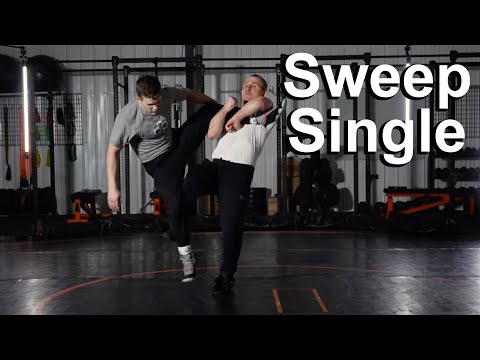
Cary Kolat teaches his Sweep Single to High Leg Finish Takedown for Collegiate or Freestyle Wrestling. Kolat teaches bot…
Translation: standard sweep single
The Standard Sweep Single executes the fundamental sweep single leg where the attacker uses a lateral penetration step to reach the opponent's lead leg at knee height and sweeps it inward while driving the upper body laterally. [1] The sweeping arc of the attack path catches the opponent's leg from the outside, and the lateral driving force pushes them over their compromised base. [1],[2] The finish involves the attacker following the falling opponent to the mat and establishing a top position. [2] The sweep single is effective as both a primary attack and a chain-wrestling transition from other setups. [2],[3]
The standard sweep single is the baseline version of this lateral single leg attack. [1]
Commonly seen in folkstyle and freestyle competition. [1]
No images yet for this technique.
Sign in to suggest an image.
Cary Kolat teaches his Sweep Single to High Leg Finish Takedown for Collegiate or Freestyle Wrestling. Kolat teaches bot…
Stay connected with RUDIS: Website: https://rudis.com/ Instagram: https://www.instagram.com/the_rudis/ TikTok: https://t…
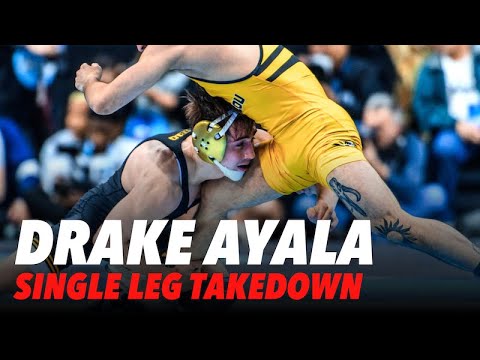
In this Technique Tuesday breakdown, Iowa Hawkeye Drake Ayala shows how to create clean scoring opportunities using his …
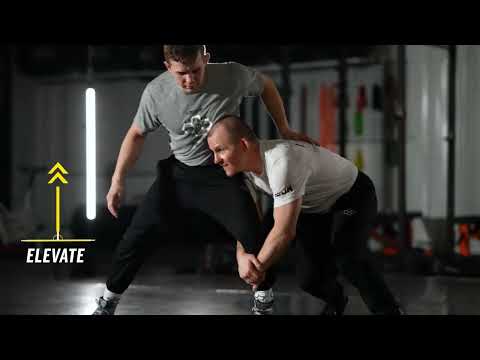
The standard sweep single is a high-level single-leg takedown technique that emphasizes setup, mobility, and high-leg finishing mechanics. Cary Kolat (presented in both RUDIS and his independent channel) teaches a philosophy of aggressive pacing through a heavy crosshand setup—a deliberate hit to the opponent's arm that creates opening and forces a reactive step. Kolat prioritizes maintaining hand mobility rather than locking hands early, keeping his shooting hand above the knee and using his palm on the mat to generate balance and speed. His signature finishing element involves a free-hand punch-to-the-sky motion combined with a knee lift and foot block (not a kick) to prevent the opponent from re-stabilizing, followed by pressure applied to the spine. Kolat also details a seamless transition from the sweep into a cross-lift or crotch-lift turn when the opponent bails out. Drake Ayala (FloWrestling) approaches the finish from a mat-wrestling position with similar hand-placement principles—keeping the shooting hand above the knee—but emphasizes aggressive shoulder pressure into the opponent's hip/thigh area and directional foot drive. Ayala stresses a balance-stealing method using a hopping motion while circling to trip the remaining leg. Both Kolat and Ayala agree on critical hand positioning above the knee and the importance of body-weight pressure, though Kolat emphasizes knee-lift mechanics and spine pressure while Ayala stresses shoulder-to-hip contact and directional circling. Kolat's instruction includes strategic transition theory for freestyle wrestling, whereas Ayala focuses narrowly on mat-phase finishing mechanics.
Synthesized from 3 instructors
No instructional courses yet for this technique.
Sign in to suggest a course.
Risk of injury to the person this technique is applied to
Single leg is one of the safest takedowns; controlled descent (John Smith methodology)
Skill level needed to execute this technique reliably
Whether this technique is allowed under major competition rule sets
Japanese amateur wrestling terminology
Japanese amateur wrestling terminology
Standard katakana transliteration of Western martial arts terminology (外来語) — used in Japanese MMA, boxing, and BJJ communities
Standard katakana transliteration used in Japanese wrestling (レスリング)
penetration step speed, upper body endurance for finishing, balance
longer arms for reach, quick hips for level change
quadriceps, hip flexors, shoulders, grip/forearms
No—Cary Kolat recommends against locking your hands on the single leg, as it limits mobility. Instead, keep your hands free to stay mobile and adjust during the takedown, especially in freestyle wrestling.
Drake Ayala emphasizes that your shooting hand must be positioned above the knee—moving it just 4-6 inches higher prevents opponents from executing escapes like wizards, sprawls, or stepping over. Positioning below the knee leaves you vulnerable to multiple counters.
Drake Ayala places his shoulder into the opponent's hip/thigh area from nearly on top (not to the side) and applies heavy pressure with his head and shoulder. This pressure directs the opponent's body weight in the direction of the takedown, which is critical for actually finishing the move.
Cary Kolat recommends keeping it simple: use a big, heavy hit to open up the opponent's position and create fear of attack, then execute the takedown. He emphasizes controlling pace and putting hands on your opponent from the start of the match.
The Standard Sweep Single executes the fundamental sweep single leg where the attacker uses a lateral penetration step to reach the opponent's lead leg at knee height and sweeps it inward while driving the upper body laterally. The sweeping arc of the attack path catches the opponent's leg from the outside, and the lateral driving force pushes them over their compromised base.
The standard sweep single has been a wrestling competition technique for generations, particularly valued in freestyle wrestling for its effectiveness from motion. The technique has been adopted into BJJ and MMA as a reliable standup attack.
IJF: banned — Banned since 2010 leg grab prohibition — direct hansoku-make for touching opp…; IBJJF: legal — Legal at all belt levels, scored as takedown (2 points); UWW: restricted — Legal in freestyle (2-4 points), banned in Greco-Roman (no attacks below waist); Unified MMA: legal — Legal takedown technique; ADCC: legal — Legal, scored 2-4 points in second half of match; FIAS Sport Sambo: legal — Legal — all takedowns permitted; FIAS Combat Sambo: legal — Legal; NCAA Folkstyle: legal — Legal, scored as takedown (2 points)
Danger rating 3/10. Moderate — single leg is one of the safest takedowns; controlled descent (John Smith methodology)
The standard setup chain: Establish Grip → Off-Balance (Kuzushi) → Execute the Reap/Sweep.
Standard counters include: Sprawl — drop hips back and drive weight down to stuff the takedown attempt / Lift the Targeted Leg — raise the foot being attacked to avoid the reap or sweep / Step Over — lift the targeted leg over the sweeping limb to evade / Counter-Throw — use opponent's committed weight shift to execute a counter technique.
Common variants: Inside single (shooting to the inside of the lead leg, head inside position); Outside single (attacking from the outside of the lead leg); High crotch (securing the thigh above the knee with head in the hip); Low single (attacking the ankle from outside range without deep penet…).
Commonly seen in folkstyle and freestyle competition.
Top errors to watch for: Reaching for the leg before stepping laterally — the step creates the angle for the sweep / Sweeping and pushing in the same direction instead of opposite directions / Staying squared up during the sweep instead of creating an angle / Not pulling the leg firmly enough — a light touch won't collapse a braced leg.
The Standard Sweep Single is also known as Suīpu Shinguru, Standard Sweep Single Leg, Sweep Pick, Crescent-Path Single.