How To DOMINATE THE CLINCH in UFC 5 (CLINCH GUIDE) | EA SPORTS UFC 5
0
From Clinch·IC4Games
In this video we go through the different clinch positions in EA Sports UFC 5 and how to transition between them. We als…
Translation: from clinch
The ear pull from the clinch is a pain compliance technique where the attacker grips the opponent's ear and pulls or twists it while maintaining a standing clinch position. [1],[2] The intense pain from the ear cartilage being stretched or twisted can force positional compliance — the opponent moves their head in the direction the ear is pulled to relieve the pain. [1] From the clinch, the ear pull can be used to off-balance the opponent, create openings for takedowns, or force a release of their grips. [1] While not a joint lock, the pain can force a verbal or physical submission. [1],[2]
Clinch submissions exploit the close-range tie-up to attack with standing guillotines, arm-in chokes, and neck cranks. [1]
Clinch submissions derive from judo standing submissions and catch wrestling. [1]
Standing guillotine chokes from the clinch are among the most common submissions in MMA competition. [1]
No images yet for this technique.
Sign in to suggest an image.
In this video we go through the different clinch positions in EA Sports UFC 5 and how to transition between them. We als…
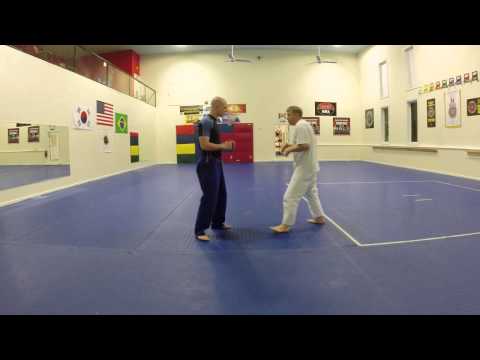
These are two fundamental self defense takedowns from the Clinch
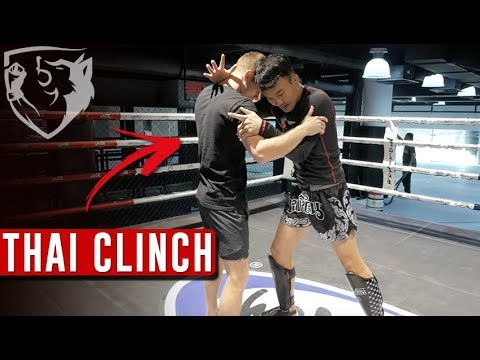
Train with me in Singapore►http://bit.ly/FightTIPSinSingapore I had the honor of taking a private training lesson with P…
The ear-pull technique from clinch is not directly addressed in the provided instructional transcripts. FightTIPS's comprehensive clinch tutorial with Petchboonchu covers dominant hand positioning, hip mechanics, sweeps, body locks, cross-face applications, and plum clinch escapes, but does not demonstrate or reference ear-pulling as a submission or pain-compliance method. IC4Games provides a video-game tutorial on UFC 5 clinch mechanics, which is not applicable to live fighting instruction. RoyMarsh Jiu Jitsu focuses on two fundamental takedowns from clinch—the body fold and leg hook—emphasizing proper clinch establishment, hip connection, posture control, and takedown timing, but does not discuss ear-pull techniques. Across all three sources, the instructors stress clinch fundamentals: maintaining grip integrity, controlling opponent posture through head and hip positioning, reading opponent intent to select appropriate offensive techniques, and transitioning between positions fluidly. The absence of ear-pull instruction in these pedagogically diverse sources (elite clinch fighting, video game mechanics, and judo-influenced takedowns) suggests this specific pain-compliance hold may fall outside these instructors' core technical focus areas or is considered a supplementary rather than foundational clinch technique.
Synthesized from 3 instructors
No instructional courses yet for this technique.
Sign in to suggest a course.
Risk of injury to the person this technique is applied to
Ear pull variant — pain compliance with minimal structural risk
Skill level needed to execute this technique reliably
Whether this technique is allowed under major competition rule sets
Japanese traditional martial arts terminology
Japanese traditional martial arts terminology
Standard katakana transliteration of Western martial arts terminology (外来語) — used in Japanese MMA, boxing, and BJJ communities
Japanese terminology sourced from Japanese traditional martial arts terminology
grip strength, joint isolation ability, positional control
strong forearms and stable base
forearm flexors, core stabilisers, hip muscles for base
Get your arms on the inside and grab on the triceps in the steering wheel position, or use one hand on the back of the head (not neck) for more control. According to fightTIPS's Petchboonchu clinch breakdown, grabbing the back of the head gives you better control than keeping both hands on the triceps.
Use a wider stance (slightly more than hip-width apart), bend your knees to lower your center of gravity, and keep your hips square to your opponent. Turning and twisting gives your opponent a dominant angle and breaks your posture.
Picture a recycling sign: pull down on the head, lift on the arm, and bump with the knee. Timing is crucial—execute the sweep as your opponent throws a knee by stepping in to block and knock them off balance.
Adjust your arm position from the high back to the low back and push on the lat, which makes it much harder for them to escape. Attention to detail in hand placement is very important.
Create a complete line of contact from your shoulder down to your hip rather than just point contacts, which are easy to break. Roy Marsh emphasizes stepping in to connect your whole body and then locking your hands with a gable grip, ball of hook grip, or S grip depending on body type.
The ear pull from the clinch is a pain compliance technique where the attacker grips the opponent's ear and pulls or twists it while maintaining a standing clinch position. The intense pain from the ear cartilage being stretched or twisted can force positional compliance — the opponent moves their head in the direction the ear is pulled to relieve the pain.
Ear manipulation as a pain compliance technique appears in traditional jujutsu, self-defense systems, and military combatives. The technique is generally prohibited in sport competition but remains part of self-defense and law enforcement training curricula.
IBJJF: restricted — Varies — pressure-based controls may be legal but direct pain holds without s…; IJF: banned — Not a recognized submission category in judo; ADCC: legal — Legal; Unified MMA: legal — Legal; FIAS Sport Sambo: restricted — Varies by application; FIAS Combat Sambo: legal — Legal
Danger rating 2/10. Ear pull variant — pain compliance with minimal structural risk
The standard setup chain: Establish Position → Create the Threat → Secure the Hold → Finish.
Standard counters include: Early Recognition — identify the submission attempt early and begin defence immediately / Posture and Base — maintain strong posture and base to prevent submission setups / Grip Fight — deny the attacker their preferred gripping configuration.
Common variants: Standard variation (primary grip configuration and finishing angle); Gi variation (using the gi material for grip assistance and control); No-gi variation (adapted grips for submission grappling without the gi); Transition variation (applied during a positional change or scramble).
Standing guillotine chokes from the clinch are among the most common submissions in MMA competition.
Top errors to watch for: Using pain compliance from clinch without a takedown or transition plan — the pain should create openings for the nex… / Leaning your weight into the opponent without maintaining base — you become vulnerable to counter-throws and trips / Applying trachea pressure in training — throat strikes and pressure are dangerous and should only be simulated lightl… / Using clinch pain compliance as stalling — referees may break the clinch if no technique follows the control.
The From Clinch is also known as Kurinchi kara, Clinch Pressure Hold, Standing Clinch Pressure.