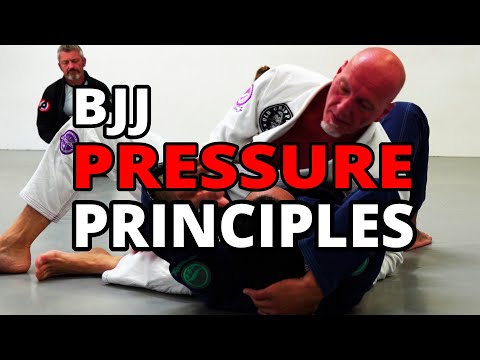
BJJ Pressure Principles
0
Pressure Techniques·The Art of Skill
OLD GRAPPLER SUMMIT IS HAPPENING! An all-inclusive immersion retreat on Halloween weekend 2025. https://oldgrapplersummi…
Translation: pressure techniques
Pressure techniques are pain compliance methods that use focused body weight, bony prominences (knees, elbows, forearms, chin), or grinding pressure to create intense localized pain on sensitive areas of the opponent's body. [1],[2] Common pressure techniques include knee-on-belly with directed sternum pressure, cross-face forearm grinding against the jaw or orbital bone, ear pulls and ear compression, rib pressure from mount or side control, and chin-in-throat pressure to force defensive openings. Pressure techniques are primarily transitional tools — they force reactions (turning, opening, releasing grips) that create opportunities for chokes, joint locks, or positional advances. [3],[4] While technically legal in most rule sets, excessive or gratuitous pressure application may draw referee intervention for unsportsmanlike conduct.
Pressure compliance methods are documented in Japanese feudal police techniques (taiho-jutsu), where pain compliance was used to arrest and subdue suspects without lethal force. [1],[2] Modern law enforcement defensive tactics worldwide incorporate pressure point controls derived from both Asian martial arts and Western control techniques. [3] In competition grappling, cross-face pressure has been a standard wrestling technique for centuries, and BJJ competitors use systematic pressure applications — particularly from knee-on-belly and mount — as part of their positional control methodology. [4]
Pressure techniques use body weight and positional control to create discomfort, exhaust the opponent, and force errors that lead to submissions. [1]
Pressure-based grappling was emphasised in early BJJ by the Gracie family and remains central to the 'crushing' style of top control. [1]
Pressure passing and top control are fundamental strategies in IBJJF competition, where position and control lead to submission opportunities. [1]
No images yet for this technique.
Sign in to suggest an image.
OLD GRAPPLER SUMMIT IS HAPPENING! An all-inclusive immersion retreat on Halloween weekend 2025. https://oldgrapplersummi…
No instructional courses yet for this technique.
Sign in to suggest a course.
Risk of injury to the person this technique is applied to
Pressure techniques use body weight and positioning for discomfort without structural damage
Skill level needed to execute this technique reliably
Whether this technique is allowed under major competition rule sets
Japanese police taiho-jutsu / Koryu Jujutsu
Japanese terminology sourced from Japanese police taiho-jutsu / Koryu Jujutsu
Classical schools: Tenjin Shin'yo-ryu, Takenouchi-ryu, etc.
Standard Japanese martial arts terminology (kanji/hiragana)
Established Japanese martial arts naming convention — native Japanese term (和語/漢語)
Japanese terminology sourced from Japanese police taiho-jutsu / Koryu Jujutsu
grip strength, joint isolation ability, positional control
strong forearms and stable base
forearm flexors, core stabilisers, hip muscles for base
Every move, in any martial art, shares a few universal traits. Mix and match below to pinpoint the right tool — or compare equivalents across styles.
Pain compliance/pressure techniques use targeted pressure on nerve points, joints, and sensitive areas to control without injuring. Used extensively in law enforcement and military restraint. Different from submissions — the goal is compliance, not injury or unconsciousness. (Law enforcement and military manuals in corpus)
You can create pressure even from the bottom by establishing multiple points of connection with your opponent. Get a dominant underhook with a deep bite on the biceps tucked under the hip, maintain heaviness with a grip on the belt, and wedge a knee into the hip bone—creating at least three connection points that make it difficult for your opponent to escape.
The instructor emphasizes interrupting and slowing down your opponent's breathing. By controlling their torso and positioning your weight strategically, you can deplete their energy over time—which is essential when facing younger or more muscular opponents who have more raw strength.
Place your bottom hand under the opponent's sternum and along the spine, which lifts their back slightly off the mat and allows you to pull while pressing down simultaneously. This positioning lets you control their breathing and prevents them from generating space to escape.
Pressure techniques are pain compliance methods that use focused body weight, bony prominences (knees, elbows, forearms, chin), or grinding pressure to create intense localized pain on sensitive areas of the opponent's body. Common pressure techniques include knee-on-belly with directed sternum pressure, cross-face forearm grinding against the jaw or orbital bone, ear pulls and ear compression, rib pressure from mount or side control, and chin-in-throat pressure to force defensive openings.
Pressure compliance methods are documented in Japanese feudal police techniques (taiho-jutsu), where pain compliance was used to arrest and subdue suspects without lethal force. Modern law enforcement defensive tactics worldwide incorporate pressure point controls derived from both Asian martial arts and Western control techniques.
IBJJF: restricted — Varies — pressure-based controls may be legal but direct pain holds without s…; IJF: banned — Not a recognized submission category in judo; ADCC: legal — Legal; Unified MMA: legal — Legal; FIAS Sport Sambo: restricted — Varies by application; FIAS Combat Sambo: legal — Legal
Danger rating 3/10. Pressure techniques use body weight and positioning for discomfort without structural damage
The standard setup chain: Achieve Controlling Position → Isolate the Neck → Set the Grip → Apply Pressure.
Standard counters include: Tuck Chin — protect the neck by lowering the chin to prevent the choke from sinking / Two-on-One Grip Fight — use both hands to strip the choking grip before it locks / Turn Into — rotate toward the choking arm to relieve carotid pressure / Posture Up — straighten the spine and create distance to break the choking angle.
Common variants: Standard variation (primary grip configuration and finishing angle); Gi variation (using the gi material for grip assistance and control); No-gi variation (adapted grips for submission grappling without the gi); Transition variation (applied during a positional change or scramble).
Pressure passing and top control are fundamental strategies in IBJJF competition, where position and control lead to submission opportunities.
Top errors to watch for: Applying pressure without positional control — pressure is only effective when you have a dominant position; otherwis… / Using muscle tension instead of skeletal alignment — proper pressure uses bone structure and gravity; muscular pressu… / Distributing weight evenly — effective pressure concentrates body weight on a small contact area; spread-out weight i… / Not combining pressure with submission threats — pressure should create reactions that open submission opportunities.
The Pressure Techniques is also known as Appaku-waza, Pressure Point Submissions, Pain Pressure Holds.