Gift of Destruction
0
Gooseneck Extension·WisdomandAction·Added by Admin
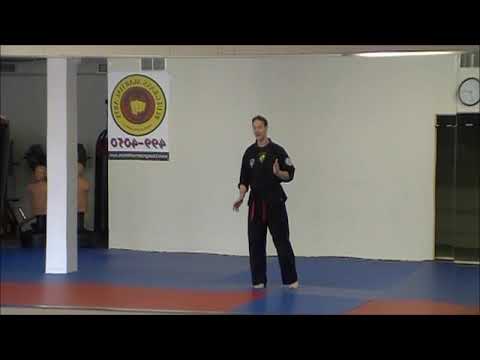
Shot in Mirror Image for Simplicity of Following Video Instruction Bluegrass Martial Arts Kenpo Karate GIFT OF DESTRUCT…
Translation: gooseneck extension
The gooseneck extension wrist lock bends the wrist backward while curling the fingers downward, creating a shape resembling a goose's neck. [1],[2] The attacker grips the back of the opponent's hand and pushes it toward the forearm while simultaneously curling the fingers, compounding the extension pressure on the wrist with flexion pressure on the finger joints. [1],[3] This double-action makes the gooseneck particularly painful and difficult to resist. [1] It is commonly applied from wrist control positions in standing or from top positions in ground grappling. [1],[4]
Gooseneck wrist locks are prevalent in aikido (kote-gaeshi variations), traditional jujutsu, and Chinese chin na as a fundamental joint manipulation technique. [1],[2],[3] The technique has been used in law enforcement and self-defense systems worldwide due to its effectiveness at controlling a standing opponent with minimal force. [1],[4]
Gooseneck extension hyperextends the wrist backward, attacking the joint from the opposite direction of the standard gooseneck. [1]
Wrist extension locks appear in jūjutsu, aikido, and military combatives. [1]
Wrist extension locks are used as surprise submissions at advanced BJJ competition. [1]
No images yet for this technique.
Sign in to suggest an image.
Shot in Mirror Image for Simplicity of Following Video Instruction Bluegrass Martial Arts Kenpo Karate GIFT OF DESTRUCT…
No instructional courses yet for this technique.
Sign in to suggest a course.
Risk of injury to the person this technique is applied to
Wrist lock variant targeting carpal and radioulnar joints through forced deviation or torsion
Skill level needed to execute this technique reliably
Whether this technique is allowed under major competition rule sets
Koryu Jujutsu / Aikido — sori-gaeshi (bending back)
Japanese terminology sourced from Koryu Jujutsu / Aikido — sori-gaeshi (bending back)
Classical schools: Tenjin Shin'yo-ryu, Takenouchi-ryu, etc.
Aikido technique naming conventions
Mixed Japanese-Western terminology — combines traditional Japanese terms with katakana loanwords
Japanese terminology sourced from Koryu Jujutsu / Aikido — sori-gaeshi (bending back)
fine motor control, grip sensitivity, quick hand transitions
dexterous hands with strong fingers
forearm flexors and extensors, intrinsic hand muscles
A gooseneck is a wrist bend created by holding your opponent's forearm in a way that forces their wrist to bend, typically delivered as a finishing strike after securing control of their arm and elbow.
Use a two-on-one grip on their arm, strike their elbow to prevent them from bending it, and pull their arm past your body while keeping control at the elbow—this prevents them from folding their arm and allows you to transition into the wrist lock.
If you allow their elbow to bend as you pull their arm, you risk them pulling that elbow into themselves and escaping the position, so you must strike and control the elbow to keep the arm extended.
The gooseneck extension wrist lock bends the wrist backward while curling the fingers downward, creating a shape resembling a goose's neck. The attacker grips the back of the opponent's hand and pushes it toward the forearm while simultaneously curling the fingers, compounding the extension pressure on the wrist with flexion pressure on the finger joints.
Gooseneck wrist locks are prevalent in aikido (kote-gaeshi variations), traditional jujutsu, and Chinese chin na as a fundamental joint manipulation technique. The technique has been used in law enforcement and self-defense systems worldwide due to its effectiveness at controlling a standing opponent with minimal force.
IBJJF: legal — Legal at all belt levels; IJF: banned — Only elbow joint locks (kansetsu-waza) permitted in judo — all other joint lo…; ADCC: legal — Legal — all submissions legal in ADCC; Unified MMA: legal — Legal submission technique; FIAS Sport Sambo: legal — Legal; FIAS Combat Sambo: legal — Legal
Danger rating 5/10. Wrist lock variant targeting carpal and radioulnar joints through forced deviation or torsion
The standard setup chain: Establish Position → Create the Threat → Secure the Hold → Finish.
Standard counters include: Early Recognition — identify the submission attempt early and begin defence immediately / Posture and Base — maintain strong posture and base to prevent submission setups / Grip Fight — deny the attacker their preferred gripping configuration.
Common variants: Standard wrist lock (kote gaeshi) (two-handed rotational lock on the wrist); Gooseneck wrist lock (flexion lock bending the wrist down toward the forearm); Standing wrist lock (applied during grip fighting or a standing exchange); Ground wrist lock (catching the opponent's posted hand from mount, side cont…).
Wrist extension locks are used as surprise submissions at advanced BJJ competition.
Top errors to watch for: Not positioning the thumb correctly — the thumb must press into the back of the hand between the metacarpal bones; wr… / Using finger grip only — the gooseneck requires the thumb's focused pressure combined with the finger wrap; fingers a… / Attempting against a released grip — the gooseneck works best when the opponent is actively gripping; once they relea… / Not controlling the forearm — the forearm must be stabilised for the wrist extension to be effective.
The Gooseneck Extension is also known as Gūsu Nekku Nobashi, Gooseneck Wrist Lock, Swan Neck Lock, Dorsal Gooseneck.