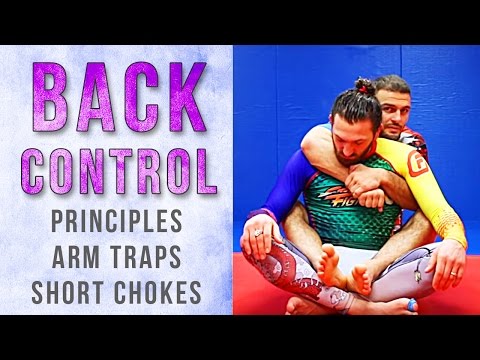
BACK CONTROL: Principles, Arm Traps and Short Chokes!
0
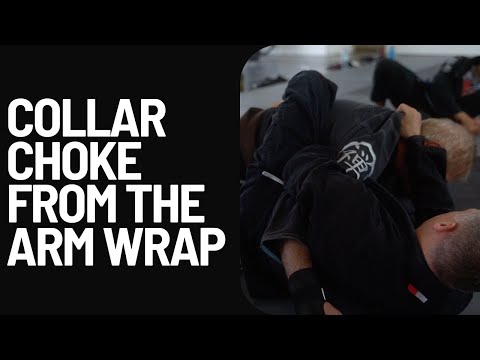
Arm Wrap Choke·Evo BJJ
In this week's video we go in-depth over back control principles like 2 hooks or 1? The harness and the "King & Knight",…
Translation: Arm wrap choke — the attacker wraps the opponent's arm across their own neck, then uses a collar grip to create a choking mechanism where the opponent's trapped arm is part of the choke
The Arm Wrap Choke is a closed guard submission where the attacker wraps the opponent's arm across their own neck and secures a deep collar grip on the far side, creating a choking mechanism that uses the opponent's trapped arm as a wedge against one side of the neck while the collar grip compresses the other side. [1] The technique begins with the guard player controlling one of the opponent's arms (typically by gripping the wrist or sleeve), threading the arm under the opponent's elbow, and wrapping it diagonally across the opponent's throat so that the opponent's own forearm presses against one carotid artery. [1] The attacker then reaches across with the wrapping hand to grip the far collar deep (four fingers inside), and pulls the collar tight while simultaneously squeezing the wrapped arm into the neck. [1] The result is a cross-collar choking mechanism where half the pressure comes from the collar grip and half comes from the opponent's own trapped arm — making the choke uniquely difficult to defend because the opponent cannot strip a grip that is their own arm. [1] Saulo Ribeiro presents this as a foundational closed guard attack in Jiu-Jitsu University, emphasising that the Arm Wrap is not just a standalone choke but the entry point for a chain of attacks: if the opponent defends the choke by pulling their arm free, the attacker transitions immediately to a straight armlock on the freed arm. [1] This choke-to-armlock chain (arm wrap choke → straight armlock) is one of the most reliable attack sequences from closed guard in Brazilian Jiu-Jitsu, as the opponent must choose between defending the choke (exposing the arm) or defending the armlock (exposing the neck). [1],[2]
The Arm Wrap Choke is a classical Brazilian Jiu-Jitsu technique from the Gracie Jiu-Jitsu curriculum, documented by Saulo Ribeiro — a six-time World Champion — in his comprehensive instructional work Jiu-Jitsu University (2008). [1] The technique reflects the Gracie philosophy of closed guard fighting: using the guard position not just as a defensive shell but as an active attacking platform where the bottom player threatens submissions that chain together. [1] The arm wrap principle (using the opponent's own body part as a weapon against them) is a recurring theme in BJJ, appearing also in the arm triangle choke family and various Ezequiel choke variations. [2] The technique's inclusion in Ribeiro's book, which was technically edited by John Danaher, signals its importance in the systematic BJJ curriculum — Ribeiro organises his book by belt level, and the arm wrap appears in the purple belt (Guard) section, indicating it is an intermediate technique that builds on fundamental guard skills. [1]
The Arm Wrap Choke is a high-percentage closed guard attack in gi BJJ because it creates an inescapable dilemma: defending the choke by pulling the arm free directly sets up the straight armlock, and defending the armlock by keeping the arm still allows the choke to tighten. [1] This 'action-reaction' principle makes the arm wrap chain more effective than either the choke or armlock would be in isolation. [1] The technique is most effective against opponents who lean forward in closed guard with one hand on the hip or chest — this extended arm is the ideal wrapping target. [1],[2] At competition level, the arm wrap is commonly used by guard players who prefer the systematic closed guard game over modern open guard styles. [2]
Gracie Jiu-Jitsu closed guard system → Saulo Ribeiro (6x World Champion) → documented in Jiu-Jitsu University (2008, technical editor John Danaher) → standard closed guard technique in BJJ worldwide. [1]
The arm wrap choke and its chain to straight armlock is a staple of closed guard competition at IBJJF events. The choke-to-armlock transition represents one of the most reliable attack sequences from closed guard in gi BJJ competition at all belt levels.
No images yet for this technique.
Sign in to suggest an image.
In this week's video we go in-depth over back control principles like 2 hooks or 1? The harness and the "King & Knight",…
In this video, 2nd-degree black belt Marc Barton teaches the arm wrap choke from closed guard. Marc credits his instruct…
The arm wrap choke is a fundamental submission attack executed from back control or closed guard position, with two distinct setup approaches taught by the instructors. Evo BJJ emphasizes the technique as a progression from back control, beginning with establishing a strong harness grip (over hook with the choking hand, under hook as the supporting arm) while reducing space between attacker and opponent. The submission is executed via a short choke using the radius bone of the wrist to compress the jaw, with the elbow pulled back past the opponent's shoulder. Hand fighting and crisscross foot control are critical preliminary steps to secure the opponent's hands before executing the choke. Jiu Jitsu Brotherhood presents an alternative entry from guard using a double lapel grip, requiring the attacker to break the grip through combined arm and leg pressure, change body angle to approximately 45 degrees, and wrap the opponent's arm tightly. Both instructors agree on the importance of maintaining tension in the collar and using the trapped arm as a lever. Jiu Jitsu Brotherhood notes that thumb placement in the collar facilitates the final compression, while Evo BJJ highlights the radius bone as the primary pressure point. Both emphasize that proper body positioning and angle maintenance are essential to prevent escape and execute the choke effectively.
Synthesized from 2 instructors
No instructional courses yet for this technique.
Sign in to suggest a course.
Risk of injury to the person this technique is applied to
Blood choke with moderate onset speed (5-10 seconds to unconsciousness when fully locked). The unique danger is that the opponent's own arm contributes to the choke, making it difficult to relieve pressure — even if the attacker's grip loosens slightly, the trapped arm maintains partial compression.
Skill level needed to execute this technique reliably
Whether this technique is allowed under major competition rule sets
Jiu-Jitsu University (Ribeiro & Howell, 2008)
description: [1] Ribeiro 2008 Guard section, [2] Danaher 2019
Standard katakana transliteration of Western martial arts terminology (外来語) — used in Japanese MMA, boxing, and BJJ communities
description: [1] Ribeiro 2008 Guard section, [2] Danaher 2019
Requires good grip strength for the collar grip and arm control
Upper body pulling strength for the wrapping motion
Active legs for posture breaking and guard control
Does not require exceptional flexibility
Favours practitioners with longer arms (easier to reach the far collar)
Accessible to all body types with proper technique
The arm wrap choke uses the attacker's arm wrapped around the opponent's neck and secured by threading through their own lapel or arm — creating a tight noose. Various entries from side control, north-south, and back control. (BJJ instructionals)
Open your hand slightly to create slack in the collar, then insert your thumb before re-closing your grip. According to Jiu Jitsu Brotherhood, this is necessary because taking all the slack out of the collar initially makes it difficult to get the thumb in.
Involving your legs to bring your opponent forward makes the choke significantly easier to finish than relying on arm strength alone. Jiu Jitsu Brotherhood notes that without leg engagement, it becomes very difficult to complete the technique.
You want to maintain a 45-degree angle across your opponent rather than putting your back flat on the floor, as this makes it much harder for them to escape the arm wrap.
You want to position your hand high over the opponent's elbow to maintain control. Pulling the hand down too low weakens your grip and reduces your ability to control the position effectively.
The Arm Wrap Choke is a closed guard submission where the attacker wraps the opponent's arm across their own neck and secures a deep collar grip on the far side, creating a choking mechanism that uses the opponent's trapped arm as a wedge against one side of the neck while the collar grip compresses the other side. The technique begins with the guard player controlling one of the opponent's arms (typically by gripping the wrist or sleeve), threading the arm under the opponent's elbow, and wrapping it diagonally across the opponent's throat so that the opponent's own forearm presses against one carotid artery.
The Arm Wrap Choke is a classical Brazilian Jiu-Jitsu technique from the Gracie Jiu-Jitsu curriculum, documented by Saulo Ribeiro — a six-time World Champion — in his comprehensive instructional work Jiu-Jitsu University (2008). The technique reflects the Gracie philosophy of closed guard fighting: using the guard position not just as a defensive shell but as an active attacking platform where the bottom player threatens submissions that chain together.
IBJJF: legal — Legal at all belt levels, gi and no-gi — chokes are the safest submission cat…; IJF: legal — Legal (shime-waza) — strangulation techniques are one of three permitted subm…; ADCC: legal — Legal; Unified MMA: legal — Legal — choke submissions are among the most common finishes in MMA; FIAS Sport Sambo: banned — All chokes prohibited in Sport Sambo; FIAS Combat Sambo: legal — Legal
Danger rating 7/10. Blood choke with moderate onset speed (5-10 seconds to unconsciousness when fully locked). The unique danger is that the opponent's own arm contributes to the choke, making it difficult to relieve pressure — even if the attacker's grip loosens slightly, the trapped arm maintains partial compression.
The standard setup chain: Closed guard → Break opponent's posture (pull them down with legs and grips) → Control one arm (wrist grip, sleeve grip, or overhook) → Thread arm under opponent's elbow → Wrap their arm diagonally across their own throat → Reach across to grip the far collar deep (four fingers inside) → Pull collar tight while squeezing the wrapped arm into the neck → Opponent taps from choke → If opponent pulls arm free → Immediately extend hips for straight armlock on the freed arm.
Standard counters include: Posture up immediately — maintaining upright posture prevents the arm from being wrapped across the neck / Strip the collar grip — use both hands to peel the attacker's fingers out of the collar before the choke is set / Keep elbows tight — do not extend the arms inside closed guard; keeping elbows clamped to the body prevents the arm f… / Stack and pass — driving forward and stacking the attacker compresses their ability to maintain the wrap.
Common variants: Standard arm wrap (right arm wraps opponent's right arm, left hand grips far…); Cross-body arm wrap (wrapping the arm from the opposite side for a different c…); Arm wrap to straight armlock (the primary chain: if the choke is defended, immediately …); Arm wrap to omoplata (if the opponent pulls the arm free and posts wide, transi…); Arm wrap to back take (if the opponent turns to escape, follow them to take the …).
The arm wrap choke and its chain to straight armlock is a staple of closed guard competition at IBJJF events. The choke-to-armlock transition represents one of the most reliable attack sequences from closed guard in gi BJJ competition at all belt levels.
Top errors to watch for: Attempting without breaking posture — if the opponent is upright with good posture, their arm cannot be wrapped acros… / Shallow collar grip — only getting two fingers inside the collar results in a grip that slides off under pressure; fo… / Not controlling the arm throughout — if the wrapped arm slips free before the collar grip is secured, the entire atta… / Forgetting the armlock chain — many practitioners abandon the position if the choke doesn't work immediately; the arm….
The Arm Wrap Choke is also known as Āmu Rappu Chōku, Arm Wrap, Guard Arm Wrap Choke, Wrapped Arm Choke, Arm-Across Collar Choke.