How to Finish North South Choke (And Common Mistakes to Avoid)
0
North-South Choke·Chewjitsu
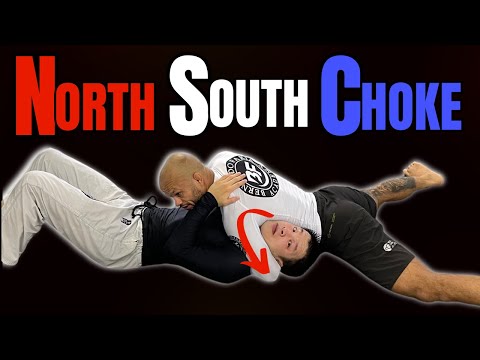
Jeffrey requested some tips on making his North South Choke in BJJ work. Primarily he wanted to figure out to do the No…
上四方絞(Kami-shiho-jime)
TraditionalTranslation: Upper Four-Corner Strangle
The north-south choke is a strangulation applied from the north-south position (kami-shiho-gatame orientation), where the attacker lies chest-to-chest on top of the opponent but facing the opposite direction. [2] The attacker wraps an arm around the opponent's neck, drives the shoulder downward in a 'paper cutter' motion against the wrist, and uses body weight and arm pressure to compress the neck — the exact mechanism (carotid blood choke vs. esophageal airway compression) is taught differently across schools (Marcelo Garcia teaches it as a blood choke; John Danaher emphasises esophageal pressure). [1],[4] The technique requires precise weight distribution — the attacker must drop the hip on the choking side to create the necessary angle and pressure. The north-south choke is effective in both gi and no-gi grappling and is particularly useful as a transition from side control or as a counter when an opponent turns into the attacker. [1] It is classified as a high-percentage submission at black belt level but requires significant body feel and timing to execute correctly.
The north-south choke derives from judo's kami-shiho-gatame (upper four-corner hold) position, which in classical judo is primarily a pin rather than a choke. [2] The choking application from this position was developed in Brazilian Jiu-Jitsu, with Marcelo Garcia being its most famous practitioner — Garcia finished numerous ADCC and World Championship matches with the north-south choke, making it his signature submission alongside the rear naked choke. [4] The technique has become a staple in MMA, used by fighters transitioning from top control. [1]
No images yet for this technique.
Sign in to suggest an image.
Jeffrey requested some tips on making his North South Choke in BJJ work. Primarily he wanted to figure out to do the No…
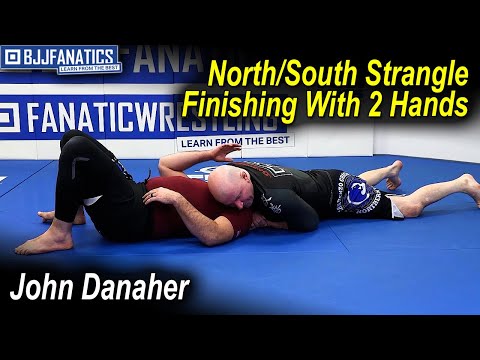
FINISHING the North/South Strangle with 2 HANDS https://bjjfanatics.com John Danaher demonstrates how to finish a North…
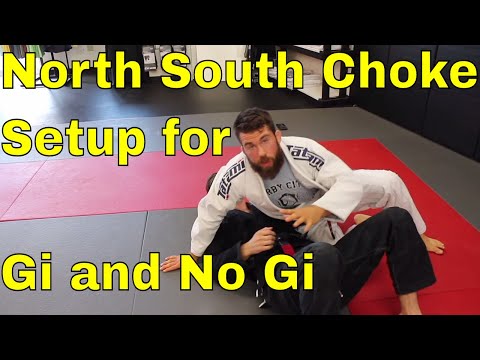
On This lesson today i am showing you guys The North South Choke that i learn from My Professor MARCELO MARCELO, These D…
The north-south choke is a strangle attack where the attacker positions perpendicular to the opponent with the head and upper body across the opponent's torso. All three instructors emphasize that proper neck positioning precedes finishing pressure. John Danaher (BJJ Fanatics) stresses that approximately 90% of the choke comes from the initial strangle arm placement; he instructs practitioners to turn the hip down slightly, touch the outside knee to the mat, walk toward the center line while locking hands, then drive the shoulder downward—not upward—onto the esophagus using body weight rather than arm strength. Chewjitsu recommends entry from reverse kesa katami position, highlighting the critical step of locking the opponent's chin in place by shifting weight sideways to prevent head rotation; he warns against positioning too high on the body and emphasizes that the entire body engages in the finish, including leg drive from planted toes. BIG OSS Jiu-Jitsu Channel prioritizes arm management, cautioning against squeezing before achieving proper neck control and demonstrating how to clear the opponent's defensive arm using hip pressure and body positioning. He recommends testing the choke with one arm before adding the second hand. All instructors agree the technique works in both gi and no-gi contexts, though applications vary slightly. Common errors across their teachings include premature squeezing, insufficient body positioning, and failure to manage the opponent's arms.
Synthesized from 3 instructors
No instructional courses yet for this technique.
Sign in to suggest a course.
Risk of injury to the person this technique is applied to
North-south choke uses chest-on-face pressure combined with arm compression of the carotid
Skill level needed to execute this technique reliably
Whether this technique is allowed under major competition rule sets
Kosen Judo / Japanese BJJ — from Kami-shiho-gatame position
Japanese terminology sourced from Kosen Judo / Japanese BJJ — from Kami-shiho-gatame position
Standard Japanese martial arts terminology (kanji/hiragana)
Established Japanese martial arts naming convention — native Japanese term (和語/漢語)
Japanese terminology sourced from Kosen Judo / Japanese BJJ — from Kami-shiho-gatame position
shoulder and chest pressure, hip sprawl endurance
heavier upper body, broad shoulders
deltoids, pectorals, core, hip extensors
Popularized by Marcelo Garcia, who used it as his signature technique. The choke compresses the carotid from the north-south position using the shoulder and bicep. (Garcia, Advanced Brazilian Jiu-Jitsu Techniques)
You need to first wrap the head with one arm and secure it against your ribs before squeezing. According to BIG OSS Jiu-Jitsu, you should not squeeze until you've locked the opponent's head in place and established proper positioning—squeezing too early prevents you from getting the correct configuration.
John Danaher emphasizes bringing your shoulder down like a paper cutter rather than lifting your hands to your chest. Keep your elbow all the way back underneath you so your shoulder can come down to your hand, then walk toward the center line to complete the strangle.
According to Chewjitsu, locking your opponent's chin in place is very important—if they can turn and face you with their head, you won't create the necessary pressure on the carotid artery. Shift your weight side to side to maintain control of their head position.
John Danaher teaches that you should lock your hands when finishing in competition, as locked hands are much more effective than single-arm techniques.
The north-south choke is a strangulation applied from the north-south position (kami-shiho-gatame orientation), where the attacker lies chest-to-chest on top of the opponent but facing the opposite direction. The attacker wraps an arm around the opponent's neck, drives the shoulder downward in a 'paper cutter' motion against the wrist, and uses body weight and arm pressure to compress the neck — the exact mechanism (carotid blood choke vs.
The north-south choke derives from judo's kami-shiho-gatame (upper four-corner hold) position, which in classical judo is primarily a pin rather than a choke. The choking application from this position was developed in Brazilian Jiu-Jitsu, with Marcelo Garcia being its most famous practitioner — Garcia finished numerous ADCC and World Championship matches with the north-south choke, making it his signature submission alongside the rear naked choke.
IBJJF: legal — Legal at all belt levels, gi and no-gi — chokes are the safest submission cat…; IJF: legal — Legal (shime-waza) — strangulation techniques are one of three permitted subm…; ADCC: legal — Legal; Unified MMA: legal — Legal — choke submissions are among the most common finishes in MMA; FIAS Sport Sambo: banned — All chokes prohibited in Sport Sambo; FIAS Combat Sambo: legal — Legal
Danger rating 8/10. North-south choke uses chest-on-face pressure combined with arm compression of the carotid
The standard setup chain: Achieve Controlling Position → Isolate the Neck → Set the Grip → Apply Pressure.
Standard counters include: Tuck Chin — protect the neck by lowering the chin to prevent the choke from sinking / Two-on-One Grip Fight — use both hands to strip the choking grip before it locks / Turn Into — rotate toward the choking arm to relieve carotid pressure / Posture Up — straighten the spine and create distance to break the choking angle.
Common variants: Standard north-south choke (shoulder drives into the neck from north-south position); Paper-cutter variation (uses the forearm blade across the throat from the north-s…); Transition finish (applied during the walk-around from side control to north…).
Marcelo Garcia used the north-south choke in ADCC and IBJJF competition. Kim Couture and Demian Maia also applied the technique in UFC competition.
Top errors to watch for: Not dropping the hips low enough — the compression comes from hip sprawling; if the hips remain elevated, the armpit … / Wrapping the arm too loosely — the choking arm must be tight around the neck with the elbow close to the body; a loos… / Not gripping the hip or belt with the choking hand — the hand anchor prevents the opponent from pushing the arm away;… / Positioning too far to one side — the chest must be centred on the opponent's chest for the armpit to align with the ….
The North-South Choke is also known as Kami-shiho-jime, Kami-shiho-jime variant, NS Choke, Kimura Choke.