Technique Gogoplata
0
Gogoplata From Closed Guard·Superhero Jiu Jitsu Academy
Superhero Jiu Jitsu Academy 10th Planet Springfield First degree blackbelt Mike Dewitt Jr shows you the gogoplata thro…
Translation: Gogoplata (katakana loanword)
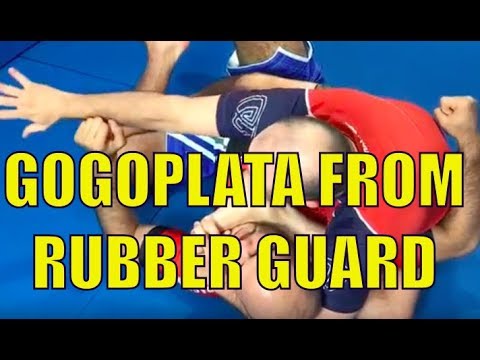
The gogoplata from closed guard is applied by the bottom player who brings one shin across the opponent's throat from inside the guard, then pulls the opponent's head down onto the shin using an overhook or grip behind the head. [1],[2] The shin bone acts as a rigid bar pressing into the trachea and carotid arteries, creating both an air choke and a blood choke simultaneously. [1] The setup typically involves transitioning from rubber guard or a high guard position, threading the foot across the neck while the opponent is postured down. [1],[2]
The gogoplata gained worldwide attention when Nick Diaz submitted Takanori Gomi with it in the PRIDE organization in 2007, though the technique was already known in BJJ circles. [1],[2] The name derives from the Sanskrit word 'gogo' and the Portuguese 'plata,' reflecting its Brazilian Jiu-Jitsu development. [1] The technique requires exceptional flexibility to thread the shin across the opponent's throat from guard and is associated with the rubber guard system popularized by Eddie Bravo. [1],[2]
Requires excellent flexibility and timing; low overall success rate but devastating when secured. The shin-across-throat mechanic creates choking pressure that is nearly impossible to resist [1]
Brought to prominence by Nino Schembri in BJJ and Nick Diaz in MMA. The technique draws from Japanese jujutsu and was adapted to modern guard play by flexible and creative competitors [1]
Rare finish at elite competition levels; most famous for Nick Diaz vs. Takanori Gomi (PRIDE, 2007). Occasionally finished at IBJJF events by flexible competitors [1]
No images yet for this technique.
Sign in to suggest an image.
Superhero Jiu Jitsu Academy 10th Planet Springfield First degree blackbelt Mike Dewitt Jr shows you the gogoplata thro…
🔗 Links: Follow me on Instagram for more jiu-jitsu content: https://www.instagram.com/tarik_bjj/ Discover top-qualit…
Click On The Link To Watch All Bernardo Faria’s Instructional Courses: https://bjjfanatics.com/pages/bernardo-faria-prod…
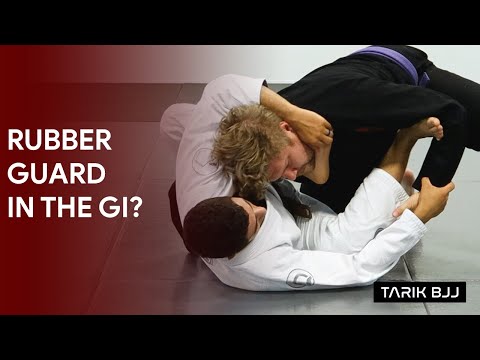
The gogoplata from closed guard begins with breaking the opponent's posture through elbow control and knee compression, as demonstrated by Superhero Jiu Jitsu Academy and Brandon McCaghren (via Bernardo Faria BJJ Fanatics). The technique transitions into rubber guard by establishing an overhook and foot-on-hip position to create distance and angle. From there, the bottom player moves into what instructors call "New York" position—shin across the neck with the opposite hand hugging the knee. The critical execution phase, emphasized uniformly across all three instructors, involves clearing the opponent's head by establishing a forearm frame on the inside of their chest (not the wrist), then sliding the foot underneath the chin using an elbow-drive motion. McCaghren stresses keeping the position "deep" and maintaining proximity to the opponent's head. Once the foot is positioned under the chin, the bottom player clasps their own foot—preferably grabbing the toes from above rather than underneath, which Tarik BJJ and McCaghren both note prevents unnecessary lifting. The final compression comes from straightening the arm to control posture while pressing the toes downward like a gas pedal, creating a neck choke. All three instructors agree that arm isolation remains critical throughout to prevent the opponent from blocking the foot placement, and Tarik BJJ notes the technique often flows naturally when the opponent turns into a threatened omoplata.
Synthesized from 3 instructors
No instructional courses yet for this technique.
Sign in to suggest a course.
Risk of injury to the person this technique is applied to
Shin-on-neck chokes use the shin bone as a pressure bar against the throat
Skill level needed to execute this technique reliably
Whether this technique is allowed under major competition rule sets
Japanese BJJ community; JBJJF competition usage
Official Japanese BJJ federation — competition rules and terminology
Standard katakana transliteration of Western martial arts terminology (外来語) — used in Japanese MMA, boxing, and BJJ communities
Japanese terminology sourced from Japanese BJJ community; JBJJF competition usage
exceptional hip flexibility, long legs
extreme lower body flexibility (rubber guard practitioners)
hip flexors, hamstrings, adductors
Every move, in any martial art, shares a few universal traits. Mix and match below to pinpoint the right tool — or compare equivalents across styles.
Don't lift your foot up and over, as this creates space that allows them to stand up and rip their arm out. Instead, bring your elbow out and force your foot under the chin with a controlled movement, keeping the position tight throughout.
Most people try to simply throw their foot up and grab it without maintaining good body mechanics and positioning. Instead, keep good angles by bringing your knee forward first, which creates proper posture to execute the technique effectively.
Grabbing the head with both hands immediately prevents your opponent from turning away, which is a very common escape that can lead to them giving you an omoplata instead. This head control locks them in place so you can finish the submission.
Control and isolate your opponent's arm on the side where you're bringing your foot up, keeping it away from their body so they can't block the foot from coming to their neck. If you can keep their arm controlled, they lose the ability to defend with both arms.
The gogoplata from closed guard is applied by the bottom player who brings one shin across the opponent's throat from inside the guard, then pulls the opponent's head down onto the shin using an overhook or grip behind the head. The shin bone acts as a rigid bar pressing into the trachea and carotid arteries, creating both an air choke and a blood choke simultaneously.
The gogoplata gained worldwide attention when Nick Diaz submitted Takanori Gomi with it in the PRIDE organization in 2007, though the technique was already known in BJJ circles. The name derives from the Sanskrit word 'gogo' and the Portuguese 'plata,' reflecting its Brazilian Jiu-Jitsu development.
IBJJF: legal — Legal at all belt levels, gi and no-gi — chokes are the safest submission cat…; IJF: legal — Legal (shime-waza) — strangulation techniques are one of three permitted subm…; ADCC: legal — Legal; Unified MMA: legal — Legal — choke submissions are among the most common finishes in MMA; FIAS Sport Sambo: banned — All chokes prohibited in Sport Sambo; FIAS Combat Sambo: legal — Legal
Danger rating 8/10. Shin-on-neck chokes use the shin bone as a pressure bar against the throat
The standard setup chain: Achieve Controlling Position → Isolate the Neck → Set the Grip → Apply Pressure.
Standard counters include: Tuck Chin — protect the neck by lowering the chin to prevent the choke from sinking / Two-on-One Grip Fight — use both hands to strip the choking grip before it locks / Turn Into — rotate toward the choking arm to relieve carotid pressure / Posture Up — straighten the spine and create distance to break the choking angle.
Common variants: Standard gogoplata (shin placed across the throat from rubber guard or high g…); Mounted gogoplata (applied from mount position, shin across the throat); Reverse gogoplata (applied from behind or inverted position).
Rare finish at elite competition levels; most famous for Nick Diaz vs. Takanori Gomi (PRIDE, 2007).
Top errors to watch for: Attempting without the rubber guard foundation — the gogoplata from guard requires mission control proficiency; jumpi… / Not maintaining guard throughout — the guard must stay controlled; opening the guard to place the shin risks a comple… / Forcing the shin into position against a posturing opponent — break posture first with mission control; the shin plac… / Not recognising when flexibility is insufficient — if the shin can't comfortably reach, don't force; use omoplata or ….
The Gogoplata From Closed Guard is also known as Gogopuratta, Guard Gogoplata, Shin Choke from Guard, Kagato-jime.