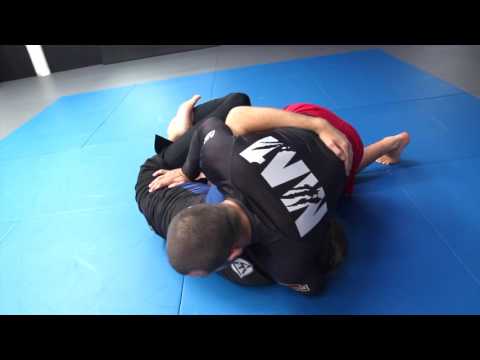
The Japanese Necktie
0
Japanese Necktie·Absolute MMA St Kilda - Melbourne
My No Gi Chokes DVD here: Focusing on the guillotine, arm in guillotine, anaconda, darce, Japanese necktie, North South …
Not yet documented
The Japanese Necktie is a front headlock choke/crank hybrid that combines elements of the D'Arce choke and the front headlock guillotine — the attacker threads the choking arm under the opponent's armpit and around the neck from the front headlock position, using a figure-four or clasp grip to create bilateral compression. [1] The technique creates both a choking/strangling action and a cervical crank simultaneously, making it extremely uncomfortable and difficult to defend. [1],[2]
Developed within the parent martial arts tradition. [1]
Used in relevant competition formats. [1]
No images yet for this technique.
Sign in to suggest an image.
My No Gi Chokes DVD here: Focusing on the guillotine, arm in guillotine, anaconda, darce, Japanese necktie, North South …
This is a nasty choke. A last minute addition to the end of the seminar by request. Nice rash guards too ;) Oh, and c…
No instructional courses yet for this technique.
Sign in to suggest a course.
Risk of injury to the person this technique is applied to
Standard technique-level risk appropriate to the category
Skill level needed to execute this technique reliably
Whether this technique is allowed under major competition rule sets
Jiu-Jitsu University (Saulo Ribeiro, 2008)
Description sources — [1] Martial arts curriculum [2] Competition analysis
Standard katakana transliteration of Western martial arts terminology (外来語) — used in Japanese MMA, boxing, and BJJ communities
Description sources — [1] Martial arts curriculum [2] Competition analysis
technique-specific physical attributes
technique-dependent
Every move, in any martial art, shares a few universal traits. Mix and match below to pinpoint the right tool — or compare equivalents across styles.
The Japanese necktie is a front headlock choke that uses a D'Arce-like arm thread but finishes with a sprawling motion rather than a roll. Named after its association with Japanese fighters in early MMA. Less common than the guillotine but extremely effective when the opponent defends the standard guillotine by pulling their head free. (BJJ technique archives)
The Japanese Necktie works better when you have shorter arms, since the Darce Choke requires long enough arms to reach through for the lock. Instructors at Absolute MMA St Kilda note it's a viable alternative if the standard Darce setup doesn't work for your arm length.
Block your opponent's hip and maintain space—you don't want them to close the gap when they go for the underhook, as this makes the technique harder to complete. Keep their underhook loose by controlling the distance, then secure a chin strap with their head tied against your ribs before driving them back.
Feed your hand through while curling their head and sliding your forearm back to connect your hands together. Keep heavy pressure on that arm, don't let them extend their head or roll to their back, then lift your chest over the top behind the head and scoot your hips lower as you pull.
One effective timing is when your opponent is defending your guillotine by going around the neck instead of under—transition to the Japanese Necktie as an alternative finish from that defensive position.
The Japanese Necktie is a front headlock choke/crank hybrid that combines elements of the D'Arce choke and the front headlock guillotine — the attacker threads the choking arm under the opponent's armpit and around the neck from the front headlock position, using a figure-four or clasp grip to create bilateral compression. The technique creates both a choking/strangling action and a cervical crank simultaneously, making it extremely uncomfortable and difficult to defend.
This technique developed within its parent martial arts tradition and has been refined through competition.
IBJJF: legal — Legal at all belt levels, gi and no-gi — chokes are the safest submission cat…; IJF: legal — Legal (shime-waza) — strangulation techniques are one of three permitted subm…; ADCC: legal — Legal; Unified MMA: legal — Legal — choke submissions are among the most common finishes in MMA; FIAS Sport Sambo: banned — All chokes prohibited in Sport Sambo; FIAS Combat Sambo: legal — Legal
Danger rating 4/10. Moderate — standard technique-level risk appropriate to the category
The standard setup chain: Establish Entry Position → Set Up the Technique → Execute → Follow Through → Consolidate or Transition.
Standard counters include: Defensive techniques against this specific technique / Prevention of the entry position.
Common variants: Standard execution (the fundamental version); Modified variation (adapted for specific scenarios).
Used in relevant competition formats.
Top errors to watch for: Poor entry positioning / Incomplete execution / Not chaining with follow-up techniques / Attempting without proper setup.
The Japanese Necktie is also known as Japanese Necktie Choke, Front Headlock Necktie.
