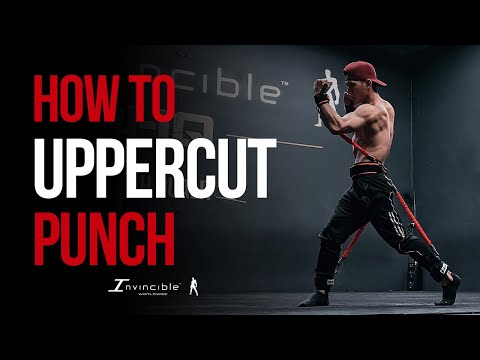
The lead uppercut is thrown with the front hand in a rising arc, typically used at close range to attack the chin from below. [1] Dempsey described the lead uppercut as a 'trigger punch' — fast enough to surprise opponents but lacking the full power of the rear uppercut due to the shorter kinetic chain. [1] The lead uppercut was historically used as a counter to opponents who dip their heads forward, particularly against aggressive fighters who lean in while throwing hooks. [2] Haislet noted that the lead uppercut is most effective when preceded by a jab to bring the opponent's guard high, opening the centreline for the rising blow. [2]
Country of origin· shown in random order
🇬🇧EnglandBoxing
🇬🇷GreeceBoxing
🇹🇭ThailandMuay Thai
🇧🇷BrazilMMA
🇺🇸USAMMA, Kickboxing
🇯🇵JapanKickboxing
🇨🇳ChinaSanda
Effectiveness
The lead uppercut attacks vertically beneath the opponent's guard, targeting the chin from below — an angle that is particularly effective at snapping the head back and producing knockouts. [1] It is most effective at close range against opponents who lean forward or drop their chin behind a high guard. [1]
Lineage
The uppercut was developed within prize-fighting and refined in gloved boxing, with Gentleman Jim Corbett among the early champions to use it systematically. [1] Mike Tyson later became the most famous practitioner of the lead uppercut, integrating it into his peek-a-boo style under trainer Cus D'Amato. [2]
Competition Record
Mike Tyson's lead uppercut was central to many of his 44 career knockouts, including his devastating first-round knockout of Michael Spinks (1988) where a short uppercut preceded the finishing combination. [1]
Images
No images yet for this technique.
Sign in to suggest an image.
Biomechanical Mechanism
Primary Action — Ballistic extension of the arm — kinetic chain transfers force from the ground through the hips to the fist
leg drive, upward hip thrust, tight vertical alignment
Favours
shorter reach fighters effective at inside range
Key muscles
quadriceps, glutes, deltoids, biceps, core
Frequently Asked Questions
Why is mechanics more important than just muscle when throwing an uppercut?
Unlike other punches that work across the body, the uppercut works against gravity, so pure muscle without proper mechanics isn't as effective. Invincible Worldwide emphasizes that joint theory and mechanics—similar to how baseball pitchers and quarterbacks throw—are essential to generate real power in an uppercut.
What's the correct path my fist should follow in a lead uppercut?
Your fist should travel in one straight line from your stomach to your nose or chin—no circular motions. Invincible Worldwide stresses thinking 'stomach to nose' as a single straight line path for the punch.
How should I finish a lead uppercut to maximize power?
When finishing the uppercut, square your hips and shoulders while driving through the punch, almost as if you're taking your shoulder away from your opponent. Invincible Worldwide notes that proper hip and shoulder rotation, combined with coverage, is where the real power comes from—not arm muscles alone.
Where should the power in an uppercut come from?
Power must come from the ground up through your lower body first—starting with your toes, then hips, then shoulders. Invincible Worldwide emphasizes that every punch, including the uppercut, should never rely on upper body muscle alone.
How does the Lead Uppercut work?
An uppercut thrown with the lead hand, dipping the body slightly and driving the fist upward with rotation from the hips and legs.
Where does the Lead Uppercut come from?
The lead uppercut is thrown with the front hand in a rising arc, typically used at close range to attack the chin from below. Dempsey described the lead uppercut as a 'trigger punch' — fast enough to surprise opponents but lacking the full power of the rear uppercut due to the shorter kinetic chain.
Is the Lead Uppercut legal in competition?
Unified MMA: legal — Legal striking technique; WBC/Boxing: legal — Legal — punches are the core technique of boxing; WKF: legal — Legal, jodan/chudan punch scores 1 point (yuko) — controlled contact required; Kyokushin: restricted — Body punches legal at full power, head punches banned; WT: restricted — Punches to trunk only (1 point), punches to head banned; ITF: legal — Legal — hand techniques to head and body both permitted; WAKO: legal — Legal in Full Contact and Low Kick formats; K: legal — 1/GLORY — Legal — full power punches to head and body; IFMA: legal — Legal
How dangerous is the Lead Uppercut?
Danger rating 6/10. High — hooks/uppercuts; generate rotational force, high KO rate (Walilko et al. 2005)
How do I set up the Lead Uppercut?
The standard setup chain: Assume Fighting Stance → Generate Power → Execute Strike → Recover to Guard.
How do I defend against the Lead Uppercut?
Standard counters include: Block — absorb the strike with a protective guard position / Evasion — move the target out of the strike's path / Counter-Attack — time an offensive response during the recovery phase of the strike.
What are the variants of the Lead Uppercut?
Common variants: Standard uppercut (rising punch from below targeting the chin); Short uppercut (compact version for clinch range); Body uppercut (targeting the solar plexus with the rising punch); Lead uppercut (using the lead hand for a faster, less-telegraphed rising…).
How effective is the Lead Uppercut in competition?
Mike Tyson's lead uppercut was central to many of his 44 career knockouts, including his devastating first-round knockout of Michael Spinks (1988) where a short uppercut preceded the finishing combination.
What are common mistakes when doing the Lead Uppercut?
Top errors to watch for: Telegraphing by dipping the shoulder excessively or bending at the waist before throwing / Leaning back to generate an arc instead of driving straight up from the legs / Throwing from too far away — the lead uppercut has even less range than the rear / Dropping the rear guard hand while throwing — the chin is exposed from the rear side.
What are other names for the Lead Uppercut?
The Lead Uppercut is also known as Rīdo Appā, Left Uppercut, Lead Age Tsuki, Jab Uppercut.