How to chop and basics of a ring fight
0
Standard Chop·iiCrazyy
https://store.playstation.com/#!/tid=CUSA00572_00
Translation: standard chop
The standard chop represents the fundamental edge-of-hand strike delivered in a downward chopping motion. [1] Fairbairn codified this technique in his 1942 manual Get Tough!, where he recommended the 'edge of hand blow' as one of the most reliable strikes for close-quarters combat, noting that it could be delivered with devastating force to the neck, temple, and bridge of the nose. [2] In karate, the chopping motion is fundamental to several uchi techniques and appears in numerous kata. [3]
Standard chop strike. [1]
From karate. [1]
Used in competition. [1]
No images yet for this technique.
Sign in to suggest an image.
https://store.playstation.com/#!/tid=CUSA00572_00
No instructional courses yet for this technique.
Sign in to suggest a course.
Risk of injury to the person this technique is applied to
Open hand chopping strike; less force than closed fist
Skill level needed to execute this technique reliably
Whether this technique is allowed under major competition rule sets
Karate-Do Kyohan: The Master Text (Gichin Funakoshi, 1935)
Alias sources — [1] Karate-Do Kyohan (Funakoshi, 1935) [2] Dynamic Karate (Nakayama, 1966) [3] Best Karate Vol. 3 (Nakayama, 1978)
History sources — [1] The Art of Striking (Blauer, 2004) [2] Get Tough! (Fairbairn, 1942) [3] Karate-Do Kyohan (Funakoshi, 1935)
Standard katakana transliteration of Western martial arts terminology (外来語) — used in Japanese MMA, boxing, and BJJ communities
Alias sources — [1] Karate-Do Kyohan (Funakoshi, 1935) [2] Dynamic Karate (Nakayama, 1966) [3] Best Karate Vol. 3 (Nakayama, 1978)
History sources — [1] The Art of Striking (Blauer, 2004) [2] Get Tough! (Fairbairn, 1942) [3] Karate-Do Kyohan (Funakoshi, 1935)
speed, power generation through kinetic chain, striking surface conditioning
athletic build with fast-twitch muscle fibres
varies by strike — hip rotators, shoulders, core
Every move, in any martial art, shares a few universal traits. Mix and match below to pinpoint the right tool — or compare equivalents across styles.
A lagon is performed by holding L2 and repeatedly spamming X. This defensive technique prevents your opponent from catching your lagon if they try to punch you.
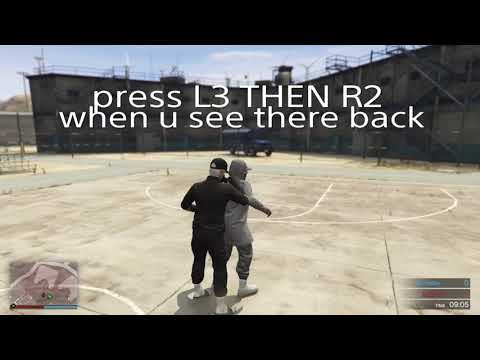
Press R2 and L3 together to execute a chop. You don't need to perform this quickly; you can take your time with the inputs.
The fundamental chopping strike bringing the edge of the open hand down in a forceful arc onto the opponent's neck, collarbone, or shoulder.
The standard chop represents the fundamental edge-of-hand strike delivered in a downward chopping motion. Fairbairn codified this technique in his 1942 manual Get Tough!
Unified MMA: legal — Legal (palm strikes, slaps permitted); WBC/Boxing: banned — Only closed-fist punches permitted; WKF: restricted — Varies by technique — some open-hand strikes legal in kata, generally restric…; Kyokushin: banned — Only closed-fist strikes to body permitted; WT: banned — Prohibited; ITF: restricted — Some knife hand techniques legal; WAKO: banned — Closed fist only; K: banned — 1/GLORY — Closed fist only; IFMA: legal — Legal — palm strikes permitted in Muay Thai
Danger rating 4/10. Moderate — open hand chopping strike; less force than closed fist
The standard setup chain: Assume Fighting Stance → Generate Power → Execute Strike → Recover to Guard.
Standard counters include: Block — absorb the strike with a protective guard position / Evasion — move the target out of the strike's path / Counter-Attack — time an offensive response during the recovery phase of the strike.
Common variants: Standard variation (primary execution of the strike from the most common stance); Power variation (modified mechanics for maximum force generation); Speed variation (minimised telegraph for a faster, harder-to-read attack); Counter variation (timed to exploit the opponent's offensive commitment).
Used in competition.
Top errors to watch for: Spreading the fingers during the chop, weakening the hand structure / Hitting with the fingertips instead of the knife edge — causes finger injuries / Over-committing and swinging past the target, pulling the body off balance / Not conditioning the striking edge of the hand — practise on the makiwara or heavy bag to toughen the surface.
The Standard Chop is also known as Sutandādo Choppu, Shuto Uchi, Knife Hand, Karate Chop.