Jumping Knees: Massive KO or Instant Takedown?
0
Standard Distance Knee·Mitt Master Matt·Added by Admin
Check out my Muay Thai courses here: https://www.mittmaster.com/collections/muay-thai This video breaks down how and wh…
Translation: standard distance knee
The standard distance knee is the basic execution of a knee strike thrown from outside clinch range, typically involving a forward step or skip to close the gap before driving the knee upward. [1] Delp describes this as a technique that bridges the gap between kicking range and clinch range, allowing a fighter to strike with the knee without committing to a full clinch engagement. [1] The technique became particularly valued in MMA, where fighters adapted the Thai distance knee to score from ranges where the clinch might be broken by the referee. [2]
Standard distance knee. [1]
From Muay Thai. [1]
Used in competition. [1]
No images yet for this technique.
Sign in to suggest an image.
Check out my Muay Thai courses here: https://www.mittmaster.com/collections/muay-thai This video breaks down how and wh…
No instructional courses yet for this technique.
Sign in to suggest a course.
Risk of injury to the person this technique is applied to
Muay Thai khao trong; direct upward thrust to body/head
Skill level needed to execute this technique reliably
Whether this technique is allowed under major competition rule sets
Muay Thai: The Art of Fighting (Yod Ruerngsa, Khun Kao Charuad & James Cartmell, 2002)
Alias sources — [1] Muay Thai Unleashed (Delp, 2006) [2] Muay Thai: The Art of Fighting (Kraitus & Kraitus, 1988) [3] WBC Muay Thai Rules (2014)
History sources — [1] Muay Thai Unleashed (Delp, 2006) [2] Ultimate MMA Conditioning (Jamieson, 2009)
Standard katakana transliteration of Western martial arts terminology (外来語) — used in Japanese MMA, boxing, and BJJ communities
Alias sources — [1] Muay Thai Unleashed (Delp, 2006) [2] Muay Thai: The Art of Fighting (Kraitus & Kraitus, 1988) [3] WBC Muay Thai Rules (2014)
History sources — [1] Muay Thai Unleashed (Delp, 2006) [2] Ultimate MMA Conditioning (Jamieson, 2009)
hip flexion power, clinch control ability, close-range comfort
long thigh for greater leverage, strong hip flexors
hip flexors, quadriceps, core, grip (for clinch)
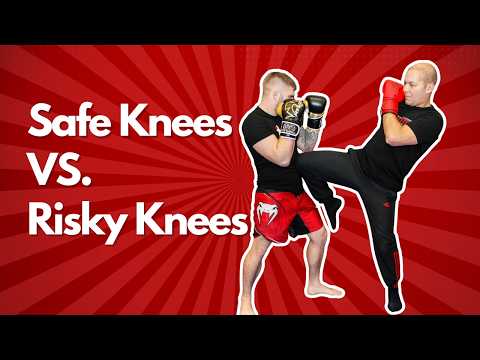
According to Mitt Master Matt, countering punches with knees at open distance is risky and has a high margin for error. He prefers to only throw a knee when you can control your opponent's hands first—either by stuffing their hands or being in close clinch range—rather than attempting to intercept at distance.
Mitt Master Matt emphasizes that your guard must be tight, the knee must be dead straight, and your hips must be driven into the knee. You should also come up on the form of your foot and lean back on your tippy toes to use the full length from your hip bone to your knee against your opponent's technique.
Mitt Master Matt notes that the intercepting knee works particularly well against shooting takedowns and when your opponent is rebounding off the cage, as these situations provide clear forward momentum to intercept. He considers these safer applications than countering punches at open distance.
A straight knee strike thrown from mid-range by stepping or lunging forward and driving the rear knee upward into the opponent's midsection without establishing a clinch.
The standard distance knee is the basic execution of a knee strike thrown from outside clinch range, typically involving a forward step or skip to close the gap before driving the knee upward. Delp describes this as a technique that bridges the gap between kicking range and clinch range, allowing a fighter to strike with the knee without committing to a full clinch engagement.
Unified MMA: restricted — Knees to standing opponent legal, knees to head of grounded opponent banned; WBC/Boxing: banned — All knee strikes prohibited; WKF: banned — Prohibited in sport karate; Kyokushin: legal — Legal to body; WT: banned — Prohibited; ITF: banned — Prohibited; WAKO: banned — Prohibited in most formats; K: restricted — 1/GLORY — One clinch knee allowed before referee break; IFMA: legal — Legal — knees are a core Muay Thai weapon, clinch knees highly scored
Danger rating 7/10. Very High — Muay Thai khao trong; direct upward thrust to body/head
The standard setup chain: Clinch or Frame → Pull Opponent In → Drive the Knee.
Standard counters include: Hip Check — push the opponent's hips away to create distance and kill the knee angle / Clinch Control — control the opponent's head and posture to prevent knee generation / Step Back — create distance to escape the knee's effective range.
Common variants: Straight knee (driving the knee straight upward into the body or head); Curved knee (round knee) (swinging the knee from the side in a circular path); Flying knee (leaping forward and driving the knee at the apex of the jump); Clinch knee (pulling the opponent into the knee from Muay Thai plum po…).
Used in competition.
Top errors to watch for: Separating the step and knee into two distinct actions, which kills the forward momentum / Not reaching for the opponent with the hands — they step away and the knee falls short / Landing the step too heavily, which slows the transition from step to knee drive / Driving the knee at body height when the opponent is upright — aim for the solar plexus or higher.
The Standard Distance Knee is also known as Sutandādo Disutansu Nī, Standard Long Knee, Standard Range Knee, Khao Trong Yao.