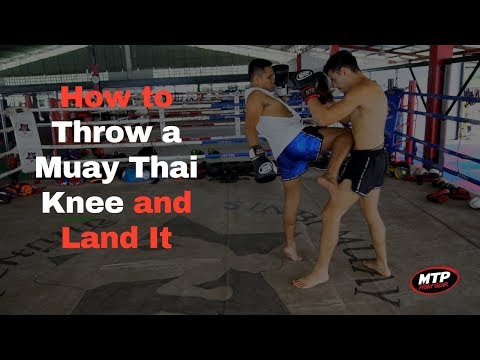
How to Land the Step Forward Knee - Learn to cover Distance
0
Distance Knee·Muay Thai PROS
Learn how to cover distance against your opponent and land your knees. In this video, Dee breaks down the proper footwor…
Translation: distance knee
The distance knee subfamily encompasses knee strikes delivered from outside the clinch, where the fighter must close distance to land the knee. [1] Delp documents the distance knee as a technique that evolved from the standard clinch knee as Muay Thai fighters sought to use knee strikes without first establishing a clinch grip, particularly effective as a counter-offensive weapon against advancing opponents. [1] The distance knee gained importance in international kickboxing and MMA, where the clinch is often broken more quickly than in pure Muay Thai competition. [2]
The distance knee is thrown from range without clinch engagement. [1]
From Muay Thai's ranged knee techniques. [1]
Used in Muay Thai and MMA. [1]
No images yet for this technique.
Sign in to suggest an image.
Learn how to cover distance against your opponent and land your knees. In this video, Dee breaks down the proper footwor…
No instructional courses yet for this technique.
Sign in to suggest a course.
Risk of injury to the person this technique is applied to
Muay Thai khao trong; direct upward thrust to body/head
Skill level needed to execute this technique reliably
Whether this technique is allowed under major competition rule sets
Muay Thai: The Art of Fighting (Yod Ruerngsa, Khun Kao Charuad & James Cartmell, 2002)
Alias sources — [1] Muay Thai: The Art of Fighting (Kraitus & Kraitus, 1988) [2] Muay Thai Unleashed (Delp, 2006) [3] WBC Muay Thai Rules (2014)
History sources — [1] Muay Thai Unleashed (Delp, 2006) [2] Muay Thai: The Art of Fighting (Kraitus & Rennehan, 2002)
Standard katakana transliteration of Western martial arts terminology (外来語) — used in Japanese MMA, boxing, and BJJ communities
Alias sources — [1] Muay Thai: The Art of Fighting (Kraitus & Kraitus, 1988) [2] Muay Thai Unleashed (Delp, 2006) [3] WBC Muay Thai Rules (2014)
History sources — [1] Muay Thai Unleashed (Delp, 2006) [2] Muay Thai: The Art of Fighting (Kraitus & Rennehan, 2002)
hip flexion power, clinch control ability, close-range comfort
long thigh for greater leverage, strong hip flexors
hip flexors, quadriceps, core, grip (for clinch)
Every move, in any martial art, shares a few universal traits. Mix and match below to pinpoint the right tool — or compare equivalents across styles.
You have to make sure that you're forward when attempting the technique, according to Muay Thai PROS.
A straight knee strike delivered from outside clinch range, stepping or lunging forward to close the distance and drive the knee into the target.
The distance knee subfamily encompasses knee strikes delivered from outside the clinch, where the fighter must close distance to land the knee. Delp documents the distance knee as a technique that evolved from the standard clinch knee as Muay Thai fighters sought to use knee strikes without first establishing a clinch grip, particularly effective as a counter-offensive weapon against advancing opponents.
Unified MMA: restricted — Knees to standing opponent legal, knees to head of grounded opponent banned; WBC/Boxing: banned — All knee strikes prohibited; WKF: banned — Prohibited in sport karate; Kyokushin: legal — Legal to body; WT: banned — Prohibited; ITF: banned — Prohibited; WAKO: banned — Prohibited in most formats; K: restricted — 1/GLORY — One clinch knee allowed before referee break; IFMA: legal — Legal — knees are a core Muay Thai weapon, clinch knees highly scored
Danger rating 7/10. Very High — Muay Thai khao trong; direct upward thrust to body/head
The standard setup chain: Clinch or Frame → Pull Opponent In → Drive the Knee.
Standard counters include: Hip Check — push the opponent's hips away to create distance and kill the knee angle / Clinch Control — control the opponent's head and posture to prevent knee generation / Step Back — create distance to escape the knee's effective range.
Common variants: Straight knee (driving the knee straight upward into the body or head); Curved knee (round knee) (swinging the knee from the side in a circular path); Flying knee (leaping forward and driving the knee at the apex of the jump); Clinch knee (pulling the opponent into the knee from Muay Thai plum po…).
Used in Muay Thai and MMA.
Top errors to watch for: Stepping too far and over-committing — the distance knee should close the gap efficiently, not lunge / Not driving the knee upward through the target — the forward step is the delivery system, the knee is the weapon / Dropping the guard during the forward step / Throwing the distance knee from too far away and falling short.
The Distance Knee is also known as Disutansu Nī, Long Knee, Range Knee, Stepping Knee.