Powerful Ground N Pound From The Knee Cut Position | Kneebars For MMA
0
Ground Knee·King Kneebar
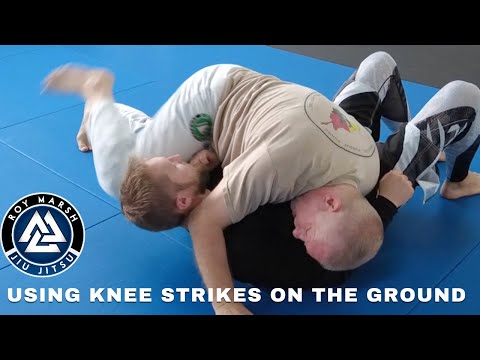
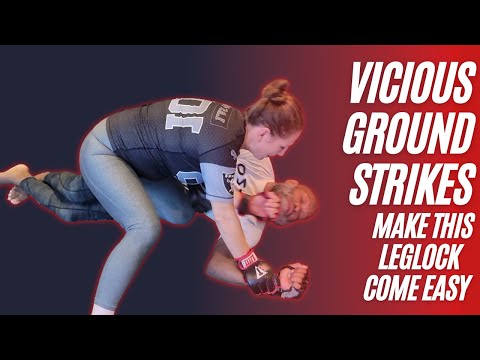
The knee cut is a great position for passing, but once you discover how powerful the ground-n-pound can be, you may choo…
Translation: ground knee
Ground knee strikes are techniques delivered to a downed or grounded opponent using the knee, with historical roots in multiple fighting systems. [1] In ancient Greek pankration, ground striking including knee strikes was permitted and depicted in pottery and sculpture. [2] In Muay Boran, ground knee strikes were part of the battlefield repertoire, used when an opponent had been taken down. [3] Modern MMA revived ground knee techniques within specific rulesets, though many organisations restrict or prohibit knees to the head of a grounded opponent. [1]
Ground knees are delivered from top position on the ground, targeting the body and head of a downed opponent. [1]
Ground knees are used in MMA ground-and-pound. [1]
Ground knees are legal in MMA (except to a grounded opponent's head in some rulesets). [1]
No images yet for this technique.
Sign in to suggest an image.
The knee cut is a great position for passing, but once you discover how powerful the ground-n-pound can be, you may choo…
This is from a class I taught on using strikes on the ground. Here, we covered the use of knees but also some important …
No instructional courses yet for this technique.
Sign in to suggest a course.
Risk of injury to the person this technique is applied to
Knees from ground positions; legal in MMA ground-and-pound
Skill level needed to execute this technique reliably
Whether this technique is allowed under major competition rule sets
Muay Thai: The Art of Fighting (Yod Ruerngsa, Khun Kao Charuad & James Cartmell, 2002)
Alias sources — [1] MMA Instruction Manual (UFC, 2008) [2] MMA Instruction Manual (UFC, 2008)
History sources — [1] Ultimate MMA Conditioning (Jamieson, 2009) [2] Combat Sports in the Ancient World (Poliakoff, 1987) [3] Muay Boran: The Ancient Art of Muay Thai (Rebac, 2008)
Standard katakana transliteration of Western martial arts terminology (外来語) — used in Japanese MMA, boxing, and BJJ communities
Alias sources — [1] MMA Instruction Manual (UFC, 2008) [2] MMA Instruction Manual (UFC, 2008)
History sources — [1] Ultimate MMA Conditioning (Jamieson, 2009) [2] Combat Sports in the Ancient World (Poliakoff, 1987) [3] Muay Boran: The Ancient Art of Muay Thai (Rebac, 2008)
hip flexion power, clinch control ability, close-range comfort
long thigh for greater leverage, strong hip flexors
hip flexors, quadriceps, core, grip (for clinch)
Every move, in any martial art, shares a few universal traits. Mix and match below to pinpoint the right tool — or compare equivalents across styles.
Ground knees are strikes delivered with the knee while on the ground — from mount, side control, or north-south. Legal in MMA but prohibited in most traditional martial arts competition. In MMA, ground knees to the body from mount are a common finishing tool. (Unified Rules of MMA; MMA training manuals)
Keep your chest along the opponent's shoulders rather than on their chest, stay on your toes, and maintain connection to prevent them from escaping into guard or away. Your leg should kick back and come straight forward, with an alternative target if they block the initial strike.
In jiu-jitsu you're aiming to submit your opponent, but in self-defense the approach is much more conservative—you're focused on not losing and not taking unnecessary chances, rather than pursuing risky submissions.
Position your knee perpendicular to your opponent with the knee in their armpit and leg flared slightly for stability. From here, get on your toes, drive your shoulder into their chin or neck, and drop into a knee cut while maintaining control of their upper body and wrists to set up effective striking.
Yes—ask if they want to continue or stop and give them a chance to tap out, as most reasonable people will choose to disengage rather than escalate. However, don't automatically release control if someone verbally gives up, as they may be attempting to escape and counter-attack.
Knee strikes delivered to a grounded opponent or while in a ground position, commonly used in ground-and-pound situations from top control.
Ground knee strikes are techniques delivered to a downed or grounded opponent using the knee, with historical roots in multiple fighting systems. In ancient Greek pankration, ground striking including knee strikes was permitted and depicted in pottery and sculpture.
Unified MMA: restricted — Knees to standing opponent legal, knees to head of grounded opponent banned; WBC/Boxing: banned — All knee strikes prohibited; WKF: banned — Prohibited in sport karate; Kyokushin: legal — Legal to body; WT: banned — Prohibited; ITF: banned — Prohibited; WAKO: banned — Prohibited in most formats; K: restricted — 1/GLORY — One clinch knee allowed before referee break; IFMA: legal — Legal — knees are a core Muay Thai weapon, clinch knees highly scored
Danger rating 6/10. High — knees from ground positions; legal in MMA ground-and-pound
The standard setup chain: Clinch or Frame → Pull Opponent In → Drive the Knee.
Standard counters include: Hip Check — push the opponent's hips away to create distance and kill the knee angle / Clinch Control — control the opponent's head and posture to prevent knee generation / Step Back — create distance to escape the knee's effective range.
Common variants: Straight knee (driving the knee straight upward into the body or head); Curved knee (round knee) (swinging the knee from the side in a circular path); Flying knee (leaping forward and driving the knee at the apex of the jump); Clinch knee (pulling the opponent into the knee from Muay Thai plum po…).
Ground knees are legal in MMA (except to a grounded opponent's head in some rulesets).
Top errors to watch for: Kneeing a downed opponent's head in MMA — this is a foul under the Unified Rules and results in disqualification / Losing top position while driving the knee — maintain base and balance throughout / Not controlling the opponent's arms before kneeing — they block the knee and you waste energy / Bouncing the knee off the target instead of driving through with hip pressure.
The Ground Knee is also known as Guraundo Nī, Ground-And-Pound Knee, Kneeling Knee Strike.