How To Do Groin Kick - Beginner Kicking
0
Phantom Groin Kick·MARTiALYOU
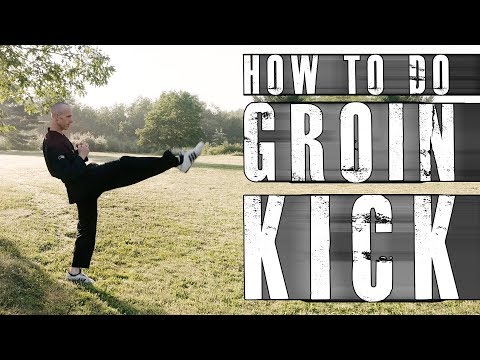
Learn to perform a basic groin kick in this tutorial designed to break down the technique for beginners. This is MARTi…
Translation: Phantom groin kick — 'phantom' refers to the ghost-like feint: the kick appears to target the groin but redirects mid-flight to a different target
The Phantom Groin Kick is a deceptive front kick that deliberately mimics a groin strike during its initial trajectory, triggering the opponent's involuntary hands-down protective reflex, at which point the kicker redirects the kick upward to the now-exposed midsection or face. [1] The technique exploits one of the most powerful involuntary reflexes in human neurology: the protective response to perceived groin attacks. [1] When a person perceives an incoming strike to the groin, the hands instinctively drop to protect the genitals — this reflex is so deeply hardwired that even experienced fighters cannot fully suppress it, creating a guaranteed window of vulnerability at the head and body level. [1] The mechanical execution involves chambering and initiating the kick identically to a standard groin kick (upward trajectory from below), then at approximately 60-70% of the kick's extension — the moment the opponent's hands begin to drop — the kicker redirects the trajectory upward by extending the hip flexion and adjusting the knee angle, sending the foot to the solar plexus, floating ribs, or chin instead of the groin. [1] The Phantom Groin Kick shares its tactical principle with the Question Mark Kick (which feints low and arcs to the head in a roundhouse trajectory) but operates on a straight front-kick line rather than a circular one. [1] Marc De Bremaeker catalogued this as one of the 89 fundamental martial arts kicks, noting that the technique is effective because 'no man on earth is able to keep his cool with something on a direct trajectory to his groin.' [1]
Deceptive kicks that exploit defensive reflexes have been part of martial arts for centuries — the principle of attacking where the opponent is NOT defending is universal across fighting systems. [1] The specific cataloguing of the Phantom Groin Kick as a named technique was done by Marc De Bremaeker and Roy Faige in Essential Book of Martial Arts Kicks (2010), where it is presented as a cross-style technique applicable to any kicking art. [1] The tactical principle (feinting low to attack high) appears in Bruce Lee's Jeet Kune Do writings as 'Progressive Indirect Attack' — using a feint on one line to open the real attack on another. [2] The groin-specific version is particularly effective because the protective reflex it exploits is involuntary and neurologically hardwired, making it functional even against experienced fighters who intellectually know the feint is coming. [1]
The Phantom Groin Kick's effectiveness is rooted in human neurology rather than martial skill — the involuntary groin-protective reflex is present in virtually all humans regardless of training level, meaning the technique works against beginners and experts alike. [1] Its tactical value extends beyond the single kick: once an opponent has been caught by the phantom, they become uncertain about ALL low-trajectory kicks for the rest of the fight, degrading their defensive decision-making and creating openings for techniques that would otherwise be well-defended. [1] The technique is most effective in its first use within a fight, when the opponent has no prior experience of the redirect from this specific fighter. [1]
The groin-feint-to-body/head concept is used regularly in professional kickboxing and MMA, though it is rarely called 'Phantom Groin Kick' in commentary. The Question Mark Kick (which uses a similar low-to-high feint on a roundhouse trajectory) has been used for numerous UFC knockouts, demonstrating the viability of the low-feint high-strike principle.
No images yet for this technique.
Sign in to suggest an image.
Learn to perform a basic groin kick in this tutorial designed to break down the technique for beginners. This is MARTi…
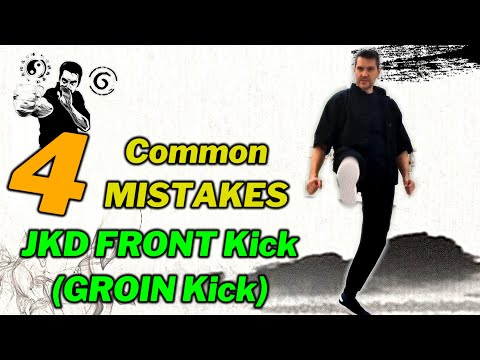
Mistakes that are often done by people when doing or training the JKD Frontkick / Groin Kick Support us: PayPal: t.t.mar…
The phantom groin kick, or front kick to the groin, is a self-defense technique that both MARTiALYOU and Thomas Marx address through complementary instructional approaches. MARTiALYOU emphasizes the foundational mechanics: establishing a stable fighting stance, chambering the knee toward the target, extending through impact using the instep as a whip-like striking surface, and actively retracting the leg to ground. The instructor advocates using the rear leg to generate maximum velocity through ground-based momentum transfer. Thomas Marx focuses on corrective execution, identifying four critical mistakes: (1) leaning back during the kick, which telegraphs intention and disrupts follow-up combinations; (2) dropping the hands during extension, reducing defensive coverage; (3) improper distance control, failing to use maximum leg reach relative to opponent proximity; and (4) passive leg retraction by gravity rather than active snap-back, which slows recovery and exposes the limb to being caught. Both instructors agree on the importance of active retraction and precision footwork. Marx adds that the front kick naturally targets the groin as its primary trajectory, and emphasizes that proper distance management—shuffling only as much as needed—maintains defensive safety while maximizing reach advantage. Repetitive practice to program reflexive execution is emphasized by MARTiALYOU as essential for fluidity.
Synthesized from 2 instructors
No instructional courses yet for this technique.
Sign in to suggest a course.
Risk of injury to the person this technique is applied to
The redirected kick loses some power compared to a fully committed strike, but it lands on an undefended target — a clean Phantom Groin Kick to the solar plexus or chin of an opponent whose hands are down can cause a knockdown or winding. The psychological effect is also significant: after being caught once, the opponent becomes uncertain whether low-trajectory kicks are real or feints, degrading their defensive decision-making for the remainder of the fight.
Skill level needed to execute this technique reliably
Whether this technique is allowed under major competition rule sets
Essential Book of Martial Arts Kicks (De Bremaeker & Faige, 2010)
description: [1] De Bremaeker 2010 pp.46-47, [2] Lee 1975 PIA principle
Standard katakana transliteration of Western martial arts terminology (外来語) — used in Japanese MMA, boxing, and BJJ communities
description: [1] De Bremaeker 2010 pp.46-47, [2] Lee 1975 PIA principle
Requires good hip flexor control for the mid-kick redirect
Moderate flexibility (must be able to redirect from groin height to solar plexus or chin height)
Good body control and core engagement to maintain power through the redirect
Quick decision-making to time the redirect to the opponent's hand movement
Accessible to most body types — the groin feint works regardless of the kicker's size
Leaning back telegraphs the kick to your opponent, giving them time to react by blocking or moving away. According to Thomas Marx, 99% of beginners make this mistake. The only exception is when you're countering a punch—in that case, leaning back is an evasive maneuver to avoid being hit while you counter simultaneously.
Keep your hands up to maintain your cover and defense, even while attacking. Thomas Marx emphasizes that dropping your hands when you kick is a very common mistake that leaves you vulnerable to counters.
Use your maximum reach by shuffling as close as you need to extend your leg fully. Thomas Marx explains that this distance control is critical because it keeps you far enough away that your opponent cannot easily counter you, while maximizing your striking power—this applies regardless of your height or size.
Actively snap your leg back rather than letting it fall by gravity. Thomas Marx notes that actively retracting allows you to set up follow-up techniques much faster, whether you're throwing another kick or using your hands.
The Phantom Groin Kick is a deceptive front kick that deliberately mimics a groin strike during its initial trajectory, triggering the opponent's involuntary hands-down protective reflex, at which point the kicker redirects the kick upward to the now-exposed midsection or face. The technique exploits one of the most powerful involuntary reflexes in human neurology: the protective response to perceived groin attacks.
Deceptive kicks that exploit defensive reflexes have been part of martial arts for centuries — the principle of attacking where the opponent is NOT defending is universal across fighting systems. The specific cataloguing of the Phantom Groin Kick as a named technique was done by Marc De Bremaeker and Roy Faige in Essential Book of Martial Arts Kicks (2010), where it is presented as a cross-style technique applicable to any kicking art.
Unified MMA: banned — Groin strikes prohibited; WBC/Boxing: banned — Prohibited — below the belt; WKF: banned — Prohibited; Kyokushin: banned — Prohibited; WT: banned — Prohibited; ITF: banned — Prohibited; WAKO: banned — Prohibited; K: banned — 1/GLORY — Prohibited; IFMA: banned — Prohibited
Danger rating 6/10. The redirected kick loses some power compared to a fully committed strike, but it lands on an undefended target — a clean Phantom Groin Kick to the solar plexus or chin of an opponent whose hands are down can cause a knockdown or winding. The psychological effect is also significant: after being caught once, the opponent becomes uncertain whether low-trajectory kicks are real or feints, degrading their defensive decision-making for the remainder of the fight.
The standard setup chain: Establish the jab rhythm (to draw opponent's attention high) → Fire the Phantom Groin Kick with a convincing groin trajectory → Opponent's protective reflex triggers (hands drop to protect groin) → At the moment hands begin to drop, redirect the kick upward → Kick lands on exposed solar plexus, ribs, or chin → Follow immediately with a cross or hook to the still-lowered guard → Reset or continue combination.
Standard counters include: Maintain a high guard with chin tucked — keeping the hands high and the chin protected means the redirect lands on a … / Read the hip angle — an experienced fighter can read the hip angle during the kick's flight and determine whether it … / Do not drop both hands — discipline the protective reflex by lowering only one hand to the groin while keeping the ot… / Step back — retreating out of range as the kick launches means the redirect arrives at maximum distance with minimum ….
Common variants: Low-to-solar-plexus phantom (feints groin, redirects to the solar plexus (the most com…); Low-to-chin phantom (feints groin, redirects all the way up to the chin (requi…); Low-to-ribs phantom (feints groin, redirects laterally to the floating ribs); Double phantom (feints groin, opponent drops hands, first redirect goes t…); Walking phantom (delivered while walking forward naturally, combining the …).
The groin-feint-to-body/head concept is used regularly in professional kickboxing and MMA, though it is rarely called 'Phantom Groin Kick' in commentary. The Question Mark Kick (which uses a similar low-to-high feint on a roundhouse trajectory) has been used for numerous UFC knockouts, demonstrating the viability of the low-feint high-strike principle.
Top errors to watch for: Half-hearted groin feint — if the initial trajectory does not genuinely look like a groin kick, the opponent will not… / Redirecting too early — changing the kick's trajectory before the opponent has begun to drop their hands means the 'p… / Redirecting too late — waiting too long means the opponent's hands have already returned to their guard after the ini… / Losing power during the redirect — the mid-flight angle change naturally costs some power; rushing or panicking durin….
The Phantom Groin Kick is also known as Fantomu Guroin Kikku, Ghost Groin Kick, Feint Groin Kick, Low-High Redirect Kick, Groin Feint Front Kick.