Kansetsu Geri
0
Kansetsu Geri·Iron Ronin Budo
Translation: joint kick
Kansetsu Geri is a stomping kick targeting the opponent's knee joint — the foot drives downward or diagonally into the front or side of the knee, hyperextending or laterally stressing the joint. [1] It is one of the most effective and most controversial kicks in martial arts — a clean kansetsu geri can tear the ACL/MCL and end a fight instantly, but it also carries a high risk of permanent knee damage. [1] Legal in MMA as the 'oblique kick' (popularized by Jon Jones), but banned in many traditional martial arts competitions. [1]
Documented in traditional karate manuals. [1]
One of the most effective fight-stopping techniques — a torn ACL/MCL immediately ends the fight. [1] In MMA, the oblique kick has become a standard range-management tool, particularly used by Jon Jones and other long-limbed fighters. Highly controversial due to the permanent injury risk — many fighters and commentators have called for it to be banned. [1]
Primarily a training, demonstration, and point-fighting technique. Rarely seen in full-contact MMA or kickboxing due to acrobatic risk and telegraphing. Appears occasionally in TKD and point-fighting karate tournaments. [1]
No images yet for this technique.
Sign in to suggest an image.
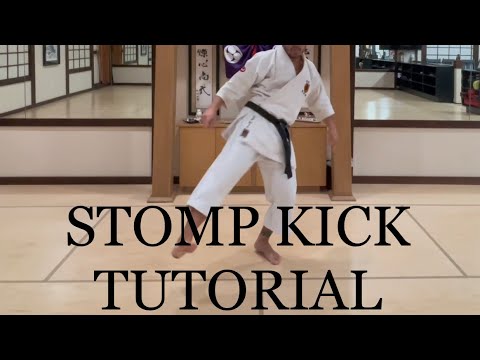
The Stomp Kick or Kansetsu Geri (instruction at 1:09) used in Karate is a devastating attack used to destroy the lower …
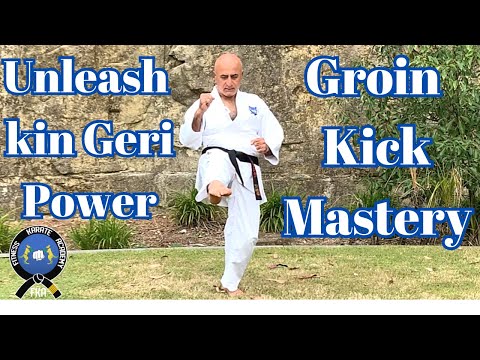
How to learn Karate kicks step by step? here is Karate kicks tutorial for beginners, this lesson is about groin kick or …
Kansetsu geri, literally 'joint kick,' encompasses multiple striking techniques targeting the knee joint in traditional karate. Fitness Karate Academy discusses kingiri (groin kick), which uses the top of the foot to deliver a straight front kick to the groin area while maintaining guard in zenkutsu dachi stance, emphasizing that the technique works regardless of opponent positioning. Goju Ninja provides the most direct kansetsu geri instruction, distinguishing between outside and inside stomp kicks that drive with the heel rather than a blade foot, originating from a square stance with the foot positioned at the side of the knee. Both techniques start robotic and simple but evolve with advanced practitioners using a scooping motion of the leg and knee bending to increase power and range of motion; Goju Ninja notes these are widely used in traditional karate systems and have applications in other striking arts like Muay Thai and savat. Iron Ronin Budo emphasizes the kansetsu geri as a knee strike executed from a chambered position with the knee raised to solar plexus level or higher, utilizing the stretch reflex to generate force during the downward drive. Iron Ronin stresses the importance of core strength and hip flexor conditioning through supplementary exercises like weighted leg raises and resistance band work to achieve the height and power necessary for effective execution. All three instructors agree the technique requires proper stance foundation and deliberate knee chamber positioning, though they emphasize different target areas—groin, knee cap, and lateral knee—reflecting varied applications within traditional karate.
Synthesized from 3 instructors
No instructional courses yet for this technique.
Sign in to suggest a course.
Risk of injury to the person this technique is applied to
Can tear ACL/MCL and cause permanent knee damage. Career-ending potential.
Skill level needed to execute this technique reliably
Whether this technique is allowed under major competition rule sets
Oyama, M. This Is Karate / Essentials of Karate.
[1] Oyama / Funakoshi, Karate technique manuals
Official karate technique names (和語/漢語)
Established Japanese martial arts naming convention — native Japanese term (和語/漢語)
[1] Oyama / Funakoshi, Karate technique manuals
precise targeting of the knee joint, hip extension power for stomping trajectory
long legs for range, heavy body weight increases impact force
hip extensors (downward drive), quadriceps (extension), core (stability)
Kansetsu geri (joint kick / oblique kick) targets the knee joint with a stomping trajectory. In MMA, Jon Jones popularized this technique — highly controversial due to the risk of permanent ACL/MCL tears. (Oyama, This Is Karate; MMA competition records; De Bremaeker & Faige, Essential Book of Martial Arts Kicks)
Beginners often perform the kick too rigidly and straight up and down, while more advanced practitioners use a scooping motion with the inside of the leg to make the technique more fluid and effective (Goju Ninja).
If it doesn't break the knee, the kick can collapse the leg and drive the opponent backward, which puts them in a disadvantageous position while you gain positional advantage (Goju Ninja).
The top of the foot is used for kansetsu geri, which is a groin or knee kick performed from a close fighting distance (Fitness Karate Academy).
Kansetsu Geri is a stomping kick targeting the opponent's knee joint — the foot drives downward or diagonally into the front or side of the knee, hyperextending or laterally stressing the joint. It is one of the most effective and most controversial kicks in martial arts — a clean kansetsu geri can tear the ACL/MCL and end a fight instantly, but it also carries a high risk of permanent knee damage.
Documented in traditional karate manuals.
WKF Karate: Banned: banned — technique prohibited or excessive contact; Unified MMA: Legal {src:Unified Rules of MMA, August 2025|/sources/Unified: legal — MMA-Rules-August-2025.pdf}
Danger rating 9/10. Extreme — can tear ACL/MCL and cause permanent knee damage. Career-ending potential.
The standard setup chain: Jab-cross to face → opponent focuses on head defense → kansetsu geri to lead knee → Rear low kick to thigh → opponent widens stance to absorb → kansetsu geri to straightened lead leg → As opponent advances → time kansetsu geri to their front knee as weight transfers forward.
Standard counters include: Lift the knee — raising the target leg removes the bracing point / Check with shin — meet the kick with a shin block before it reaches the knee / Angle change — step offline at 45 degrees to avoid the linear stomping trajectory.
Common variants: Front kansetsu geri (targeting the front of the knee (hyperextension)); Side kansetsu geri (targeting the side of the knee (lateral stress on MCL)); Oblique kick (angled downward to the knee (MMA version)); Low teep to the knee (pushing version).
Primarily a training, demonstration, and point-fighting technique. Rarely seen in full-contact MMA or kickboxing due to acrobatic risk and telegraphing.
Top errors to watch for: Kicking the thigh instead of the knee — wrong target / Snapping instead of pushing — the joint needs sustained pressure / Using full force in training — VERY dangerous to training partners / Not angling correctly — straight kicks to the kneecap are less effective.
The Kansetsu Geri is also known as Kansetsu Geri, Kansetsu-Geri, Knee Stomping Kick, Joint Destruction Kick, Oblique Kick.