Strike & defenceLocksClose rangeFighting multiple people
Distance
CloseMiddleLong
Limb angle
Zero180–135°135–90°90–45°45–0°
Body target
Upper bodyMiddle bodyLower body
Overview
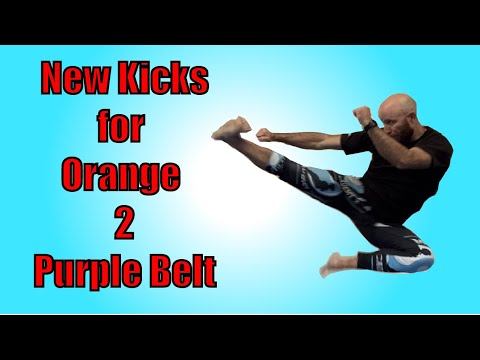
The Standard Inside Crescent Kick is executed by swinging the kicking leg in a wide arc from the outside toward the centreline, with the leg relatively straight and the foot contacting the target — typically the temple, ear, or jawline — with the sole or flat of the foot. [1] The hip drives the leg through the sweeping path, and the core muscles stabilise the body as the leg crosses the midline. [1],[2] This technique is commonly used in taekwondo sparring as a setup technique or guard-clearing tool. [2],[3]
Also known as
An Bandal ChagiKR[1]Mikazuki Geri UchiJP[2]Standard Inward Arc Kick[3]
The standard inside crescent kick is a fundamental technique in taekwondo and karate, taught at coloured belt levels and featured in traditional forms and competition sparring. [1] Its dual offensive and defensive utility has kept it in martial arts curricula across multiple styles. [2],[3]
Effectiveness sources — [1] Comprehensive Asian Fighting Arts (Draeger & Smith, 1969)
Community
Athletics
Requires
hip rotation power, rear foot pivot, full kinetic chain coordination
Favours
reach advantage, strong hips for power transfer
Key muscles
glutes, obliques, pectorals, triceps, deltoids
Frequently Asked Questions
What's the most common mistake people make when throwing an inside crescent kick?
Many practitioners fail to rotate their hips fully through the kick, leaving the hip behind instead of carrying it all the way through so the kicking hip ends up in front. Full hip rotation is essential for proper technique and power.
How should I position my body after throwing an inside crescent kick?
Pause in a "crazy stance" with full hip rotation completed, then bring your foot back to neutral. This gives you control and the ability to advance, retreat, or change angles rather than letting the kick drag you out of position.
What's the proper foot path for an inside crescent kick?
Bring your knee up and out at a 45-degree angle, then bring your foot across in a nice arc where it goes out, up, and then back. The movement creates a smooth arc rather than a straight line.
What kick does the instructor recommend following an inside crescent?
The instructor generally likes to throw a side kick after an inside crescent, using the pause in the crazy stance to set up kicking combinations.
How does the Standard Inside Crescent work?
The Standard Inside Crescent Kick is executed by swinging the kicking leg in a wide arc from the outside toward the centreline, with the leg relatively straight and the foot contacting the target — typically the temple, ear, or jawline — with the sole or flat of the foot. The hip drives the leg through the sweeping path, and the core muscles stabilise the body as the leg crosses the midline.
Where does the Standard Inside Crescent come from?
The standard inside crescent kick is a fundamental technique in taekwondo and karate, taught at coloured belt levels and featured in traditional forms and competition sparring. Its dual offensive and defensive utility has kept it in martial arts curricula across multiple styles.
Is the Standard Inside Crescent legal in competition?
Unified MMA: legal — Legal striking technique; WBC/Boxing: banned — All kicks prohibited in boxing; WKF: legal — Legal, chudan (body) kick scores 2 points, jodan (head) kick scores 3 points; Kyokushin: legal — Legal at full power to body and head; WT: legal — Legal, body kick 2 points, head kick 3 points, spinning body 4 points, spinni…; WAKO: legal — Legal in Full Contact and Low Kick formats; K: legal — 1/GLORY — Legal; IFMA: legal — Legal — kicks are a core Muay Thai technique
How dangerous is the Standard Inside Crescent?
Danger rating 5/10. High — arcing kick; primarily used for guard manipulation
How do I set up the Standard Inside Crescent?
The standard setup chain: Assume Fighting Stance → Generate Power → Execute Strike → Recover to Guard.
How do I defend against the Standard Inside Crescent?
Standard counters include: Check (Shin Block) — raise the shin to intercept the kick before it lands / Catch and Sweep — catch the kicking leg and sweep the standing leg / Step Inside — close distance inside the kick's effective range to smother it.
What are the variants of the Standard Inside Crescent?
Common variants: Standard cross (rear-hand straight punch with full hip rotation); Counter cross (pull counter) (leaning back to avoid the jab, firing the cross as a counter); Step-in cross (stepping forward with the punch for added reach and power); Body cross (targeting the solar plexus or liver with the straight rea…).
How effective is the Standard Inside Crescent in competition?
Used in competition.
What are common mistakes when doing the Standard Inside Crescent?
Top errors to watch for: Swinging the leg from the hip without engaging the core — the arc should be powered by the hip and midsection rotation / Letting the kick fade out at the top of the arc without actually hitting anything — it must snap at the target / Turning the back toward the opponent during the inward swing / Landing off-balance after the kick because the momentum carried the body sideways.
What are other names for the Standard Inside Crescent?
The Standard Inside Crescent is also known as Uchi Mikazuki-geri (Kihon-gata), An Bandal Chagi, Mikazuki Geri Uchi, Standard Inward Arc Kick.