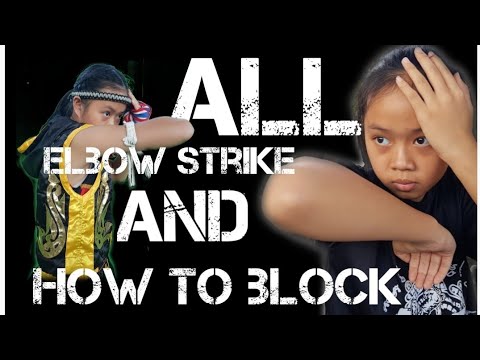
All elbow strike and how to block
0
Sok Sap·LANNAFIGHTING
#muaythai #muayboran #elbowstrike
Translation: chopping elbow
Sok Sap is the Thai terminology for the chopping elbow, a diagonal downward elbow strike that cuts across the opponent's face or head along an angled trajectory. [1] The technique is executed by raising the elbow above shoulder height, rotating the hips and torso, and driving the point of the elbow diagonally downward into the target, commonly the brow ridge, temple, or cheekbone. [1],[2] Sok Sap is particularly effective in the clinch when the opponent's posture is broken and their head is lowered, allowing the striker to accelerate the elbow into exposed facial targets. [2],[3]
Sok Sap is part of the traditional Muay Thai elbow classification system, where each elbow trajectory receives a distinct Thai name. [1] The technique has been a staple of Thai boxing for generations, taught in training camps throughout Thailand as one of the fundamental sok (elbow) variations. [2],[3]
Sok sap (chopping elbow) strikes downward in a chopping motion. [1]
A traditional Muay Thai elbow technique. [1]
Used in Muay Thai and MMA competition. [1]
No images yet for this technique.
Sign in to suggest an image.
#muaythai #muayboran #elbowstrike
Change the UFC Fight Game, implement my HAMMER FIST methods of Limb Destruction. Contact me if you wish to learn more a…
Ready to unlock your full potential and get daily Muay Thai insights? 💥 Click the link below to join my EXCLUSIVE Nak M…
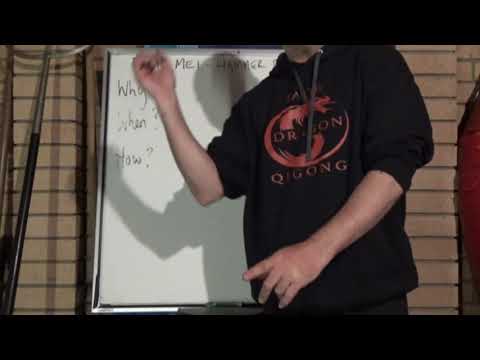
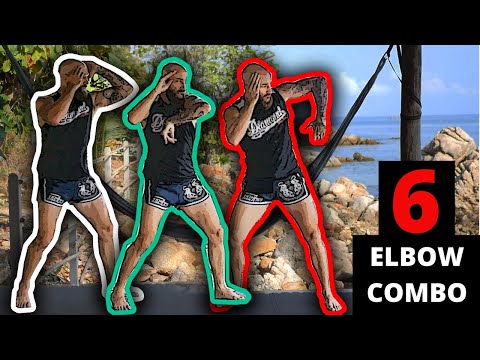
Sok Sap (chopping elbow) is a downward-striking elbow technique employed across Muay Thai and traditional kung fu systems. LANNAFIGHTING demonstrates sok sap as a fundamental elbow strike delivered at approximately 45 degrees, emphasizing proper body mechanics through repetitive drilling and detailed blocking defense. The instructor teaches sok sap alongside five other elbow variants, stressing the importance of closing openings during defense by blocking both the side and center simultaneously to prevent opponent counterattacks. Sean 'Muay Thai Guy' Fagan integrates sok sap-type motions within a six-elbow combination that progresses from spear elbows through slashing and spinning variations, highlighting that effective elbow striking requires forward footwork and shoulder engagement to generate power despite the technique's short-range nature. Fagan emphasizes hand positioning on the head's front rather than the side to maximize range and minimize exposure. Garry Hearfield's Bak Mei approach presents hammer-fist and elbow techniques as limb-destruction tools aimed at the opponent's bridge (arms), biceps, and triceps rather than facial targets, arguing this approach prevents hand injury and creates combat advantage. While Hearfield focuses on broader hammer-fist methodology rather than sok sap specifically, all three instructors agree that elbow strikes demand proper footwork, body rotation, and defensive awareness given the short range these techniques demand.
Synthesized from 3 instructors
No instructional courses yet for this technique.
Sign in to suggest a course.
Risk of injury to the person this technique is applied to
12-6 elbow; extremely dangerous downward strike
Skill level needed to execute this technique reliably
Whether this technique is allowed under major competition rule sets
Muay Thai: The Art of Fighting (Yod Ruerngsa, Khun Kao Charuad & James Cartmell, 2002)
Alias sources — [1] Muay Thai Unleashed (Delp, 2006) [2] Muay Thai: The Art of Fighting (Kraitus & Kraitus, 1988) [3] WBC Muay Thai Rules (2014)
Effectiveness sources — [1] Muay Thai: The Art of Fighting (Kraitus & Rennehan, 2002)
Standard katakana transliteration of Western martial arts terminology (外来語) — used in Japanese MMA, boxing, and BJJ communities
Alias sources — [1] Muay Thai Unleashed (Delp, 2006) [2] Muay Thai: The Art of Fighting (Kraitus & Kraitus, 1988) [3] WBC Muay Thai Rules (2014)
Effectiveness sources — [1] Muay Thai: The Art of Fighting (Kraitus & Rennehan, 2002)
hip rotation power, rear foot pivot, full kinetic chain coordination
reach advantage, strong hips for power transfer
glutes, obliques, pectorals, triceps, deltoids
According to LANNAFIGHTING, if you only block from the side, the attacker can still come through the center opening. You must block both the side and center together, keeping your guard soft but closed across both areas.
Sean Fagan explains that elbows are short-range weapons, so to land one you need to cover distance by stepping forward and using good footwork, and landing an elbow means you're already in close range with your opponent.
Sean Fagan emphasizes keeping your hand on the front of your head rather than the side, as this gives you the most range when executing the spear elbow with a forward step and shoulder pop.
Sean Fagan notes that you should aim for the collarbone (which can be broken) or the top of the head, and demonstrates how elite fighters like Jonathan Haggerty have successfully landed this strike in competition.
Sok Sap is the Thai terminology for the chopping elbow, a diagonal downward elbow strike that cuts across the opponent's face or head along an angled trajectory. The technique is executed by raising the elbow above shoulder height, rotating the hips and torso, and driving the point of the elbow diagonally downward into the target, commonly the brow ridge, temple, or cheekbone.
Sok Sap is part of the traditional Muay Thai elbow classification system, where each elbow trajectory receives a distinct Thai name. The technique has been a staple of Thai boxing for generations, taught in training camps throughout Thailand as one of the fundamental sok (elbow) variations.
Unified MMA: legal — Legal — all elbow strikes permitted; WBC/Boxing: banned — All elbow strikes prohibited in boxing; WKF: banned — Elbow strikes not a legal technique in sport karate; Kyokushin: banned — Elbow strikes prohibited; WT: banned — Prohibited; ITF: banned — Prohibited; WAKO: banned — Prohibited in all kickboxing formats; K: banned — 1/GLORY — Prohibited — key difference from Muay Thai; IFMA: legal — Legal — elbows are a core Muay Thai weapon (art of eight limbs)
Danger rating 8/10. Very High — 12-6 elbow; extremely dangerous downward strike
The standard setup chain: Assume Fighting Stance → Generate Power → Execute Strike → Recover to Guard.
Standard counters include: Block — absorb the strike with a protective guard position / Evasion — move the target out of the strike's path / Counter-Attack — time an offensive response during the recovery phase of the strike.
Common variants: Standard cross (rear-hand straight punch with full hip rotation); Counter cross (pull counter) (leaning back to avoid the jab, firing the cross as a counter); Step-in cross (stepping forward with the punch for added reach and power); Body cross (targeting the solar plexus or liver with the straight rea…).
Used in Muay Thai and MMA competition.
Top errors to watch for: Using a vertical chop instead of the diagonal 45-degree angle — the sok sap is specifically an angled strike / Not pulling the opponent's head into the elbow — the collision of downward elbow and upward-pulled head doubles the i… / Hitting with the mid-forearm instead of the elbow point — no cut, no damage / Chopping from too far away without clinch control.
The Sok Sap is also known as Sōku Sappu, Chopping Elbow, Diagonal Downward Elbow, Sok Tad.