Strike & defenceLocksClose rangeFighting multiple people
Distance
CloseMiddleLong
Overview
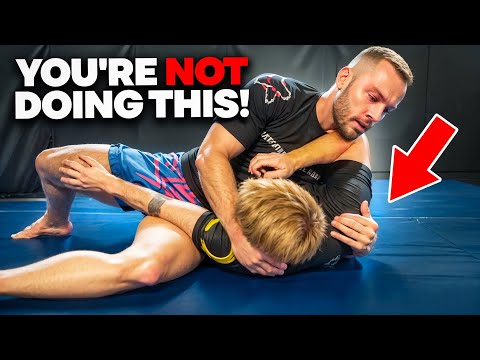
The Underhook Side Control uses an underhook on the far arm as the primary upper body control, with the other arm controlling the head or near hip. [1] The underhook provides strong control of the bottom fighter's upper body while leaving the head relatively free, which creates different tactical dynamics than crossface side control. [1],[2] The underhook side control is particularly effective for transitioning to mount, as the underhook facilitates stepping over to mount position. [2],[3]
Also known as
Underhook Side MountWrestling[1]Far Underhook Side ControlWrestling[2]Underhook PinWrestling[3]
The underhook side control developed as an alternative side control configuration to the crossface, valued for its transitional versatility and mount-access options. [1] It is a standard side control variation taught in BJJ. [2],[3]
✓Underhook side control uses a deep underhook on the far arm from the top side control position — this controls the opponent's arm and sets up transitions to mount and back take (Saulo Ribeiro, Jiu-Jitsu University, 2008)
✓The underhook from top side control clamps the opponent's far arm against your body — removing their ability to frame or push
✓Underhook side control naturally sets up the mount: the underhook prevents the opponent from blocking the leg swing
✓The underhook also enables the 'gift wrap' technique: use the underhook to trap the opponent's arm across their own body
✓From underhook side control, the Americana (keylock) is readily available: the far arm is already isolated
✓The underhook transitions to north-south: maintain the underhook while walking the body over the opponent's head
✓Underhook side control is the preferred configuration when planning to advance to mount — it creates the clearest path
Common Mistakes
!Getting a shallow underhook — the hand must reach deep to the far shoulder or lat for control
!Using the underhook without combining it with the crossface — both controls together create maximum restriction
!Not using the underhook to advance — the underhook is a transitional tool; use it to get to mount or the back
!Allowing the opponent to extract their arm from the underhook — maintain the clamp aggressively
!Underhooking without hip pressure — the underhook complements the hip pressure, not replaces it
!Not threatening the Americana from the underhook position — the submission threat forces the opponent to defend, opening transitions
!Keeping the underhook static — actively adjust the underhook depth as the opponent moves
1Pass the Guard — clear the opponent's legs to advance to this dominant position
2Settle Weight — distribute body weight to maintain heavy pressure
3Control Arms — manage the opponent's arms to prevent frames and escapes
4Threaten Submissions — attack to force defensive reactions and maintain dominance
Sources & References
Primary Source
Mastering Jujitsu (Renzo Gracie & John Danaher, 2003)
1BookJiu-Jitsu University (Ribeiro, 2008)
Alias sources — [1] Jiu-Jitsu University (Ribeiro, 2008) [2] Mastering Jujitsu (Gracie & Danaher, 2003) [3] UWW Wrestling Rules
2BookBrazilian Jiu-Jitsu: Theory and Technique (Gracie & Gracie, 2001)
Effectiveness sources — [1] Jiu-Jitsu University (Ribeiro, 2008)
3OtherJapanese Martial Arts Hybrid Terminology
Mixed Japanese-Western terminology — combines traditional Japanese terms with katakana loanwords
4CitationJiu-Jitsu University (Ribeiro, 2008)
Alias sources — [1] Jiu-Jitsu University (Ribeiro, 2008) [2] Mastering Jujitsu (Gracie & Danaher, 2003) [3] UWW Wrestling Rules
5CitationBrazilian Jiu-Jitsu: Theory and Technique (Gracie & Gracie, 2001)
Effectiveness sources — [1] Jiu-Jitsu University (Ribeiro, 2008)
Community
Athletics
Requires
base stability, heavy hips, ride ability
Favours
heavier build with strong hips for pressure
Key muscles
hip adductors, core, glutes, quadriceps
Frequently Asked Questions
What's the difference between Near Side and Far Side Underhooks?
Near Side and Far Side Underhooks have specific uses and properties that differ based on positioning. Near Side and Far Side distinctions don't apply when facing your opponent straight on (like in Mount or Butterfly Guard), but become important in angled positions like side control where the sides of your opponent's torso are at different distances.
How do I use the Near Side Underhook from top position?
The Near Side Underhook is excellent for pinning from top position during passing, as it does a much better job of pinning the top player compared to the cross face. It functions similarly to Kessa Gautami by preventing your opponent from taking your back and pinning their shoulders to the mat.
What should I prevent my opponent from doing when they get an Underhook from bottom position?
When your opponent secures an Underhook from bottom position, the key is to prevent them from pinning your shoulders—that's their main objective. Don't focus on stopping all Underhooks; instead, prevent them from accomplishing what they're trying to do, which is shoulder pinning control.
How does the Underhook Side Control work?
The Underhook Side Control uses an underhook on the far arm as the primary upper body control, with the other arm controlling the head or near hip. The underhook provides strong control of the bottom fighter's upper body while leaving the head relatively free, which creates different tactical dynamics than crossface side control.
Where does the Underhook Side Control come from?
The underhook side control developed as an alternative side control configuration to the crossface, valued for its transitional versatility and mount-access options. It is a standard side control variation taught in BJJ.
Is the Underhook Side Control legal in competition?
Danger rating 3/10. Moderate — top positions enable pressure and striking; rib compression risk under heavy pressure
How do I set up the Underhook Side Control?
The standard setup chain: Pass the Guard → Settle Weight → Control Arms → Threaten Submissions.
How do I defend against the Underhook Side Control?
Standard counters include: Bridge (Upa) — explosive hip elevation to off-balance the top player / Elbow-Knee Escape (Shrimp) — create space by driving elbow to knee and hip-escaping / Frame — establish forearm frames to prevent the top player from settling weight.
What are the variants of the Underhook Side Control?
Common variants: Low mount (hips heavy on the opponent's belly, grapevines in for sta…); High mount (knees under the armpits, arms isolated for submissions); S-mount (one knee high under the armpit, other leg across for arm …); Technical mount (one leg hooked, one knee posted, modified for back-take t…).
How effective is the Underhook Side Control in competition?
Underhook side control is used in BJJ and MMA competition.
What are common mistakes when doing the Underhook Side Control?
Top errors to watch for: Getting a shallow underhook — the hand must reach deep to the far shoulder or lat for control / Using the underhook without combining it with the crossface — both controls together create maximum restriction / Not using the underhook to advance — the underhook is a transitional tool; use it to get to mount or the back / Allowing the opponent to extract their arm from the underhook — maintain the clamp aggressively.
What are other names for the Underhook Side Control?
The Underhook Side Control is also known as Andāfukku Yoko-shiho, Underhook Side Mount, Far Underhook Side Control, Underhook Pin.