Double Hook Into Leg Take Down - Self Defence Techniques
0
Standard Southpaw·Vee AJ Jitsu
Join this channel to get access to perks: https://www.youtube.com/channel/UC5UHXD7eSL8MGe06z-_dtYw/join 👊 Self Defense…
Translation: standard southpaw
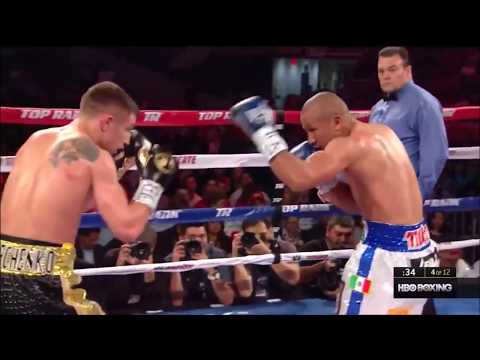
The Standard Southpaw stance mirrors the orthodox with the right foot forward, left foot back, right lead hand jabbing, and left rear hand delivering power shots. [1] The standard southpaw creates a lead-foot battle with orthodox opponents, where the outside foot position determines who has the angular advantage. [1],[2] Many of boxing and MMA's greatest fighters — including Marvin Hagler, Pernell Whitaker, and Anderson Silva — used the southpaw stance. [2],[3]
The standard southpaw stance mirrors orthodox, with the right foot forward and the dominant left hand in the rear. [1]
Southpaw stance has been used throughout boxing history. [1]
Southpaw fighters often have an advantage due to opponents' unfamiliarity. [1]
No images yet for this technique.
Sign in to suggest an image.
Join this channel to get access to perks: https://www.youtube.com/channel/UC5UHXD7eSL8MGe06z-_dtYw/join 👊 Self Defense…
The UniVs.ity (pronounced "University") is an online MMA Course for students who want unrestricted access to thoughtful…
The standard southpaw stance is a foundational position in boxing and combat sports where a fighter leads with their right side, mirroring the orthodox stance. According to Russ James's analysis of professional boxing footage, the southpaw jab serves as a primary weapon and a tool for establishing rhythm and positioning, particularly effective at setting up the right hand. James emphasizes that southpaw fighters leverage their stance's natural angles to create defensive and offensive advantages, with the jab functioning as both an offensive threat and a rhythm-setter that can frustrate opponents unfamiliar with the stance's mechanics. The transcripts note that orthodox fighters must adjust their defensive strategies when facing southpaws, as the stance creates different sight lines and approach angles. James observes that maintaining proper footwork while flat-footed is critical for both offensive execution and defensive responsiveness. While the provided video materials focus primarily on boxing application rather than a comprehensive technical breakdown of stance mechanics, the consistent emphasis across the footage is that the southpaw's lead-hand jab and subsequent right-hand combinations define the stance's strategic utility in competitive fighting contexts.
Synthesized from 1 instructor
No instructional courses yet for this technique.
Sign in to suggest a course.
Risk of injury to the person this technique is applied to
Standing positions are pre-engagement stances; minimal direct risk
Skill level needed to execute this technique reliably
Whether this technique is allowed under major competition rule sets
Brazilian Jiu-Jitsu: Theory and Technique (Renzo Gracie & Royler Gracie, 2001)
Alias sources — [1] Mastering Jujitsu (Gracie & Danaher, 2003) [2] Championship Fighting (Dempsey, 1950) [3] Championship Fighting (Dempsey, 1950)
Effectiveness sources — [1] Boxing: The Complete Guide to Training and Fitness (Hatmaker, 2004)
Standard katakana transliteration of Western martial arts terminology (外来語) — used in Japanese MMA, boxing, and BJJ communities
Alias sources — [1] Mastering Jujitsu (Gracie & Danaher, 2003) [2] Championship Fighting (Dempsey, 1950) [3] Championship Fighting (Dempsey, 1950)
Effectiveness sources — [1] Boxing: The Complete Guide to Training and Fitness (Hatmaker, 2004)
hook control, seatbelt grip endurance, hip connection
long legs for deep hooks, strong grip for seatbelt
hip adductors, biceps, forearms, core
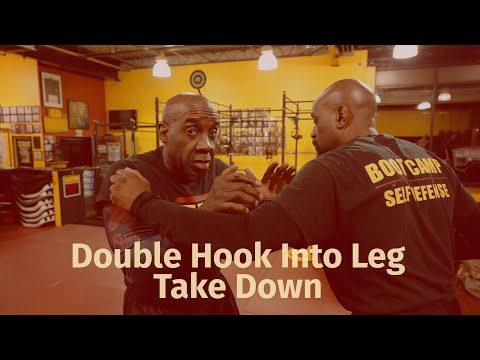
Trading punches turns the encounter into a fight where your skills must match your opponent's skills, which is unpredictable and risky. According to Vee AJ Jitsu, the goal should be to avoid fighting altogether by using techniques like takedowns instead of continuing to exchange strikes.
Vee AJ Jitsu teaches that you should immediately open up their legs and strike the groin to prevent a grappler from using their legs to defend themselves on the ground. This gives you access to follow up with additional strikes to the face, groin, or other targets.
According to Vee AJ Jitsu, if your opponent pulls their foot up defensively, take their hand, separate it, and drive down with as much force as you have to control their leg.
The Standard Southpaw stance mirrors the orthodox with the right foot forward, left foot back, right lead hand jabbing, and left rear hand delivering power shots. The standard southpaw creates a lead-foot battle with orthodox opponents, where the outside foot position determines who has the angular advantage.
The standard southpaw stance has been used by some of the most successful fighters in combat sports history. The strategic implications of the orthodox-versus-southpaw matchup have become a major area of tactical study in modern combat sports.
Unified MMA: legal — Legal; IBJJF: legal — Legal; IJF: legal — Legal; WBC/Boxing: legal — Legal — stance and footwork are fundamental; WKF: legal — Legal; UWW: legal — Legal
Danger rating 2/10. Low — standing positions are pre-engagement stances; minimal direct risk
The standard setup chain: Achieve Position → Stabilize → Maintain → Attack.
Standard counters include: Hand Fight — grip-fight the choking hand to prevent the rear naked choke / Shoulder Walk — walk shoulders to the mat to escape back control / Turn into Guard — rotate to face the attacker and recover guard position.
Common variants: Back control with hooks (both feet hooked inside the opponent's thighs); Body triangle back control (legs locked in a figure-four around the torso); Rear mount (mounted on the back with both hooks, opponent face-down); Chair sit back control (sitting behind the opponent with hooks, upright position).
Southpaw fighters often have an advantage due to opponents' unfamiliarity.
Top errors to watch for: Placing the left foot directly behind the right — offset the rear foot to the left for balance / Not adjusting hand position for southpaw — the hands mirror orthodox exactly / Standing with the weight too far forward — maintain balance for defensive movement / Not training southpaw-specific combinations — the left cross, right hook, left kick sequence is the southpaw power chain.
The Standard Southpaw is also known as Sutandādo Sausupō, Classic Southpaw Stance, Standard Right-Lead, Basic Southpaw.