Strike & defenceLocksClose rangeFighting multiple people
Distance
CloseMiddleLong
Body target
Upper bodyMiddle bodyLower body
Overview
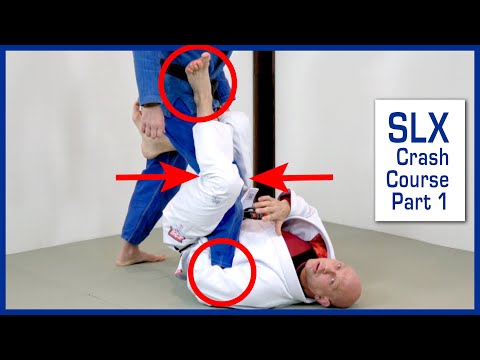
The Standard Single Leg X establishes the basic SLX position with one foot on the opponent's hip and the other foot behind the knee of the same leg, both from the outside, with hands controlling the ankle or leg. [1] From standard SLX, the guard player can sweep by elevating and off-balancing, transition to full X-guard, or attack with ankle locks, heel hooks, and kneebars by adding additional leg entanglement. [1],[2] The standard SLX is one of the most versatile positions in modern grappling. [2],[3]
Also known as
Basic SLX[1]Standard Ashi GaramiJP[2]Classic Single Leg XWrestling[3]
The standard single leg X-guard is the foundational SLX configuration, the base position from which all SLX attacks and transitions originate. [1] Its importance in both sweeping and leg-locking systems has made it one of the most studied positions in modern competition. [2],[3]
Country of origin· shown in random order
🇧🇷BrazilBJJ, Submission Grappling
🇯🇵JapanBJJ, Submission Grappling
🇺🇸USASubmission Grappling
Effectiveness
Standard single leg X (ashi garami) controls one leg with both of the bottom player's legs, providing a platform for sweeps and leg lock entries. [1]
Lineage
Single leg X was developed in modern BJJ and became central to the leg lock revolution of the 2010s. [1]
Competition Record
Single leg X is the most commonly used leg entanglement in no-gi competition. [1]
Images
No images yet for this technique.
Sign in to suggest an image.
Biomechanical Mechanism
Primary Action — Using the legs and hips to control the opponent from the bottom — maintaining distance management and attack angles
Joints Involved — Hips (primary engine for sweeps and attacks), knees (framing and hooking), ankles (secondary hooks)
Force Vector — Pulling, framing, and hip-escaping — creating angles for attacks while preventing passing
Positional Mechanic — The guard is an active offensive position — leg control compensates for bottom positioning by threatening sweeps and submissions
Position & Entry
From single-leg X or butterfly — Thread the legs into X-guard configuration under the opponent — one hook behind the knee, one behind the ankle
From guard pull (de la Riva) — Pull guard and insert hooks to establish the X-guard entanglement
Variants
Standard guard — primary leg and grip configuration for control and attacks from bottom
Offensive guard — configured for sweeps and submissions
Defensive guard — prioritising distance management and preventing passes
Transition guard — moving between guard types to adjust to the opponent's passing style
✓Standard single leg X execution: from butterfly guard or shin-on-shin, hook one foot behind the opponent's knee and place the other foot on their same-side hip, creating an X-shaped leg configuration that controls one leg completely (Danaher, Leglocks: Enter the System, 2017)
✓Step 1: from butterfly guard, elevate one of the opponent's legs with a butterfly hook
✓Step 2: thread the elevating leg up to place the foot on the opponent's hip on the same side
✓Step 3: the other leg hooks behind the opponent's knee from the outside
✓Step 4: the legs now form an X: one foot on hip, one behind the knee — this is single leg X
✓Step 5: control the opponent's ankle or wrist for upper body management
✓Step 6: threaten: technical stand-up sweep (stand up while holding the leg), X-guard transition (thread the other leg through), or leglock entry
✓The feet must be active: the hip foot pushes while the knee hook pulls to maintain control
✓Drill: from butterfly guard, enter single leg X and hit the stand-up sweep — 5 reps per side
Common Mistakes
!Not elevating the leg before entering — the butterfly hook lift creates the space to thread the legs
!Placing the hip foot on the wrong side — both feet must control the SAME leg
!Not controlling the ankle — the opponent will pull the leg free without ankle control
!Keeping the legs passive in the X-position — the feet must push and pull actively
!Not developing the stand-up sweep — it is the fundamental technique from standard single leg X
!Entering without upper body control — wrist or sleeve grips prevent the opponent from posturing away
!Only training entries from butterfly — develop entries from shin-on-shin and open guard as well
long legs for distance control and guard retention
Key muscles
hip flexors, adductors, quadriceps, core, grip
Frequently Asked Questions
What's the most common mistake people make with their hip position in single leg X guard?
According to Stephan Kesting, keeping your hips on the ground is almost never correct—it makes it very easy for your opponent to pop your heel off. Instead, you should elevate your hips and clamp your legs together to make it much harder for them to escape.
Where should I keep my top foot in single leg X guard?
Stephan Kesting emphasizes keeping your top foot on your opponent's hip rather than bringing it across the centerline, which is illegal in BJJ competition and prevents you from controlling distance with the bottom of your foot for defense.
What are the essential foundations I need to build a functional single leg X guard?
Stephan Kesting identifies four key components: the basic position, the core drill (three movements on two sides covering defense and guard transitions), the basic twist sweep, and the technical stand-up from X guard.
What's the thigh clamp and why would I use it?
The thigh clamp, popularized by Marcelo Garcia, involves bringing your elbow against the heel and grabbing your own hamstring to prevent your opponent's heel from rotating out, and it also allows you to switch your grip if they drive pressure into you.
How does the Standard Single Leg X work?
The Standard Single Leg X establishes the basic SLX position with one foot on the opponent's hip and the other foot behind the knee of the same leg, both from the outside, with hands controlling the ankle or leg. From standard SLX, the guard player can sweep by elevating and off-balancing, transition to full X-guard, or attack with ankle locks, heel hooks, and kneebars by adding additional leg entanglement.
Where does the Standard Single Leg X come from?
The standard single leg X-guard is the foundational SLX configuration, the base position from which all SLX attacks and transitions originate. Its importance in both sweeping and leg-locking systems has made it one of the most studied positions in modern competition.
Is the Standard Single Leg X legal in competition?
IBJJF: legal — Legal — guard is fundamental to BJJ, sweeps from guard score 2 points; IJF: restricted — Guard pulling penalized as non-combativity — groundwork from guard permitted …; ADCC: legal — Legal, guard pull penalized -1 point in points portion; Unified MMA: legal — Legal — no penalty for playing guard; FIAS Sport Sambo: legal — Legal
How dangerous is the Standard Single Leg X?
Danger rating 2/10. Low — guard positions are defensive; injury risk comes from transitions, not the position itself
How do I set up the Standard Single Leg X?
The standard setup chain: Achieve Guard Contact → Control Grips → Manage Distance → Threaten Submissions/Sweeps.
How do I defend against the Standard Single Leg X?
Standard counters include: Guard Pass — systematically work to clear the legs and establish a dominant position / Leg Pin — control one or both legs to neutralize guard retention / Pressure Passing — use heavy chest pressure to flatten and immobilize the guard player.
What are the variants of the Standard Single Leg X?
Common variants: Standard guard (primary leg and grip configuration for control and attack…); Offensive guard (configured for sweeps and submissions); Defensive guard (prioritising distance management and preventing passes); Transition guard (moving between guard types to adjust to the opponent's pa…).
How effective is the Standard Single Leg X in competition?
Single leg X is the most commonly used leg entanglement in no-gi competition.
What are common mistakes when doing the Standard Single Leg X?
Top errors to watch for: Not elevating the leg before entering — the butterfly hook lift creates the space to thread the legs / Placing the hip foot on the wrong side — both feet must control the SAME leg / Not controlling the ankle — the opponent will pull the leg free without ankle control / Keeping the legs passive in the X-position — the feet must push and pull actively.
What are other names for the Standard Single Leg X?
The Standard Single Leg X is also known as Sutandādo Shinguru Reggu X, Basic SLX, Standard Ashi Garami, Classic Single Leg X.