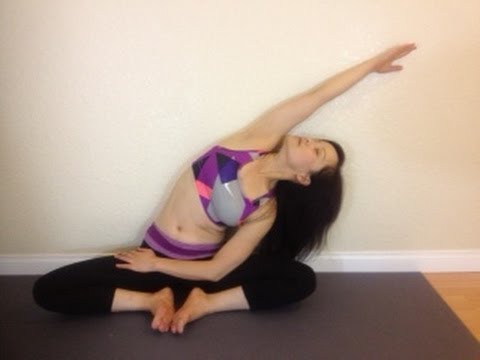
Yoga butterfly, hip opener - 2
0
Standard Reclined Butterfly·Zao Wang Assad·Added by Admin
http://zaoyoga.com facebook: http://facebook.com/zaoyoga This video shows variations of the traditional butterfly pose t…
Translation: standard reclined butterfly
The Standard Reclined Butterfly positions the guard player leaning back at approximately 45 degrees with both butterfly hooks in the opponent's thighs, using the angle to create pulling leverage on the hooks while maintaining upper body grips for control. [1] The reclined angle shifts the hook mechanics from a lifting motion to a pulling motion, which changes the available sweep and transition options. [1],[2] From standard reclined butterfly, the guard player can sweep, take the back via arm drags, or transition to other guard positions. [2],[3]
The standard reclined butterfly is the baseline version of this guard position. [1]
Developed in modern no-gi BJJ. [1]
Used in no-gi competition. [1]
No images yet for this technique.
Sign in to suggest an image.
http://zaoyoga.com facebook: http://facebook.com/zaoyoga This video shows variations of the traditional butterfly pose t…
No instructional courses yet for this technique.
Sign in to suggest a course.
Risk of injury to the person this technique is applied to
Guard positions are defensive; injury risk comes from transitions, not the position itself
Skill level needed to execute this technique reliably
Whether this technique is allowed under major competition rule sets
Advanced Brazilian Jiu-Jitsu Techniques (Marcelo Garcia, 2011)
Alias sources — [1] Jiu-Jitsu University (Ribeiro, 2008) [2] The Guard (Moreira & Beneville, 2003)
Effectiveness sources — [1] Mastering Jujitsu (Gracie & Danaher, 2003)
Standard katakana transliteration of Western martial arts terminology (外来語) — used in Japanese MMA, boxing, and BJJ communities
Alias sources — [1] Jiu-Jitsu University (Ribeiro, 2008) [2] The Guard (Moreira & Beneville, 2003)
Effectiveness sources — [1] Mastering Jujitsu (Gracie & Danaher, 2003)
hip flexibility, active legs, grip management
long legs for distance control and guard retention
hip flexors, adductors, quadriceps, core, grip
You can use a block to support your body during the stretch, which makes the position easier to achieve while you work on building flexibility.
Raise your arms on the inhale, then exhale and bend your trunk to the side—you can perform this without a block initially. Focus on feeling the stretch along the side of your trunk while coordinating with your breathing.
The Standard Reclined Butterfly positions the guard player leaning back at approximately 45 degrees with both butterfly hooks in the opponent's thighs, using the angle to create pulling leverage on the hooks while maintaining upper body grips for control. The reclined angle shifts the hook mechanics from a lifting motion to a pulling motion, which changes the available sweep and transition options.
The standard reclined butterfly represents the basic version of the reclined butterfly guard variation, developed as part of the comprehensive butterfly guard system. It is taught alongside the seated version as an alternative butterfly guard configuration.
IBJJF: legal — Legal — guard is fundamental to BJJ, sweeps from guard score 2 points; IJF: restricted — Guard pulling penalized as non-combativity — groundwork from guard permitted …; ADCC: legal — Legal, guard pull penalized -1 point in points portion; Unified MMA: legal — Legal — no penalty for playing guard; FIAS Sport Sambo: legal — Legal
Danger rating 2/10. Low — guard positions are defensive; injury risk comes from transitions, not the position itself
The standard setup chain: Achieve Guard Contact → Control Grips → Manage Distance → Threaten Submissions/Sweeps.
Standard counters include: Guard Pass — systematically work to clear the legs and establish a dominant position / Leg Pin — control one or both legs to neutralize guard retention / Pressure Passing — use heavy chest pressure to flatten and immobilize the guard player.
Common variants: Standard butterfly guard (both feet hooked inside the opponent's thighs); Single butterfly hook (one hook in while the other leg posts or controls); Butterfly with overhook (combining the hooks with an overhook for sweep setups).
Used in no-gi competition.
Top errors to watch for: Reclining without establishing grips first — the grips control the opponent's posting ability / Sweeping without breaking the opponent's base — remove the post on the sweep side before elevating / Extending the hooks too early — load the opponent's weight first, then extend for the sweep / Not following to the top after the sweep — immediately advance to a passing or pinning position.
The Standard Reclined Butterfly is also known as Sutandādo Rikuraindo Batafurai, Lying Butterfly Guard, Flat Butterfly.