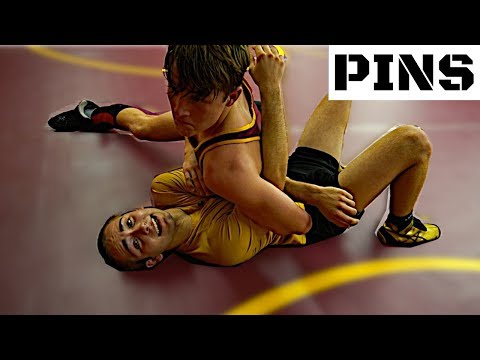
Top 5 Wrestling Moves *PINS*
0
Standard Prone Rear Mount·Cayden Henschel
This is my top 5 wrestling moves that are wrestling pins. These 5 wrestling moves are my favorite because they are fun t…
Translation: prone back mount
The prone rear mount (belly-down back mount) is a back control variant where the opponent is flattened face-down (prone) on the mat while the attacker maintains back mount with hooks in from on top. [1] Gracie University describes it as 'the single most dangerous and demoralizing position in all of jiu-jitsu.' The opponent has zero offensive options: they cannot strike, cannot see the attacker, and have extremely limited escape paths. [2] Distinguished from standard back control (opponent on side or seated) by the fact that gravity works entirely in the attacker's favor.
Described by Gracie University as 'the single most dangerous and demoralizing position in all of jiu-jitsu.' The opponent has zero offensive options and extremely limited escapes. [1]
Fundamental grappling position. Formalized in Gracie University Combatives curriculum.
Used at every level of BJJ and MMA competition. Considered the single most dominant position available.
No images yet for this technique.
Sign in to suggest an image.
This is my top 5 wrestling moves that are wrestling pins. These 5 wrestling moves are my favorite because they are fun t…
No instructional courses yet for this technique.
Sign in to suggest a course.
Risk of injury to the person this technique is applied to
The position itself is not injurious, but submissions from here (RNC, collar chokes) are high-danger; in MMA, ground-and-pound from prone back mount is devastating
Skill level needed to execute this technique reliably
Whether this technique is allowed under major competition rule sets
Gracie University — Lesson 34: Belly Down Back Mount
[1] Gracie University — Lesson 34 Gracie Combatives curriculum
Gracie University — Lesson 34: Belly Down Back Mount (Gracie Combatives) || Evolve MMA — BJJ 101: The Back Mount (evolve-mma.com)
Mixed Japanese-Western terminology — combines traditional Japanese terms with katakana loanwords
[1] Gracie University — Lesson 34 Gracie Combatives curriculum
[2] Evolve MMA — back mount technical analysis
ability to maintain weight distribution, hook control
hip flexors, core, back extensors
Get a collar tie on the neck, then secure a tight overhook with your fist positioned on their chest while squeezing your bicep. Cayden Henschel emphasizes keeping this grip controlled before transitioning into the pin.
Jump into the middle with your feet, then drop and turn while maintaining your collar tie and overhook grip. This positions you to press your elbow into their sternum for a flat pin.
Hold your grip firmly, put your elbow right on their sternum, and press up on their head. This flattens them out for an automatic pin.
The prone rear mount (belly-down back mount) is a back control variant where the opponent is flattened face-down (prone) on the mat while the attacker maintains back mount with hooks in from on top. Gracie University describes it as 'the single most dangerous and demoralizing position in all of jiu-jitsu.
Fundamental grappling position existing across all martial arts. Distinguished in BJJ from side back control as a specific dominant variant.
IBJJF: legal — Legal, mount scores 4 points — highest-scoring position; IJF: legal — Legal, osaekomi (pin) — 10-19 seconds scores waza-ari, 20 seconds scores ippon; ADCC: legal — Legal, mount scores 2 points; Unified MMA: legal — Legal dominant position; UWW: legal — Legal, back exposure scores points, pin ends match by fall; FIAS Sport Sambo: legal — Legal, pin scores points
Danger rating 2/10. The position itself is not injurious, but submissions from here (RNC, collar chokes) are high-danger; in MMA, ground-and-pound from prone back mount is devastating
The standard setup chain: Control opponent's back (from turtle or transition) → Drive weight forward to flatten opponent prone → Insert both hooks inside opponent's thighs → Establish seatbelt or collar grip → Attack: RNC, collar chokes, or transition to mounted position.
Standard counters include: Prevent being flattened — fight to stay on your side / Bridge and roll — attempt to rotate to guard / Trap a hook — isolate one hook to begin escaping / Slide hips to the side — create enough angle to begin a hip escape.
Common variants: Standard prone rear mount with hooks (classic belly-down control); Body triangle prone mount (body triangle instead of hooks for heavier control); Prone mount with seatbelt (seatbelt grip adds upper body control for choke entries).
Used at every level of BJJ and MMA competition. Considered the single most dominant position available.
Top errors to watch for: Not inserting hooks — without hooks, the opponent can roll and escape / Riding too high — weight should be distributed through the hips, not the shoulders / Not securing a seatbelt or collar grip — need upper body control for choke entries / Allowing the opponent to get to their knees — must keep them flat.
The Standard Prone Rear Mount is also known as Utsubuse Bakku Maunto, Prone Rear Mount, Belly-Down Back Mount, Flattened Back Mount, Back Mount.