BJJ Technique - Leg Lock Escape - Cross Ankle Technique - Coach Zahabi
0
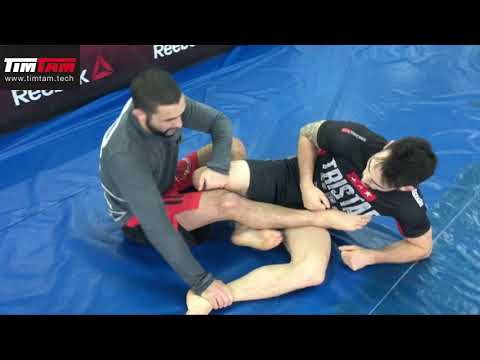
Standard Ankle Lock Escape·Tristar Gym
* Now available on Brave browser -In this video I go over one of the most important preventative leg lock escapes in the…
Translation: standard ankle lock escape
The Standard Ankle Lock Escape executes the fundamental defence by pulling the foot free from the attacker's grip through a combination of straightening the leg and rotating the foot. [1] The defender extends the trapped leg to change the hyperextension angle, then rotates the foot by turning the toes outward (supination), which makes the foot shape harder for the attacker to control. [1],[2] Simultaneously, the defender pushes on the attacker's hip with the free leg to create separation and extract the foot. [2],[3]
The standard ankle lock escape — boot the foot (point the toes and curl the foot), then clear the leg past the opponent's hip line — is the fundamental defense against straight ankle locks. [1] It is highly effective when executed before the opponent has secured a deep grip on the Achilles tendon. [1],[2]
The standard ankle lock escape is the fundamental ankle lock defence. [1]
Used in BJJ competition. [1]
No images yet for this technique.
Sign in to suggest an image.
* Now available on Brave browser -In this video I go over one of the most important preventative leg lock escapes in the…
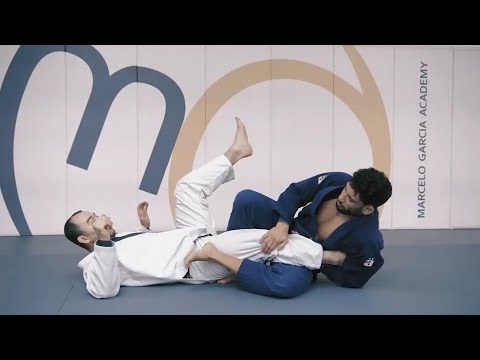
Advanced II Lesson Part 1 of 4 -- Marcelo escapes from the straight ankle lock. If your opponent pauses after encircling…
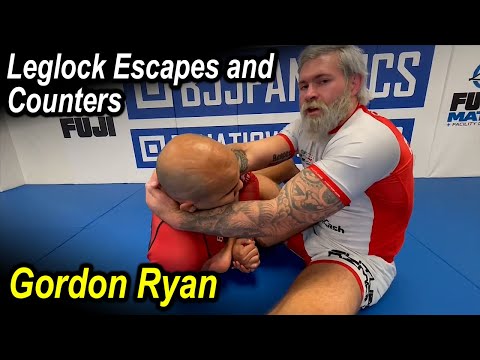
Leglock Escapes and Counters by Gordon Ryan - Click Here To Check Out Gordon Ryan's Instructional Videos - https://bjjfa…
The standard ankle lock escape centers on early recognition and rapid positional adjustment to prevent a leg locker from establishing control. Tristar Gym emphasizes the cross-ankle escape as a preventative technique, stressing that the defender must act immediately upon sensing the attack rather than allowing the attacker to deepen the lock. The core mechanics involve three sequential actions: first, using the opponent's sweep momentum to generate space by shrimping backward; second, crossing one ankle over the opponent's leg while pointing the toes of the trapped foot to create leverage and separation; and third, kicking the top knee to clear both of the opponent's legs before transitioning to offense or neutral position. Tristar Gym repeatedly underscores that space creation between the hips is critical—if the attacker's hips close the distance, the defender loses kicking leverage and the escape fails. Gordon Ryan (Bernardo Faria BJJ Fanatics) expands the conceptual framework by distinguishing between seated and standing escapes, and between early defenses (preventing lock establishment), early submission defense (lock achieved but no pressure applied), and late defenses (escape while under finishing pressure). Ryan's approach emphasizes controlling the opponent's knee and maintaining awareness of the ashi gurami (leg triangle) direction, as disrupting this control mechanism allows repositioning. Marcelo Garcia adds a reactive dimension, advocating for explosive momentum-based responses as the attacker falls, combined with hand control (collar or sleeve) to stay close and prevent re-engagement. All three instructors agree on the importance of timing—escaping early is far more effective than attempting escape from a deep, pressure-applied position. The instructors collectively present a layered defense system ranging from prevention through reactive scrambling to positional control.
Synthesized from 3 instructors
No instructional courses yet for this technique.
Sign in to suggest a course.
Risk of injury to the person this technique is applied to
Submission escapes carry risk of injury if executed too late; timing-critical
Skill level needed to execute this technique reliably
Whether this technique is allowed under major competition rule sets
Advanced Brazilian Jiu-Jitsu Techniques (Marcelo Garcia, 2011)
Alias sources — [1] Jiu-Jitsu University (Saulo Ribeiro, 2008) [2] Leg Locks: Enter the System (John Danaher, 2017)
Effectiveness sources — [1] Jiu-Jitsu University (Saulo Ribeiro, 2008) [2] Mastering Jujitsu (Renzo Gracie & John Danaher, 2003)
Mixed Japanese-Western terminology — combines traditional Japanese terms with katakana loanwords
Alias sources — [1] Jiu-Jitsu University (Saulo Ribeiro, 2008) [2] Leg Locks: Enter the System (John Danaher, 2017)
Effectiveness sources — [1] Jiu-Jitsu University (Saulo Ribeiro, 2008) [2] Mastering Jujitsu (Renzo Gracie & John Danaher, 2003)
hip mobility, explosive bridge/shrimp power, timing
flexible hips and strong glutes for escape movements
glutes, hip flexors, core, triceps (framing)
Coach Zahabi emphasizes doing the cross ankle escape immediately as soon as you feel a leg lock coming on, before your opponent gets too deep. He stresses that awareness and prevention are far more powerful than trying to escape a deep leg lock, so timing is critical to the technique's effectiveness.
According to Coach Zahabi, the most common mistake is not kicking the top knee after freeing your foot—many people think they're safe once their foot is free, but you must kick the top knee to clear both legs and prevent your opponent from re-applying the lock.
Coach Zahabi explains that you must rescue both your trapped leg and your cross ankle leg, and importantly, create space between you and your opponent by scooting backwards so your hips aren't connected. Once you've freed both feet, you can attack the back or pass the guard.
Yes, Coach Zahabi states that whether your partner is attacking the leg lock from the top position or the bottom position, you can use the cross ankle escape to completely prevent them from getting deep on the leg lock.
The Standard Ankle Lock Escape executes the fundamental defence by pulling the foot free from the attacker's grip through a combination of straightening the leg and rotating the foot. The defender extends the trapped leg to change the hyperextension angle, then rotates the foot by turning the toes outward (supination), which makes the foot shape harder for the attacker to control.
The standard ankle lock escape represents the fundamental defensive response to straight ankle locks, taught across all grappling disciplines as the primary ankle lock defence. Its simplicity and effectiveness make it the first leglock escape most grapplers learn.
Unified MMA: legal — Legal defensive/transitional technique; IBJJF: legal — Legal; IJF: legal — Legal; ADCC: legal — Legal; UWW: legal — Legal, escape scores 1 point (freestyle), reversal scores 1 point; FIAS Sport Sambo: legal — Legal; NCAA Folkstyle: legal — Legal, escape scores 1 point, reversal scores 2 points
Danger rating 4/10. Moderate — submission escapes carry risk of injury if executed too late; timing-critical
The standard setup chain: Create Space → Disrupt Control → Execute Escape → Recover Position.
Standard counters include: Maintain Pressure — keep consistent weight distribution to limit escape space / Anticipate Direction — read escape attempt direction and block early / Transition — flow to a new position when the current one is threatened.
Common variants: Standard escape (primary escape mechanic using frames, bridges, or hip mov…); Combination escape (chaining two escape directions or methods); Counter escape (using the opponent's attack attempt to create the escape …); Competition variation (modified for rule-set optimisation).
Used in BJJ competition.
Top errors to watch for: Not pointing the toes immediately — the structural ankle position must be set before the sit-up / Sitting up without gripping anything — use the opponent's body as an anchor to pull yourself up / Sitting up too slowly — the sit-up must be explosive; a slow rise lets the opponent adjust / Not breaking the grip after sitting up — the grip must be broken to fully escape.
The Standard Ankle Lock Escape is also known as Sutandādo Ashikubi-gatame Nige, Basic Ankle Lock Defense, Standard Foot Lock Escape.