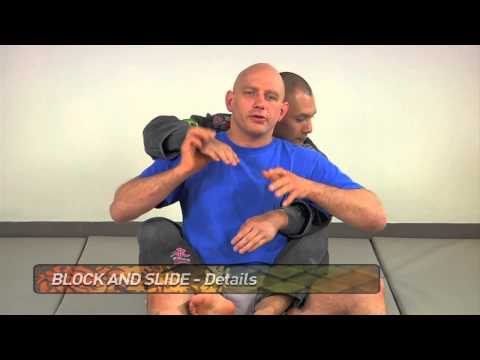
How to Escape the Rear Naked Choke
0
Choke Escape·Stephan Kesting
How to escape the rear naked choke. From the Submission Defense module of the Free Grapplearts BJJ Master App! iOS: htt…
Translation: choke escape
The Choke Escape family covers all techniques for escaping choke and strangulation submissions once they have been initiated. [1] Choke escapes are among the most urgent defensive techniques in grappling because chokes can render a fighter unconscious in seconds, creating a much shorter escape window than joint locks. [1],[2] This family covers escapes from the three most common choke categories: guillotine chokes (front headlock strangulations), rear naked chokes (back control strangulations), and triangle chokes (leg-assisted strangulations). [2],[3]
Choke escape techniques have been developed alongside choking techniques throughout the history of grappling, from judo's shime-waza defences to BJJ's comprehensive choke escape curriculum. [1] The critical nature of choke defence — preventing unconsciousness — has made it a priority in every grappling system. [2],[3]
Choke escape methodology was developed alongside choke attack systems in judo and BJJ. [1]
Choke defence is critical in MMA, where rear chokes are the most common submission. [1]
No images yet for this technique.
Sign in to suggest an image.
How to escape the rear naked choke. From the Submission Defense module of the Free Grapplearts BJJ Master App! iOS: htt…
No instructional courses yet for this technique.
Sign in to suggest a course.
Risk of injury to the person this technique is applied to
Submission escapes carry risk of injury if executed too late; timing-critical
Skill level needed to execute this technique reliably
Whether this technique is allowed under major competition rule sets
Jiu-Jitsu University (Saulo Ribeiro, 2008)
Alias sources — [1] Jiu-Jitsu University (Ribeiro, 2008) [2] Mastering Jujitsu (Gracie & Danaher, 2003)
Effectiveness sources — [1] Mastering Jujitsu (Gracie & Danaher, 2003) [2] Jiu-Jitsu University (Ribeiro, 2008)
Standard Japanese martial arts terminology (kanji/hiragana)
Established Japanese martial arts naming convention — native Japanese term (和語/漢語)
Alias sources — [1] Jiu-Jitsu University (Ribeiro, 2008) [2] Mastering Jujitsu (Gracie & Danaher, 2003)
Effectiveness sources — [1] Mastering Jujitsu (Gracie & Danaher, 2003) [2] Jiu-Jitsu University (Ribeiro, 2008)
grip fighting ability, hip mobility for sliding to the mat, chin defence
strong hands for grip fighting, flexible hips
forearms (grip fighting), core, hip flexors, neck
Every move, in any martial art, shares a few universal traits. Mix and match below to pinpoint the right tool — or compare equivalents across styles.
The Guillotine Escape subfamily covers techniques for escaping the guillotine choke (mae-hadaka-jime), a front headlock strangulation applied from standing or guard position. [1] Guillotine escapes must address the neck compression while managing the positional control — either escaping in the clinch (standing) or passing the guard (ground). [1,2] The primary escape strategies involve posturing to relieve the choke angle, driving forward to create a Von Flue counter opportunity, or circling the head free of the grip. [2,3]
The RNC Escape subfamily covers techniques for escaping the rear naked choke (hadaka-jime), the most dangerous and highest-finishing submission in grappling and MMA. [1] RNC escapes must be initiated before the choke is fully locked — once the figure-four grip is secured and the squeeze applied, escape becomes extremely difficult. [1,2] Escape strategies focus on hand fighting to prevent the choke lock-up, shoulder walking to create defensive angle, and chin tucking to protect the neck while working to turn and face the opponent. [2,3]
The Triangle Escape subfamily covers techniques for escaping the sankaku-jime (triangle choke), where the attacker uses the legs to form a triangle around the defender's head and one arm, creating a strangulation. [1] Triangle escapes must address the locked legs around the neck while managing the risk that escape attempts may tighten the choke further. [1,2] The primary escape strategies are posturing (straightening the spine to relieve pressure) and stacking (driving forward to compress the attacker and change the choke angle). [2,3]
Choke escapes are the most time-critical escapes in grappling — a fully locked blood choke causes unconsciousness in 5-10 seconds. The first defense is always to address the hands (strip grips, two-on-one the choking hand) BEFORE the choke is locked. (Ribeiro, Jiu-Jitsu University; Danaher, Back Attacks: Enter the System)
The primary prevention is to not allow your opponent to establish rear mount position. According to Stephan Kesting, it's very difficult to apply a rear naked choke without at least one hook in rear mount, so denying that position is your first line of defense.
Stephan Kesting recommends grip fighting to stop your opponent's hands from connecting—particularly preventing one hand from coming over your neck. This early intervention, before the choke is fully locked, is often the most effective escape opportunity.
Stephan Kesting emphasizes always escaping toward the underhook side, as this makes you significantly safer. Once you escape this way, you can tuck your chin down and raise your shoulders to further protect yourself.
If the choke is completely locked, Stephan Kesting suggests you can pop the opponent's arm over your shoulder to threaten a straight arm lock, then control their head with both hands, which opens up various rear mount escape options.
The Choke Escape family covers all techniques for escaping choke and strangulation submissions once they have been initiated. Choke escapes are among the most urgent defensive techniques in grappling because chokes can render a fighter unconscious in seconds, creating a much shorter escape window than joint locks.
Choke escape techniques have been developed alongside choking techniques throughout the history of grappling, from judo's shime-waza defences to BJJ's comprehensive choke escape curriculum. The critical nature of choke defence — preventing unconsciousness — has made it a priority in every grappling system.
Unified MMA: legal — Legal defensive/transitional technique; IBJJF: legal — Legal; IJF: legal — Legal; ADCC: legal — Legal; UWW: legal — Legal, escape scores 1 point (freestyle), reversal scores 1 point; FIAS Sport Sambo: legal — Legal; NCAA Folkstyle: legal — Legal, escape scores 1 point, reversal scores 2 points
Danger rating 4/10. Moderate — submission escapes carry risk of injury if executed too late; timing-critical
The standard setup chain: Create Space → Disrupt Control → Execute Escape → Recover Position.
Standard counters include: Maintain Pressure — keep consistent weight distribution to limit escape space / Anticipate Direction — read escape attempt direction and block early / Transition — flow to a new position when the current one is threatened.
Common variants: Slide to side (choking-arm side) (fighting hands and sliding hips to the mat on the choking…); Peel-and-turn (stripping the seatbelt grip and turning into the opponent); Trap-arm escape (trapping one arm and rolling to pin the opponent's back); Body triangle escape (addressing the body triangle lock before escaping the hooks).
Choke defence is critical in MMA, where rear chokes are the most common submission.
Top errors to watch for: Defending too late — once the choke is fully locked, escape is nearly impossible; defend the hands and entry / Relying solely on chin tuck — the chin tuck buys time but the opponent will eventually pry the chin / Trying to muscle out of chokes — technical escapes with grip breaks work; strength fails under fatigue / Panicking when choked — panic wastes oxygen and energy; stay calm and work the escape.
The Choke Escape is also known as Shime-waza Nige, Strangle Escape, Choke Defense.