Mount Escapes for Blue Belts and ADCC Champions by Gordon Ryan
0
Hip Out Mount Escape·Gordon Ryan
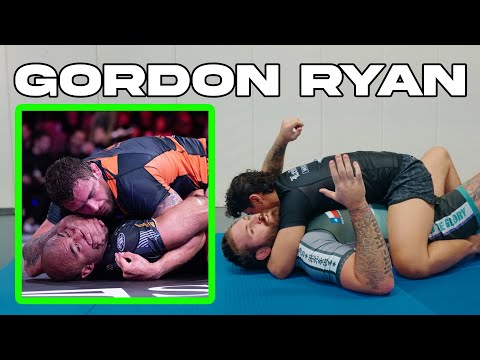
Hi everyone, my name is Gordon Ryan. This is a look into my life. If you enjoy it, watch it. If you hate it, watch it. I…
Translation: Hip out mount escape — an escape from mount using a hip escape (shrimp) combined with an elbow-knee connection to recover half guard or full guard from the bottom of mount
The Hip Out Mount Escape is the fundamental technique for recovering guard from the bottom of mount position, combining a hip escape (shrimp) with an elbow-knee connection that inserts the knee between the two bodies, creating a barrier that prevents the mounted opponent from re-establishing full mount. [1] This is the single most important escape in all of grappling: being mounted is the worst position in BJJ and MMA (the mounted opponent has maximum control and striking ability), and the Hip Out Escape is the primary method of recovering from this position at every level from white belt to world championship. [1],[2] The mechanical execution follows a precise sequence: (1) frame against the opponent's hip with both hands (creating initial space), (2) bridge slightly to one side (displacing the opponent's weight), (3) hip escape (shrimp) laterally by driving the hips away from the opponent's centre of gravity, (4) insert the near knee into the space created between the bodies (the 'elbow-knee connection' — the elbow meets the knee to create a wedge), (5) continue shrimping until the full guard or half guard is recovered. [1],[2] BJ Penn documented the technique in The Book of Knowledge (2007) as one of the 'basic mount escapes' that every MMA fighter must master, noting that the escape works against both ground-and-pound mount (where the opponent is striking) and positional mount (where the opponent is working for submissions). [1] The escape's name — 'Hip Out' — describes the core action: the hips move OUT (laterally away from the mounted opponent) rather than UP (the bridge escape works by moving the hips upward). [1] The Hip Out is complementary to the trap-and-roll (bridge) escape: the bridge displaces the opponent vertically, while the hip out displaces the defender laterally. [1],[2] Together, these two escapes provide complete mount defence — if the trap-and-roll fails (the opponent bases out), the hip out escape is the immediate follow-up, and vice versa. [1]
The Hip Out (Elbow-Knee) Mount Escape is the most fundamental escape in Brazilian Jiu-Jitsu, taught from the very first class at every BJJ school worldwide. [1],[2] The hip escape movement (shrimp) was codified by Hélio Gracie as one of the core movements of the Gracie Jiu-Jitsu survival system — Hélio, who was smaller and weaker than most opponents, developed the hip escape as a method of escaping dominant positions without requiring superior strength. [2] The technique was further systematised by every subsequent generation of BJJ instructors and has remained fundamentally unchanged since its codification — a testament to its biomechanical soundness. [2] BJ Penn included the Hip Out Mount Escape in The Book of Knowledge (2007) as part of the MMA adaptation of BJJ's fundamental survival techniques. [1] The escape is considered so fundamental that it is often called simply 'THE mount escape' — the trap-and-roll is the only other technique of comparable importance from bottom mount. [1],[2]
The Hip Out Mount Escape is the single most important escape technique in grappling — it is the primary method of recovering guard from the worst position in BJJ/MMA, and it works at every level from beginner to world championship. [1],[2] The technique's effectiveness comes from its biomechanical soundness: lateral hip displacement creates a gap that the mounted opponent's downward weight cannot simultaneously cover, and the bone-on-bone elbow-knee connection creates a wedge that resists compression. [2] In competition, the Hip Out Escape has been used successfully by every BJJ and MMA champion in history — it is not a technique that becomes obsolete at higher levels; it becomes MORE essential because the cost of remaining mounted increases. [1],[2] In MMA, the escape is critical for survival: remaining in bottom mount under ground-and-pound leads to referee stoppages, so the Hip Out must be executed quickly and decisively. [1]
Every BJJ and MMA champion in history has relied on the Hip Out Mount Escape as their primary method of recovering from bottom mount. The technique is used in every UFC event, every IBJJF World Championship, and every grappling competition at every level. It is the most universally applied escape technique in combat sports.
No images yet for this technique.
Sign in to suggest an image.
Hi everyone, my name is Gordon Ryan. This is a look into my life. If you enjoy it, watch it. If you hate it, watch it. I…
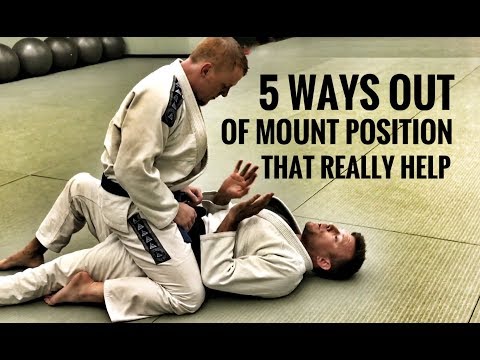
So much more at Patreon.com/KnightJiuJitsu Getting mounted sucks, but these techniques and concepts help it to suck a l…
The hip-out mount escape is a fundamental technique for escaping mounted position when the top player has established control. Both Knight Jiu-Jitsu and Gordon Ryan emphasize that elbow positioning relative to the opponent's knees is the critical determining factor for escape success. Knight Jiu-Jitsu demonstrates the foundational method: when hands are available on the mat, trap the opponent's hand or wrist with a gable grip, control the foot on the same side, then bridge and arch the hips to execute a roll. Gordon Ryan adds specificity regarding hand placement—using either a hip post (when the bottom player's elbow is inside the opponent's knee) or a cross hip post (when the opponent's knee is inside)—followed by a bridge directed over one shoulder to shift the opponent's weight onto a single knee. Both instructors agree that bridging is the initiating power source and that maintaining inside elbow position is essential. Knight Jiu-Jitsu provides variations for different top-player configurations, including responses to grapevine leg hooks and crossed ankles, while Gordon Ryan focuses on the fundamental mechanics of hand positioning and the relationship between bridge direction and weight distribution. Both emphasize that technique must adapt to the opponent's specific defensive setup rather than forcing a single method, and both stress avoiding ineffective techniques such as wrapping feet around the opponent or passive hugging.
Synthesized from 2 instructors
No instructional courses yet for this technique.
Sign in to suggest a course.
Risk of injury to the person this technique is applied to
The Hip Out Mount Escape is a purely defensive positional recovery technique with no injury risk to either participant.
Skill level needed to execute this technique reliably
Whether this technique is allowed under major competition rule sets
Mixed Martial Arts: The Book of Knowledge (Penn, Cordoza & Krauss, 2007)
description: [1] Penn 2007, [2] Ribeiro 2008
Standard katakana transliteration of Western martial arts terminology (外来語) — used in Japanese MMA, boxing, and BJJ communities
description: [1] Penn 2007, [2] Ribeiro 2008
The Hip Out is designed to work for practitioners of ALL sizes and strength levels — Hélio Gracie specifically developed it as an escape for smaller, weaker fighters
Strong hips for the shrimping motion (developed through training, not prerequisite)
Basic coordination for the elbow-knee connection
No flexibility or conditioning requirements
The most accessible escape technique in grappling — taught in the first class of every BJJ school
The hip out (elbow-knee) mount escape is the fundamental mount escape in BJJ — frame on the hip, shrimp the hips out, insert the knee to recover half guard or full guard. Saulo Ribeiro considers this the single most important technique in jiu-jitsu. (Ribeiro, Jiu-Jitsu University; Gracie fundamentals)
According to Knight Jiu-Jitsu, trap and roll works best when your opponent is high and tight with their legs in close and a vertical posture. If they're low and wide, the trap and roll is no longer the right technique—you should switch to a different escape like the elbow escape.
Knight Jiu-Jitsu recommends pushing through from the heel and stepping on your opponent's leg, then placing your foot on your own foot and hopping both legs off at the same time before finishing your elbow escape. You can then go to half guard or back to full guard depending on the space available.
When a bridge is no longer effective due to the opponent's knees in your armpits, Knight Jiu-Jitsu suggests using a C-clamp hand position to push into their armpits, bridge up, then immediately replace your hands with your feet so you can push on their torso or hips and roll over your shoulder.
According to Gordon Ryan, the determining factor is your hand position: if your elbow can get to the inside position relative to your partner's knee, use a standard hip post; if your partner's knee is on the inside position relative to your elbow, use a cross hip post instead.
The Hip Out Mount Escape is the fundamental technique for recovering guard from the bottom of mount position, combining a hip escape (shrimp) with an elbow-knee connection that inserts the knee between the two bodies, creating a barrier that prevents the mounted opponent from re-establishing full mount. This is the single most important escape in all of grappling: being mounted is the worst position in BJJ and MMA (the mounted opponent has maximum control and striking ability), and the Hip Out Escape is the primary method of recovering from this position at every level from white belt to world championship.
The Hip Out (Elbow-Knee) Mount Escape is the most fundamental escape in Brazilian Jiu-Jitsu, taught from the very first class at every BJJ school worldwide. The hip escape movement (shrimp) was codified by Hélio Gracie as one of the core movements of the Gracie Jiu-Jitsu survival system — Hélio, who was smaller and weaker than most opponents, developed the hip escape as a method of escaping dominant positions without requiring superior strength.
Unified MMA: legal — Legal defensive/transitional technique; IBJJF: legal — Legal; IJF: legal — Legal; ADCC: legal — Legal; UWW: legal — Legal, escape scores 1 point (freestyle), reversal scores 1 point; FIAS Sport Sambo: legal — Legal; NCAA Folkstyle: legal — Legal, escape scores 1 point, reversal scores 2 points
Danger rating 2/10. The Hip Out Mount Escape is a purely defensive positional recovery technique with no injury risk to either participant.
The standard setup chain: Bottom mount → Frame on the opponent's hips with both hands (creating initial space) → Bridge slightly to one side (displacing the opponent's weight) → Hip escape (shrimp) laterally (driving the hips AWAY from the opponent's centreline) → As the gap opens between the bodies → Insert the near knee into the space → Connect the elbow to the knee (bone-on-bone wedge) → Continue shrimping → Recover half guard or full guard → From guard: sweep, submit, or stand up → If the first shrimp doesn't create enough space → shrimp again to the same side → or bridge and shrimp to the opposite side → alternate until the escape succeeds.
Standard counters include: Maintain heavy hips — driving the hips low into the defender's body reduces the space available for the shrimp / Grapevine — hooking the defender's legs with the feet (grapevining) from mount prevents them from shrimping / High mount — climbing to high mount (knees in armpits) places the weight above the defender's frame, making the hip e… / Follow the shrimp — when the defender shrimps to one side, immediately adjust the mount to cover the new position.
Common variants: Standard hip out to full guard (shrimping far enough to recover closed guard); Hip out to half guard (shrimping to recover half guard (the minimum escape)); Hip out to Guantanamo (10th Planet) (hip escaping directly into the lockdown half guard for im…); Double hip out (two successive shrimps (one to each side) if the first do…); Hip out with underhook (adding an underhook during the escape for more control of…); Hip out to standing (using the hip escape to create space, then immediately st…).
Every BJJ and MMA champion in history has relied on the Hip Out Mount Escape as their primary method of recovering from bottom mount. The technique is used in every UFC event, every IBJJF World Championship, and every grappling competition at every level.
Top errors to watch for: Not framing first — attempting the hip escape without creating initial space (by framing on the opponent's hips) mean… / Bridge instead of shrimp — the hip out requires LATERAL displacement (shrimp), not VERTICAL displacement (bridge). A … / Elbow-knee disconnect — if the inserting knee and the same-side elbow don't touch, the opponent's weight drives the k… / Shrimping toward the opponent — the hips must move AWAY from the opponent's centreline. Shrimping toward the opponent….
The Hip Out Mount Escape is also known as Hippu Auto Maunto Esukēpu, Elbow-Knee Mount Escape, Shrimp Mount Escape, Hip Escape from Mount, Guard Recovery from Mount.