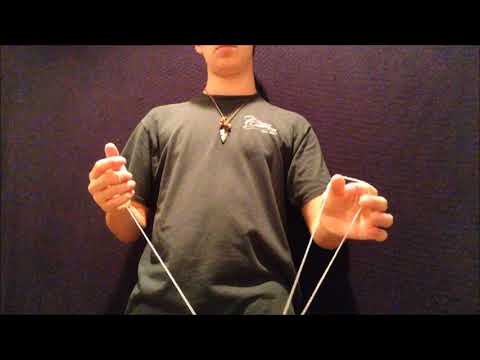
Yusuke Otsuka Cross-Arm Combo Tutorial
0
Cross-Arm Cover·Noah Chin
A little late but better late than never. :)
Translation: cross-arm cover
The Cross-Arm Cover subfamily positions both arms crossed in front of the face or body, creating a double-layered barrier against incoming strikes. [1] The cross-arm cover provides maximum facial protection by creating an interlocking shield of forearms in front of the chin and nose, but it sacrifices visibility and the ability to counter-punch quickly. [1],[2] The cross-arm cover is primarily used as an emergency defence when the fighter is hurt or stunned and needs to survive a barrage of strikes until they recover. [2],[3]
The cross-arm cover crosses both arms over the head for maximum protection against overhead strikes. [1]
A fundamental boxing and MMA defensive technique. [1]
Used in boxing and MMA competition. [1]
No images yet for this technique.
Sign in to suggest an image.
A little late but better late than never. :)
No instructional courses yet for this technique.
Sign in to suggest a course.
Risk of injury to the person this technique is applied to
Blocking and parrying absorb strike force; hand/forearm injury from repeated blocking
Skill level needed to execute this technique reliably
Whether this technique is allowed under major competition rule sets
Boxing (Edwin Haislet, 1940)
Alias sources — [1] Championship Fighting (Dempsey, 1950) [2] Boxing Mastery (Hatmaker, 2004) [3] Fighter's Fact Book (Christensen, 2000)
Effectiveness sources — [1] Boxing: The Complete Guide to Training and Fitness (Hatmaker, 2004)
Standard katakana transliteration of Western martial arts terminology (外来語) — used in Japanese MMA, boxing, and BJJ communities
Alias sources — [1] Championship Fighting (Dempsey, 1950) [2] Boxing Mastery (Hatmaker, 2004) [3] Fighter's Fact Book (Christensen, 2000)
Effectiveness sources — [1] Boxing: The Complete Guide to Training and Fitness (Hatmaker, 2004)
reaction speed, structural body mechanics, defensive awareness
quick reflexes and conditioned defensive surfaces
varies — forearms (blocking), legs (movement), core (stability)
Every move, in any martial art, shares a few universal traits. Mix and match below to pinpoint the right tool — or compare equivalents across styles.
The Cross-Arm Cover subfamily positions both arms crossed in front of the face or body, creating a double-layered barrier against incoming strikes. The cross-arm cover provides maximum facial protection by creating an interlocking shield of forearms in front of the chin and nose, but it sacrifices visibility and the ability to counter-punch quickly.
The cross-arm cover is one of boxing's oldest emergency defensive positions, used by fighters who are hurt and need to protect themselves from further damage. The technique has been part of boxing's defensive toolkit since the sport's bare-knuckle era.
Unified MMA: legal — Legal defensive technique; WBC/Boxing: legal — Legal — blocking and evasion are core boxing skills; WKF: legal — Legal — blocking is a fundamental karate skill; Kyokushin: legal — Legal; WT: legal — Legal; WAKO: legal — Legal; K: legal — 1/GLORY — Legal; IFMA: legal — Legal
Danger rating 3/10. Moderate — blocking and parrying absorb strike force; hand/forearm injury from repeated blocking
The standard setup chain: Anticipate the Attack → Execute Defence → Recover Stance → Counter or Disengage.
Standard counters include: Timing — attack when the defence is recovering or between movements / Feint — use deception to create openings in the defensive structure / Angle Change — attack from an unexpected angle that the defence does not cover.
Common variants: Standard defence (primary defensive technique from the most common position); Reactive defence (triggered by the opponent's attack, minimal movement for …); Proactive defence (anticipating the attack and positioning to neutralise it …); Counter defence (using the defensive movement to create an immediate count…).
Used in boxing and MMA competition.
Top errors to watch for: Staying in the cross-arm cover too long — it blocks your vision and prevents countering; use it for 1-2 seconds only / Not splitting the arms to counter — the cross-arm cover must transition to offence immediately / Crossing the arms too high (above the forehead) — the cross should be in front of the face at chin-to-forehead level / Leaving gaps at the sides — tuck the elbows close to protect against hooks.
The Cross-Arm Cover is also known as Kurosu Āmu Kabā, Cross Guard, Crossed Arms Defence, X-Guard Cover.