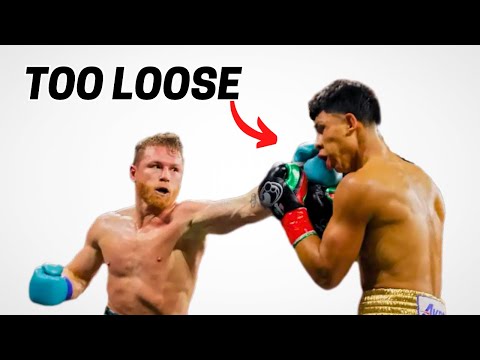
Philly Shell Tutorial || Boxing Defence | McLeod Scott Boxing
0
Cover Defence·McLeod Scott Boxing
65% OFF‼️ SOVIET BOXING TRAINING 🏫 Was £79.99, NOW £28.00 🤯🤯 Use code SOVIETBOX65 at the checkout 🛒 👇 www.spart…
Translation: cover defence
The Cover Defence family encompasses defensive postures and techniques where the fighter positions the arms, hands, and shoulders to create a protective shell that absorbs strikes on non-vulnerable areas rather than attempting to block or evade each individual attack. [1] Cover defences are used when the volume or speed of incoming strikes makes individual blocking impractical — the fighter tightens their guard and weathers the storm until they can counter, clinch, or escape. [1],[2] This family includes high guard covers, shell covers, and cross-arm covers, each offering different levels of protection and mobility. [2],[3]
Cover defences have been fundamental to boxing since the sport's earliest days, where the ability to absorb punishment behind a tight guard was essential for survival in long prizefights. [1] The cover-up became a recognised defensive system through boxing's evolution, with different guard positions developed for different situations. [2],[3]
Cover defences are fundamental in boxing and Muay Thai. [1]
Covering is the most basic survival defence in boxing, MMA, and Muay Thai competition. [1]
No images yet for this technique.
Sign in to suggest an image.
65% OFF‼️ SOVIET BOXING TRAINING 🏫 Was £79.99, NOW £28.00 🤯🤯 Use code SOVIETBOX65 at the checkout 🛒 👇 www.spart…
Why your HIGH GUARD doesn't work? It comes down to a bad understanding of this defensive technique. This breakdown walk…
No instructional courses yet for this technique.
Sign in to suggest a course.
Risk of injury to the person this technique is applied to
Blocking and parrying absorb strike force; hand/forearm injury from repeated blocking
Skill level needed to execute this technique reliably
Whether this technique is allowed under major competition rule sets
Karate-Do Kyohan: The Master Text (Gichin Funakoshi, 1935)
Alias sources — [1] Championship Fighting (Dempsey, 1950) [2] Boxing Mastery (Hatmaker, 2004) [3] Championship Fighting (Dempsey, 1950) [4] Boxing Mastery (Hatmaker, 2004)
Effectiveness sources — [1] Boxing: The Complete Guide to Training and Fitness (Hatmaker, 2004) [2] Muay Thai Unleashed (Delp, 2006)
Standard katakana transliteration of Western martial arts terminology (外来語) — used in Japanese MMA, boxing, and BJJ communities
Alias sources — [1] Championship Fighting (Dempsey, 1950) [2] Boxing Mastery (Hatmaker, 2004) [3] Championship Fighting (Dempsey, 1950) [4] Boxing Mastery (Hatmaker, 2004)
Effectiveness sources — [1] Boxing: The Complete Guide to Training and Fitness (Hatmaker, 2004) [2] Muay Thai Unleashed (Delp, 2006)
forearm conditioning, reaction speed, structural stability
dense bone structure, strong forearms
forearm flexors/extensors, deltoids, biceps, core (absorbing impact)
Every move, in any martial art, shares a few universal traits. Mix and match below to pinpoint the right tool — or compare equivalents across styles.
The Cross-Arm Cover subfamily positions both arms crossed in front of the face or body, creating a double-layered barrier against incoming strikes. [1] The cross-arm cover provides maximum facial protection by creating an interlocking shield of forearms in front of the chin and nose, but it sacrifices visibility and the ability to counter-punch quickly. [1,2] The cross-arm cover is primarily used as an emergency defence when the fighter is hurt or stunned and needs to survive a barrage of strikes until they recover. [2,3]
The High Guard Cover subfamily positions both hands high beside the head with the elbows tucked tight, creating a protective frame around the head and face that absorbs and deflects incoming strikes. [1] The high guard is the standard defensive posture in boxing and MMA, providing a balance between protection and the ability to see incoming strikes and counter-punch. [1,2] The high guard keeps the hands close to the chin and temples — the primary knockout targets — while maintaining enough mobility for the fighter to transition to offence quickly. [2,3]
The Shell Cover subfamily covers the defensive posture where the fighter curls into a compact protective shape, tucking the chin behind the shoulders and covering the head with the arms, creating a turtle-like shell that minimises the exposed target area. [1] The shell cover is used against overwhelming offence — particularly in MMA ground-and-pound situations — where the fighter needs to minimise damage while looking for an opportunity to escape, clinch, or recover guard. [1,2] The shell position sacrifices all offensive capability for maximum protection. [2,3]
Covering up — using arms and shoulders to absorb strikes — appears extensively across our corpus. The shell defense (tight guard covering the head) is the last line of defense when movement and parrying fail. In Muay Thai, the long guard uses the lead arm to cover and redirect. (Boxing and Muay Thai manuals)
Position your hands like binoculars to give yourself better vision and an extra six inches of padding for blocking and powering. Pin your hands directly to your face and tense your back muscles so they don't move when getting hit, rather than just holding them up with shoulder tension alone.
DelCardo Boxing emphasizes that while the high guard feels awkward at first, it is possible to stay dynamic with conscious practice. The key is maintaining a low center of gravity and wide base—if you raise your chest and lift your center of gravity, it becomes harder to move and punch.
Keep your center of gravity low and your base wide, like a stable triangle. Balance means you can punch and defend at any moment; the moment you raise your chest and lift your center of gravity, you lose the ability to respond effectively.
If you stay compact with a low center of gravity when taking shots, judges are less likely to see the impact clearly. Conversely, when you raise your chest, judges can more easily score punches against you.
The Cover Defence family encompasses defensive postures and techniques where the fighter positions the arms, hands, and shoulders to create a protective shell that absorbs strikes on non-vulnerable areas rather than attempting to block or evade each individual attack. Cover defences are used when the volume or speed of incoming strikes makes individual blocking impractical — the fighter tightens their guard and weathers the storm until they can counter, clinch, or escape.
Cover defences have been fundamental to boxing since the sport's earliest days, where the ability to absorb punishment behind a tight guard was essential for survival in long prizefights. The cover-up became a recognised defensive system through boxing's evolution, with different guard positions developed for different situations.
Unified MMA: legal — Legal defensive technique; WBC/Boxing: legal — Legal — blocking and evasion are core boxing skills; WKF: legal — Legal — blocking is a fundamental karate skill; Kyokushin: legal — Legal; WT: legal — Legal; WAKO: legal — Legal; K: legal — 1/GLORY — Legal; IFMA: legal — Legal
Danger rating 3/10. Moderate — blocking and parrying absorb strike force; hand/forearm injury from repeated blocking
The standard setup chain: Anticipate the Attack → Execute Defence → Recover Stance → Counter or Disengage.
Standard counters include: Timing — attack when the defence is recovering or between movements / Feint — use deception to create openings in the defensive structure / Angle Change — attack from an unexpected angle that the defence does not cover.
Common variants: High block (forearm raised above the head to protect against overhead…); Low block (forearm driven downward to deflect kicks or body strikes); Cross block (forearm crosses the body to protect the opposite side); Double forearm block (both forearms together for maximum coverage).
Covering is the most basic survival defence in boxing, MMA, and Muay Thai competition.
Top errors to watch for: Covering up and staying covered — the cover is temporary; immediately counter or move when the barrage pauses / Covering with gaps between the arms — the elbows, forearms, and fists must form a complete barrier / Looking away or closing eyes while covered — keep watching through the guard to see the next opening / Covering without tightening the core — the body must be braced for impact alongside the arms.
The Cover Defence is also known as Kabā Difensu, Shell, Guard, Covering Up, Turtle Guard — standing.