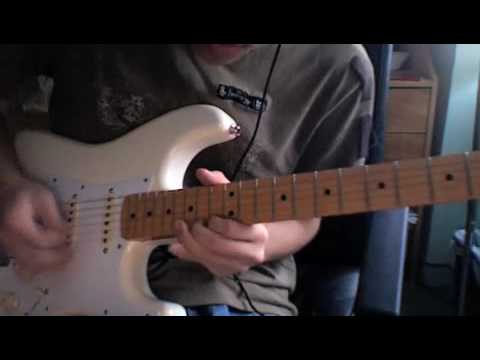
Bana - Shell (Cover)
0
Shell Cover·EvaGoN
An (accurate?) guitar cover of Witch Hunter Robin's OP.. Shell by Bana.. .
Translation: shell cover
The Shell Cover subfamily covers the defensive posture where the fighter curls into a compact protective shape, tucking the chin behind the shoulders and covering the head with the arms, creating a turtle-like shell that minimises the exposed target area. [1] The shell cover is used against overwhelming offence — particularly in MMA ground-and-pound situations — where the fighter needs to minimise damage while looking for an opportunity to escape, clinch, or recover guard. [1],[2] The shell position sacrifices all offensive capability for maximum protection. [2],[3]
The shell cover tucks the chin and raises both forearms to create a tight defensive shell. [1]
The shell defence is fundamental in boxing. [1]
Used in boxing and MMA competition. [1]
No images yet for this technique.
Sign in to suggest an image.
An (accurate?) guitar cover of Witch Hunter Robin's OP.. Shell by Bana.. .
No instructional courses yet for this technique.
Sign in to suggest a course.
Risk of injury to the person this technique is applied to
Blocking and parrying absorb strike force; hand/forearm injury from repeated blocking
Skill level needed to execute this technique reliably
Whether this technique is allowed under major competition rule sets
Boxing (Edwin Haislet, 1940)
Alias sources — [1] Championship Fighting (Dempsey, 1950) [2] Boxing Mastery (Hatmaker, 2004) [3] Fighter's Fact Book (Christensen, 2000)
Effectiveness sources — [1] Boxing: The Complete Guide to Training and Fitness (Hatmaker, 2004)
Standard katakana transliteration of Western martial arts terminology (外来語) — used in Japanese MMA, boxing, and BJJ communities
Alias sources — [1] Championship Fighting (Dempsey, 1950) [2] Boxing Mastery (Hatmaker, 2004) [3] Fighter's Fact Book (Christensen, 2000)
Effectiveness sources — [1] Boxing: The Complete Guide to Training and Fitness (Hatmaker, 2004)
reaction speed, structural body mechanics, defensive awareness
quick reflexes and conditioned defensive surfaces
varies — forearms (blocking), legs (movement), core (stability)
Every move, in any martial art, shares a few universal traits. Mix and match below to pinpoint the right tool — or compare equivalents across styles.
The Shell Cover subfamily covers the defensive posture where the fighter curls into a compact protective shape, tucking the chin behind the shoulders and covering the head with the arms, creating a turtle-like shell that minimises the exposed target area. The shell cover is used against overwhelming offence — particularly in MMA ground-and-pound situations — where the fighter needs to minimise damage while looking for an opportunity to escape, clinch, or recover guard.
The shell cover developed as a defensive response to the ground-and-pound striking that became a dominant feature of MMA competition. In boxing, similar tight cover-up positions have been used since the sport's bare-knuckle era to survive punishment during heavy exchanges.
Unified MMA: legal — Legal defensive technique; WBC/Boxing: legal — Legal — blocking and evasion are core boxing skills; WKF: legal — Legal — blocking is a fundamental karate skill; Kyokushin: legal — Legal; WT: legal — Legal; WAKO: legal — Legal; K: legal — 1/GLORY — Legal; IFMA: legal — Legal
Danger rating 3/10. Moderate — blocking and parrying absorb strike force; hand/forearm injury from repeated blocking
The standard setup chain: Anticipate the Attack → Execute Defence → Recover Stance → Counter or Disengage.
Standard counters include: Timing — attack when the defence is recovering or between movements / Feint — use deception to create openings in the defensive structure / Angle Change — attack from an unexpected angle that the defence does not cover.
Common variants: Standard defence (primary defensive technique from the most common position); Reactive defence (triggered by the opponent's attack, minimal movement for …); Proactive defence (anticipating the attack and positioning to neutralise it …); Counter defence (using the defensive movement to create an immediate count…).
Used in boxing and MMA competition.
Top errors to watch for: Taking the rear hand off the chin — the rear hand MUST protect the chin at all times in the shell / Dropping the lead hand too low — it should protect the body, not hang by the thigh / Using the shell against hooks without additional head movement — hooks go around the shoulder; bob or weave as well / Standing square while using the shell — the bladed stance is essential for the shoulder to create the deflection angle.
The Shell Cover is also known as Sheru Kabā, Shell Guard, Turtle Shell, Compact Cover.