Translation: Outside defence — the deflecting hand works from the outside line (between the attacker's arm and the defender's outer body), redirecting the straight punch inward past the face while the body angles offline
Range & classification
Category
Strike & defenceLocksClose rangeFighting multiple people
Distance
CloseMiddleLong
Overview
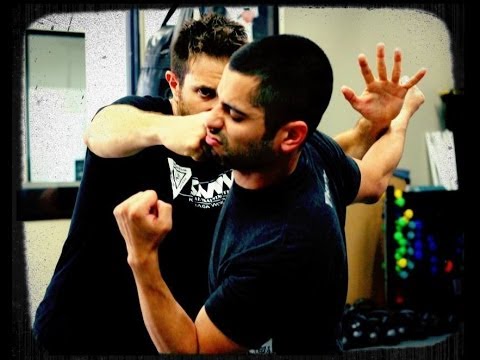
The Outside Defence Against Straight Punch is the complementary pair to the Inside Defence, deflecting an incoming straight punch from the OUTSIDE line — the hand moves from the defender's centreline outward, contacting the outside of the attacker's forearm or wrist and redirecting the punch past the face to the defender's outside. [1] While the Inside Defence works from the inside line (deflecting the punch outward past the face), the Outside Defence works from the outside line (deflecting the punch inward past the face while the body angles to the outside), providing complete bilateral coverage when combined: the Inside Defence covers the inside angle, the Outside Defence covers the outside angle. [1],[2] The Outside Defence includes a critical body-movement component: as the deflecting hand redirects the punch, the defender steps at approximately 30-45° to the outside of the attacker's punching arm, simultaneously creating a new angle that makes the attacker's follow-up attack difficult while positioning the defender for a devastating counter from the outside flank. [1] This body angle is what distinguishes the Outside Defence from the Inside Defence (which typically stays on the centreline): the Outside Defence actively creates an angular advantage. [1] Following the Krav Maga simultaneous defence-and-attack principle, the deflecting hand redirects the punch while the opposite hand delivers a counter-strike — but in the Outside Defence, the counter often targets the side of the attacker's jaw, the ear, or the temple, because the angled position gives access to targets the frontal Inside Defence cannot reach. [1],[2] Yaron Lichtenstein documented this defence alongside the Inside Defence as the two primary responses to straight punches, noting that the choice between Inside and Outside depends on the attacker's angle, the defender's position, and the tactical opportunity: the Inside Defence is faster (less body movement required) while the Outside Defence creates a superior counter-attacking angle. [1]
Also known as
Outside BlockOutside DeflectionKrav Outside DefenceForearm RedirectOutside Line DefenceOutside Parry
The Outside Defence was developed alongside the Inside Defence as part of Krav Maga's paired defensive system for straight punches. [1],[2] Imi Lichtenfeld recognised that straight punches could be deflected from two directions — inside or outside — and that each direction created different counter-attacking opportunities. [1] The Outside Defence's angular component reflects Lichtenfeld's background in boxing and wrestling, where 'taking the angle' (moving to the opponent's flank) is a fundamental tactical principle. [2] Yaron Lichtenstein documented the Outside Defence in The Book of Krav-Maga: The Bible (2007) as the complement to the Inside Defence, together forming a complete response system for straight-line attacks. [1]
Country of origin· shown in random order
🇮🇱IsraelKrav Maga, Kapap
🇧🇷BrazilMMA (as an outside-angle concept)
🇺🇸USAMMA (as an outside-angle concept)
🇬🇧EnglandBoxing (as the outside slip principle)
🇬🇷GreeceBoxing (as the outside slip principle)
🇨🇳ChinaWing Chun (as pak sao with angle)
Effectiveness
The Outside Defence creates the most tactically advantageous position in unarmed combat: the defender's flank at 30-45° to the attacker. [1] From this position, the defender can hit, clinch, or takedown while the attacker must rotate before they can defend or counter — a rotation that takes 0.3-0.5 seconds, more than enough time for the defender's counter to land. [1] The angular advantage is so valuable that it is a central concept in virtually every fighting system: boxing's 'outside slip,' Muay Thai's angle-off, karate's tai sabaki, and wrestling's inside-step all exploit the same principle. [1],[2] The Outside Defence's simultaneous deflection-and-angle provides the fastest path to this advantageous position from a defensive starting point. [1]
Lineage
Imi Lichtenfeld (developed alongside the Inside Defence as a paired response system) → Yaron Lichtenstein (9th Dan, documented 2007) → taught worldwide as a core Krav Maga defence. The angular principle has parallels in boxing (outside slip), Muay Thai (angle-off), karate (tai sabaki), and wrestling. [1],[2]
Competition Record
Not applicable — self-defence technique. The outside-angle principle is used universally in boxing, MMA, and all striking martial arts as a fundamental tactical concept.
Images
No images yet for this technique.
Sign in to suggest an image.
Biomechanical Mechanism
Primary Action — The forearm or palm contacts the OUTSIDE of the attacker's punching arm, redirecting the punch inward (toward the attacker's centreline) while the body steps to the outside at 30-45° — creating both the deflection and the angular advantage simultaneously
Joints Involved — Defending arm: shoulder (abduction to reach the outside of the incoming arm), elbow (slight flexion), wrist/hand (contact surface — either the forearm ulnar edge or the open palm); Counter-striking arm: standard striking joints; Feet (the lead foot steps to the outside at 30-45°, the body follows); Hips (rotation to face the new angle)
Force Vector — The deflection moves the punch INWARD (from the outside of the arm toward the attacker's centreline), while the body moves OUTWARD (stepping away from the punch's original line). This creates a two-part evasion: the punch is deflected in one direction while the body moves in the opposite direction.
Leverage Principle — The angular step creates a geometric advantage: after the Outside Defence, the defender is at the attacker's FLANK (30-45° off their centreline), while the attacker is still facing their original direction. This means the defender can hit the attacker from the side while the attacker must first rotate to face the new angle before they can attack back. In combat terms, the defender has 'taken the angle' — one of the most advantageous tactical positions in any fighting system.
Position & Entry
Against a right straight punch (standard) — As the attacker throws a right straight, the defender's right hand contacts the outside of the attacker's right forearm, deflecting the punch inward → simultaneously, the defender's left foot steps to the outside (the attacker's right side) at 30-45° → the defender's left hand fires a counter-strike to the attacker's exposed right temple/jaw
Against a jab — Against the faster jab, the outside defence must be quicker — a shorter deflection combined with a shorter step creates the angle for the counter
Against an aggressive rush — When the attacker rushes forward with a straight punch, the Outside Defence allows the defender to step offline while redirecting the rush past them — the attacker's momentum carries them past the defender, who is now at their flank
Following an Inside Defence — If the first punch is defended with Inside Defence (staying on the centreline), and the attacker throws a second straight punch, the Outside Defence takes the angle for a different counter-attack perspective
As a setup for a takedown — After stepping to the outside angle, the defender has access to the attacker's rear — the Outside Defence can flow into a rear clinch, rear body lock, or rear takedown
Variants
Standard Outside Defence — forearm deflection with 30-45° step to the outside
Palm Outside Defence — using the open palm for the deflection (broader contact surface, more forgiving timing)
Large-angle Outside Defence — stepping a full 45-60° to the outside for maximum angular advantage (sacrificing speed for angle)
Small-angle Outside Defence — minimal step (15-20°) for speed in close-quarters situations
Outside Defence to clinch — stepping to the outside angle and immediately clinching the attacker from behind
Outside Defence to takedown — flowing from the deflection and angle into a rear takedown
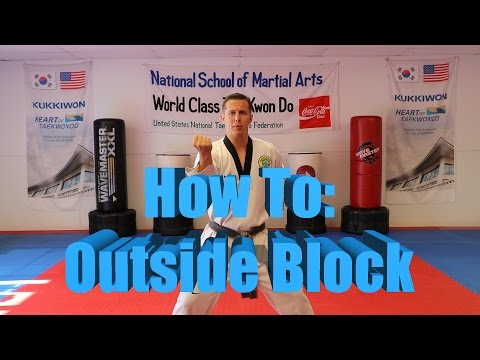
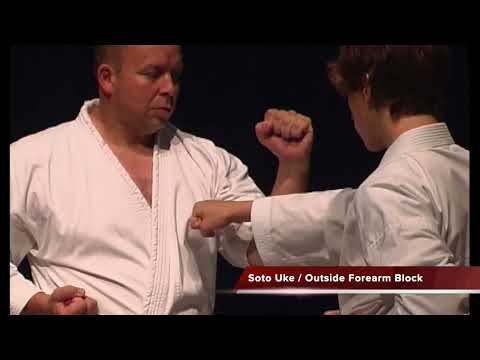
The outside defence against a straight punch is a fundamental blocking technique taught across karate and Krav Maga traditions with notable convergences and distinctions. Karatestarters emphasizes the mechanics of *soto uke* (outside forearm block), where the defender raises the arm past the ear with elbow high, then sweeps down and out while twisting the hips at impact; the inside forearm makes initial contact, then rotates until the inside edge bears the final load. Other World Entertainment describes a similar mechanics but frames it as a lateral stepping block—the defender steps slightly to the side while bringing the forearm across to deflect the incoming strike, keeping the block tight and close to the body using proper forearm contact rather than the wrist. Both instructors stress avoiding common errors: over-crossing the body (limiting recovery), blocking with a square stance (reducing power), and overextending the arm. KMW Krav Maga and Jeff Chan MMAShredded diverge conceptually by framing the technique as a *redirection* rather than a block—the hand guides the punch off-line across the body while simultaneously allowing counter-striking or body shots. Chan adds the strategic layer of parrying the initial punch to read and prepare for follow-up attacks, incorporating head movement and footwork. All four sources agree on the fundamental principle: controlled deflection using the forearm, proper stance alignment, and simultaneous offensive response.
Synthesized from 4 instructors
karatestarters — Soto uke, (outside block) Tutorial: Detailed mechanics of *soto uke*: raising arm past ear, sweeping down and out, hip twist at impact, forearm rotation from inside to inside-edge contact. Identifies common mistakes including over-crossing, blocking square, and poor head alignment.
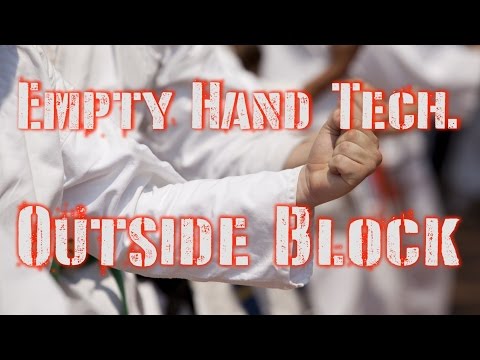
Other World Entertainment — Empty Hand Technique – Outside Block – Complete Lesson – Learn Martial Arts: Lateral stepping approach to the outside block; emphasis on stepping slightly to the side while blocking out. Stresses forearm contact over wrist and keeping the block tight and close to the body to prevent self-contact on recoil.
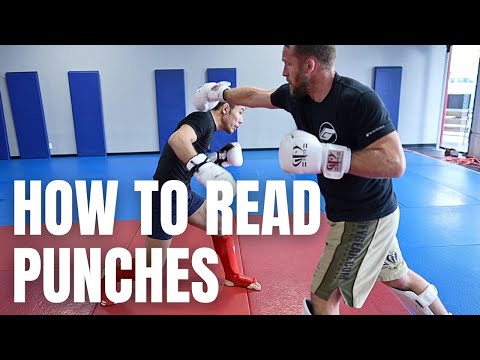
Jeff Chan MMAShredded — 3 Beginner Tips for Reading Punches & Improving Head Movement: Frames the initial block as a parry to read and control the opponent's lead hand, enabling detection and evasion of follow-up punches. Introduces head movement sequencing after the block and emphasizes distance management and footwork.
KMW Krav Maga — Krav Maga : How to Defend Against A Straight Punch in a Street Fight - Self Defense Technique: Conceptualizes the technique as redirection off-line rather than a hard block; simultaneous body counter-strike while redirecting. Emphasizes fighting stance maintenance, automatic recoil, and immediate offensive follow-up (strikes, kicks, knees).
Learn This Technique
No instructional courses yet for this technique.
Sign in to suggest a course.
Ratings
Danger Rating
Risk of injury to the person this technique is applied to
2
Low2/10
The Outside Defence is a defensive technique with minimal direct injury risk. The angular advantage it creates, however, positions the defender for devastating counter-attacks from the attacker's blind side — the flank angle gives access to the temple, ear, and jaw from a direction the attacker cannot easily defend.
Difficulty
Skill level needed to execute this technique reliably
Intermediate
Competition Legality
Whether this technique is allowed under major competition rule sets
✓The body angle is JUST AS IMPORTANT as the hand deflection: a deflection without the angular step leaves the defender on the centreline (functionally the same as the Inside Defence). The step to the outside is what creates the tactical advantage (Lichtenstein, 2007). [1] Drill the Inside Defence and Outside Defence alternately against the same attack — the partner throws a straight punch, and the defender chooses Inside or Outside randomly. This develops the ability to select the appropriate defence based on the situation. [1] The counter-strike from the Outside Defence targets different areas than the Inside Defence counter: from the outside angle, the exposed targets are the side of the jaw, the temple, the ear, and the back of the head — targets the Inside Defence cannot reach because it stays on the centreline. Practise targeting these specific areas. [1] The step must be explosive — a slow, tentative step to the outside gives the attacker time to rotate and face the new angle. The step and the deflection must happen simultaneously, arriving at the outside angle at the same moment the punch is deflected. [1] In MMA, the Outside Defence creates opportunities beyond just counter-striking: from the flank position, the defender can take the back, execute a rear clinch, or shoot for a takedown — all from a position where the attacker cannot effectively defend. [2] Drill in street clothes and from passive positions: the Outside Defence must work when the defender starts with hands down, holding objects, or in non-fighting postures. [1]
Common Mistakes
!Deflecting without stepping — blocking the punch without taking the outside angle loses the primary tactical advantage of the Outside Defence. The STEP is essential.
!Stepping too wide — over-stepping (more than 45°) puts the defender behind the attacker but too far away to counter effectively. The step should keep the defender within striking range.
!Deflecting too hard — the Outside Defence is a REDIRECTION, not a hard block. Excessive force wastes energy and can pull the defender off-balance.
!Stepping the wrong direction — stepping INSIDE (toward the attacker's free hand) instead of OUTSIDE puts the defender in the path of the attacker's other hand. Always step to the OUTSIDE of the punching arm.
!Not counter-striking — taking the angle without immediately counter-attacking wastes the advantage. The attacker will rotate to face the new angle within 0.3-0.5 seconds; the counter must arrive before this rotation.
!Forgetting about the second punch — the attacker may follow the straight with a hook or second straight; after the Outside Defence, the defender must be prepared for follow-up attacks.
1Attacker throws a straight punch → Defender's hand contacts the outside of the punching arm → Deflects the punch INWARD (toward the attacker's centreline) → SIMULTANEOUSLY: lead foot steps 30-45° to the outside of the punching arm → Body follows the step, arriving at the attacker's flank → Opposite hand fires a counter-strike to the exposed temple/jaw/ear from the new angle → Attacker must rotate to face the defender (0.3-0.5 second delay) → Counter lands before the attacker can adjust → Continue with follow-up combatives from the advantageous angle → OR clinch/takedown from the rear quarter position
Sources & References
Primary Source
The Book of Krav-Maga: The Bible (Lichtenstein, 2007)
1Book[1] Lichtenstein, Y.A. (2007). The Book of Krav-Maga: The Bible. ISBN 978-85-907111-0-0. Outside Defence chapter. [2] Lichtenfeld, I. and Yanilov, E. (2001). Krav Maga: How to Defend Yourself Against Armed Assault. Frog Books.pp. Lichtenstein 2007 Outside Defence chapter
Standard katakana transliteration of Western martial arts terminology (外来語) — used in Japanese MMA, boxing, and BJJ communities
3Citation[1] Lichtenstein, Y.A. (2007). The Book of Krav-Maga: The Bible. ISBN 978-85-907111-0-0. Outside Defence chapter. [2] Lichtenfeld, I. and Yanilov, E. (2001). Krav Maga: How to Defend Yourself Against Armed Assault. Frog Books.pp. Lichtenstein 2007 Outside Defence chapter
Requires footwork coordination (deflection + step must be simultaneous)
Basic agility for the angular step
No special conditioning or flexibility
Slightly more complex than the Inside Defence (which doesn't require the angular step)
Accessible to all body types with practice
Notes
Outside defense redirects the straight punch from outside — the defender's hand sweeps the punch outward while stepping to the inside angle. Used when the inside defense angle is not available. (Complete Krav Maga; Lichtenfeld system)
Frequently Asked Questions
Why shouldn't I block straight on when defending against a straight punch?
Blocking square-on allows the attack to carry through because you can't effectively use your muscle groups. Instead, you need to position yourself side-on to generate proper defensive power and deflect the strike.
What's the correct arm motion for an outside block?
Your arm should go forward and round in a smooth motion, similar to skipping a stone across water, with your elbow positioned about one to two fists away from your rib cage. Keep your head straight throughout the movement.
Should I try to stop a straight punch or redirect it?
According to Krav Maga principles, you should redirect the punch off line across your body rather than trying to block or stop it, which allows you to maintain your stance and stay in position to counter.
What part of my arm should I use to block?
Block with your forearm, not your wrist, since the wrist breaks easily. Keep your blocking arm tight and close to your body to prevent the strike from looping back and hitting you.
How does the Outside Defence Against Straight Punch work?
The Outside Defence Against Straight Punch is the complementary pair to the Inside Defence, deflecting an incoming straight punch from the OUTSIDE line — the hand moves from the defender's centreline outward, contacting the outside of the attacker's forearm or wrist and redirecting the punch past the face to the defender's outside. While the Inside Defence works from the inside line (deflecting the punch outward past the face), the Outside Defence works from the outside line (deflecting the punch inward past the face while the body angles to the outside), providing complete bilateral coverage when combined: the Inside Defence covers the inside angle, the Outside Defence covers the outside angle.
Where does the Outside Defence Against Straight Punch come from?
The Outside Defence was developed alongside the Inside Defence as part of Krav Maga's paired defensive system for straight punches. Imi Lichtenfeld recognised that straight punches could be deflected from two directions — inside or outside — and that each direction created different counter-attacking opportunities.
Is the Outside Defence Against Straight Punch legal in competition?
How dangerous is the Outside Defence Against Straight Punch?
Danger rating 2/10. The Outside Defence is a defensive technique with minimal direct injury risk. The angular advantage it creates, however, positions the defender for devastating counter-attacks from the attacker's blind side — the flank angle gives access to the temple, ear, and jaw from a direction the attacker cannot easily defend.
How do I set up the Outside Defence Against Straight Punch?
The standard setup chain: Attacker throws a straight punch → Defender's hand contacts the outside of the punching arm → Deflects the punch INWARD (toward the attacker's centreline) → SIMULTANEOUSLY: lead foot steps 30-45° to the outside of the punching arm → Body follows the step, arriving at the attacker's flank → Opposite hand fires a counter-strike to the exposed temple/jaw/ear from the new angle → Attacker must rotate to face the defender (0.3-0.5 second delay) → Counter lands before the attacker can adjust → Continue with follow-up combatives from the advantageous angle → OR clinch/takedown from the rear quarter position.
How do I defend against the Outside Defence Against Straight Punch?
Standard counters include: Pivot to follow the angle — rotating to face the defender's new position negates the angular advantage / Hook punch as follow-up — if the attacker throws a hook immediately after the straight, the Outside Defence may step … / Takedown when the defender steps — the angular step can be exploited if the attacker shoots for a takedown during the… / Double punch — throwing both hands simultaneously overwhelms the single-direction Outside Defence.
What are the variants of the Outside Defence Against Straight Punch?
Common variants: Standard Outside Defence (forearm deflection with 30-45° step to the outside); Palm Outside Defence (using the open palm for the deflection (broader contact s…); Large-angle Outside Defence (stepping a full 45-60° to the outside for maximum angular…); Small-angle Outside Defence (minimal step (15-20°) for speed in close-quarters situations); Outside Defence to clinch (stepping to the outside angle and immediately clinching t…); Outside Defence to takedown (flowing from the deflection and angle into a rear takedown).
How effective is the Outside Defence Against Straight Punch in competition?
Not applicable — self-defence technique. The outside-angle principle is used universally in boxing, MMA, and all striking martial arts as a fundamental tactical concept.
What are common mistakes when doing the Outside Defence Against Straight Punch?
Top errors to watch for: Deflecting without stepping — blocking the punch without taking the outside angle loses the primary tactical advantag… / Stepping too wide — over-stepping (more than 45°) puts the defender behind the attacker but too far away to counter e… / Deflecting too hard — the Outside Defence is a REDIRECTION, not a hard block. Excessive force wastes energy and can p… / Stepping the wrong direction — stepping INSIDE (toward the attacker's free hand) instead of OUTSIDE puts the defender….
What are other names for the Outside Defence Against Straight Punch?
The Outside Defence Against Straight Punch is also known as Autosaido Difensu, Outside Block, Outside Deflection, Krav Outside Defence, Forearm Redirect.