Cross Overhook
0
Overhook-Whizzer·TakingItToTheMMAT
Khuen Khru Will Bernales, Head Instructor of the Bernales Institute of Martial Arts, Certified Instructor in Muay Thai u…
Translation: overhook / whizzer
The Overhook-Whizzer family covers clinch positions where the attacker hooks their arm over the opponent's arm from the outside, wrapping around the upper arm or shoulder to control or redirect the opponent's movement. [1] The overhook (also called the whizzer when combined with hip pressure) is primarily a defensive and counter-offensive tool — it neutralises the opponent's underhook by trapping it, and can be used to generate hip pressure, execute throws, and create scramble opportunities. [1],[2] The distinction between a standard overhook (arm wrap) and a whizzer (arm wrap plus active hip drive) is critical to understanding the family's tactical applications. [2],[3]
The overhook has been a fundamental clinch technique in wrestling since antiquity, and the whizzer — the active, hip-pressure variant — became a recognised technique through American folkstyle wrestling in the 20th century. [1] The term 'whizzer' is unique to wrestling terminology and describes the defensive overhook with aggressive hip drive that became a hallmark of American wrestling style. [2],[3]
The overhook (and its defensive application, the whizzer) is the primary counter to the underhook, wrapping over the opponent's arm to neutralise their inside control. [1] Welker describes the overhook as 'the essential defensive clinch tool' because it allows a fighter who has lost the underhook battle to stay competitive in the exchange. [1] Petrov notes the overhook can also be used offensively for throws such as the arm-spin and lateral drop. [2]
The overhook (whizzer) is a fundamental defensive and offensive tool in wrestling, used to counter underhooks and set up throws. [1]
No images yet for this technique.
Sign in to suggest an image.
Khuen Khru Will Bernales, Head Instructor of the Bernales Institute of Martial Arts, Certified Instructor in Muay Thai u…
No instructional courses yet for this technique.
Sign in to suggest a course.
Risk of injury to the person this technique is applied to
Upper body clinch positions for control and transitions
Skill level needed to execute this technique reliably
Whether this technique is allowed under major competition rule sets
Freestyle Wrestling: A Complete Guide for Coaches and Wrestlers (Petrov, 1977)
Alias sources — [1] Wrestling Physical Conditioning Encyclopedia (Welker, 2010) [2] Wrestling Physical Conditioning Encyclopedia (Welker, 2010) [3] NCAA Wrestling Rules and Interpretations [4] NCAA Wrestling Rules and Interpretations
Effectiveness sources — [1] Wrestling Physical Conditioning Encyclopedia (Welker, 2010) [2] Freestyle Wrestling: A Complete Guide (Petrov, 2005)
Official Kodokan ground technique classification system
Standard katakana transliteration of Western martial arts terminology (外来語) — used in Japanese MMA, boxing, and BJJ communities
Alias sources — [1] Wrestling Physical Conditioning Encyclopedia (Welker, 2010) [2] Wrestling Physical Conditioning Encyclopedia (Welker, 2010) [3] NCAA Wrestling Rules and Interpretations [4] NCAA Wrestling Rules and Interpretations
Effectiveness sources — [1] Wrestling Physical Conditioning Encyclopedia (Welker, 2010) [2] Freestyle Wrestling: A Complete Guide (Petrov, 2005)
swimming speed for inside position, shoulder drive, hip pressure
strong shoulders and low centre of gravity
deltoids, pectorals, core, quadriceps
Every move, in any martial art, shares a few universal traits. Mix and match below to pinpoint the right tool — or compare equivalents across styles.
The Standard Overhook subfamily covers the basic overhook position where the attacker wraps their arm over the top of the opponent's arm, hooking around the upper arm or shoulder and pulling it tight against the body. [1] The standard overhook traps the opponent's arm in a controlled position, preventing them from using that arm for frames, grips, or offensive actions. [1,2] Unlike the whizzer, the standard overhook relies on the arm wrap itself for control rather than incorporating active hip pressure, making it a more static but still effective control position. [2,3]
The Whizzer subfamily covers the active overhook variant where the attacker combines the arm wrap with aggressive hip pressure, driving the hip into the opponent's body on the overhook side to create a powerful defensive and counter-offensive tool. [1] The whizzer is distinguished from the standard overhook by its dynamic hip engagement — the attacker doesn't just trap the arm but actively drives the hip forward and downward, using the overhook as a lever to redirect or stop the opponent's movement. [1,2] The whizzer is the primary defence against single-leg takedowns and underhook drives in wrestling. [2,3]
The overhook (whizzer) appears in 147 passages across 17 books. BJ Penn's Closed Guard dedicates multiple sections to 'Whizzer Control Posture Break' and 'Whizzer Grip to Triangle.' The whizzer is the primary counter to the underhook — wrapping over the opponent's arm and pressing down with the elbow. Also documented in the 1943 US Navy H2H Combat manual. (17 books; BJ Penn, Closed Guard; 1943 US Navy H2H)
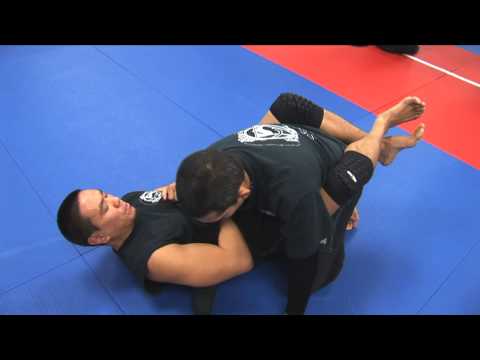
The pinch guard keeps your knees clamped on your opponent while your feet remain unlocked, versus a traditional closed guard where the feet are locked. According to TakingItToTheMMAT, this variation allows for different transition options when working toward the overhook.
If they pull out, you can grab underneath the tricep and kick underneath to reposition and maintain control, as shown in TakingItToTheMMAT's Cross Overhook breakdown.
The Overhook-Whizzer family covers clinch positions where the attacker hooks their arm over the opponent's arm from the outside, wrapping around the upper arm or shoulder to control or redirect the opponent's movement. The overhook (also called the whizzer when combined with hip pressure) is primarily a defensive and counter-offensive tool — it neutralises the opponent's underhook by trapping it, and can be used to generate hip pressure, execute throws, and create scramble opportunities.
The overhook has been a fundamental clinch technique in wrestling since antiquity, and the whizzer — the active, hip-pressure variant — became a recognised technique through American folkstyle wrestling in the 20th century. The term 'whizzer' is unique to wrestling terminology and describes the defensive overhook with aggressive hip drive that became a hallmark of American wrestling style.
Unified MMA: legal — Legal — clinching is integral to MMA; IJF: legal — Legal — kumi-kata (grip fighting) is fundamental to judo; IBJJF: legal — Legal — standing grip fighting and clinch work permitted; IFMA: legal — Legal — the clinch is a core element of Muay Thai, clinch dominance is highly…; WBC/Boxing: restricted — Holding is technically a foul — referee breaks clinch, excessive holding resu…; K: restricted — 1/GLORY — One attack from clinch allowed, then referee breaks; WAKO: restricted — Clinch generally broken by referee — limited or no clinch fighting in most fo…; UWW: legal — Legal — clinch is fundamental to wrestling, the primary position in Greco-Roman
Danger rating 4/10. Moderate — upper body clinch positions for control and transitions
The standard setup chain: Close Distance → Establish Primary Grip → Position the Hips → Apply Pressure.
Standard counters include: Pummeling — fight for inside position by swimming arms under opponent's grips / Frame and Push — create distance using forearm frames against the chest or neck / Grip Break — systematically strip the opponent's controlling grips / Posture Up — straighten the spine and drive the hips forward to break clinch control.
Common variants: Single underhook (one arm inside for angle and control); Double underhooks (both arms inside for maximum inside position); Underhook with collar tie (combining the underhook with head control).
The overhook/whizzer is one of the most fundamental defensive clinch grips in wrestling and MMA, used at every level of competition from youth wrestling through Olympic and UFC title fights.
Top errors to watch for: Using the overhook without hip pressure — the whizzer is only effective when combined with hip drive on that side / Overhooking loosely — the arm must clamp down firmly on the opponent's arm to control it / Using the overhook as a permanent defensive position — it should transition to offence or back to underhook / Not using the free hand — the non-overhook hand must post, grip, or prepare an attack.
The Overhook-Whizzer is also known as Ōbāfukku / Wizā, Overhook, Whizzer, Wizzer, Outside Tie.