💥MAE MAI MUAY THAI BORAN TECNIQUE 15💥HAK KOR ERAWAN #muayboran #muaythai #defensapersonal
0
Hak Kor Erawan·Kreng Jai Boxing
🙏 Bienvenido al Kreng Jai Boxing🙏 tu escuela virtual de artes marciales. El Kreng Jai Boxing se base en los diferente…
Translation: Breaking Erawan's neck
Mae Mai techniques represent centuries of refined combat principles; Hak Kor Erawan embodies a specific tactical principle that remains effective in modern Muay Thai. [1]
Traditional Muay Boran → Modern Muay Thai Mae Mai curriculum. [1]
Used in Muay Thai stadium competition (Lumpinee, Rajadamnern)
No images yet for this technique.
Sign in to suggest an image.
🙏 Bienvenido al Kreng Jai Boxing🙏 tu escuela virtual de artes marciales. El Kreng Jai Boxing se base en los diferente…
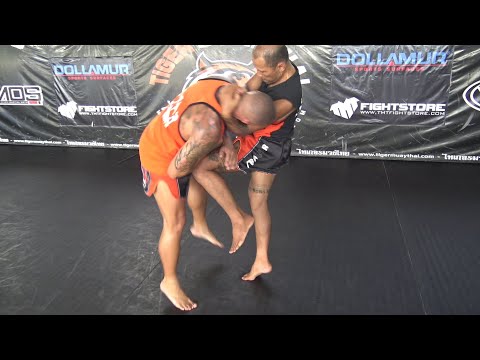
Traditional Thai martial arts master Kru Oh and Chris Lawrence demonstrate the fundamental "Mae Mai" technique: Hak Kor …
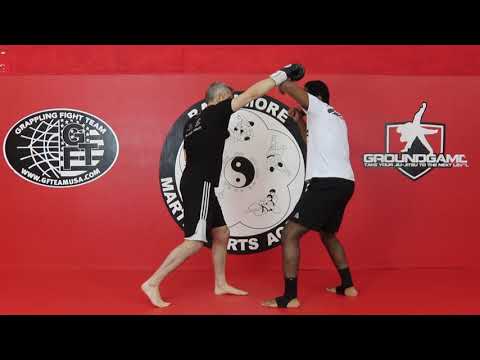
Baltimore Martial Arts Muay Thai Coach Wesley Furr teaches how to do Hak Kor Erawan - Lead block to clinch, rear knee fo…
8th Grade - Brown and Green Techniques
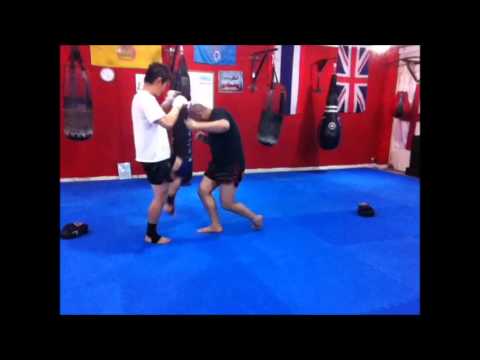
my whatssap https://wa.me/919946007505 Hahk Kaw Aiyarah (Breaking the Divine Elephant's Neck Technique) The Muaythai …
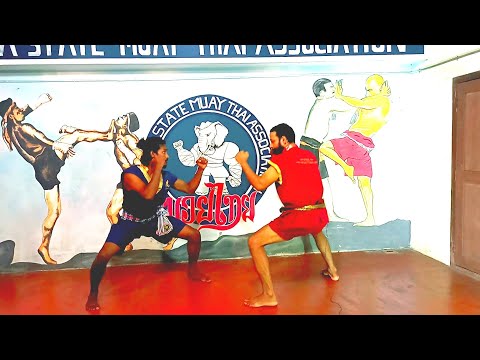
Traditional Thai martial arts master Kru Oh and Chris Lawrence demonstrate the fundamental "Mae Mai" technique: Hak Ngua…
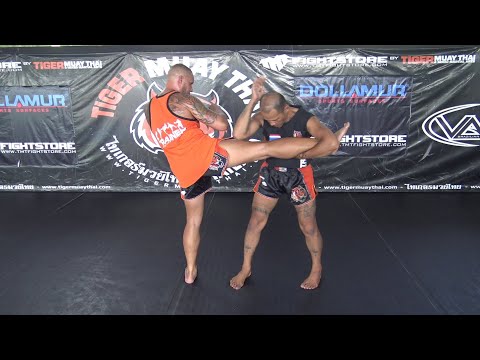
Hak Kor Erawan (Breaking the Divine Elephant's Neck) is a clinch technique rooted in Muay Boran that combines defensive and offensive elements within close-range engagement. Baltimore Martial Arts emphasizes the foundational mechanics: a practitioner executes a high block while simultaneously stepping diagonally into the opponent's space, then transitions into clinch control by bringing both hands inside and driving downward on the opponent's neck to facilitate a rear-side knee strike to the body. This distinguishes the technique from a standard high block by requiring aggressive spatial penetration and upper-body control. Tiger Muay Thai and MMA Training Camp describes the technique as a swing-based movement that functions as both a keeper and counter tool, with multiple repetitions building fluidity in the swing mechanics. The instructors agree on the clinch engagement and knee counter as core components, though they emphasize different aspects: Baltimore Martial Arts focuses on the block-to-clinch transition sequence and offensive knee application, while Tiger Muay Thai stresses the swing repetition and adaptability as a versatile counter option. The technique represents a mae mai (fundamental technique) in the classical Muay Thai curriculum.
Synthesized from 4 instructors
No instructional courses yet for this technique.
Sign in to suggest a course.
Risk of injury to the person this technique is applied to
Master-level technique with significant combat application
Skill level needed to execute this technique reliably
Whether this technique is allowed under major competition rule sets
Muay Thai: The Art of Fighting (Ruerngsa, Charuad & Cartmell)
description, historyOrigin: sourced from Ruerngsa, Y
description, historyOrigin: sourced from Ruerngsa, Y
Requires comprehensive Muay Thai foundation
Good timing and distance management
Hak kor erawan (break the elephant's neck) is a traditional Muay Thai mae mai technique — a clinch throw that twists the opponent's neck. Named after the three-headed elephant of Thai mythology. (Kraitus, Muay Thai: The Art of Fighting; traditional Muay Thai texts)
In Hak Kor Erawan, you bring both hands inside and push aggressively into your opponent's space, rather than keeping the block close to your body as in a normal high block.
After executing the lead block and clinch, you can counter with a rear knee strike to the body.
Hak Kor Erawan (Break the Elephant's Neck) is a devastating clinch technique that twists the opponent's neck using the clinch grip, named after the mythical three-headed elephant Erawan. It combines neck manipulation with knee strikes.
Hak Kor Erawan is one of the 15 Mae Mai (Master Tricks) of Muay Thai, preserved from the traditional Muay Boran curriculum. The Mae Mai represent the highest-level tactical principles of Thai boxing, each named after Thai mythology, literature, or cultural references.
Unified MMA: legal — Legal — clinching is integral to MMA; IJF: legal — Legal — kumi-kata (grip fighting) is fundamental to judo; IBJJF: legal — Legal — standing grip fighting and clinch work permitted; IFMA: legal — Legal — the clinch is a core element of Muay Thai, clinch dominance is highly…; WBC/Boxing: restricted — Holding is technically a foul — referee breaks clinch, excessive holding resu…; K: restricted — 1/GLORY — One attack from clinch allowed, then referee breaks; WAKO: restricted — Clinch generally broken by referee — limited or no clinch fighting in most fo…; UWW: legal — Legal — clinch is fundamental to wrestling, the primary position in Greco-Roman
Danger rating 7/10. Master-level technique with significant combat application
The standard setup chain: Read opponent → Apply Hak Kor Erawan principle → Execute technique → Follow up.
Standard counters include: Specific to each Mae Mai technique.
Common variants: Classical Hak Kor Erawan; Competition adapted Hak Kor Erawan.
Used in Muay Thai stadium competition (Lumpinee, Rajadamnern)
Top errors to watch for: Attempting without understanding the tactical principle / Over-committing.
The Hak Kor Erawan is also known as Hak Kor Erawan, Break the Elephant's Neck.