Hassō-no-kamae (eight-direction guard) positions the sword vertically beside the right side of the head, with the tsuka at mouth height and the blade pointing upward. [1] This guard radiates threat in all eight directions (hence its name) and is an aggressive posture that facilitates rapid downward and diagonal cuts. [1],[2] Hassō-no-kamae is associated with the element of fire (ka) and is used in kenjutsu to pressure the opponent with the implied threat of explosive cutting from a high position. [2],[3]
Hassō-no-kamae is one of the five traditional kamae in Japanese kenjutsu, described in numerous koryū manuscripts and in Musashi's Book of Five Rings as the fire guard. [1] It is practised in both koryū kata and in the Nihon Kendō Kata of the AJKF. [2],[3]
Страна происхождения· показано в случайном порядке
🇯🇵Япония八相の構えКэндзюцу, Кэндо
Эффективность
Hasso no kamae (eight-direction guard) positions the shinai upright beside the right shoulder, with the tsuba (guard) near mouth level. [1] It is a compact guard used primarily in kendo kata rather than in free sparring (jigeiko), valued for its ability to transition quickly into both cuts and thrusts. [2]
Родословная
Hassō no kamae holds the sword vertically beside the head, a classical kenjutsu guard that appears in kata but is rarely used in free sparring. [1]
Соревновательные результаты
Hassō no kamae is practised in kendo kata but is virtually never used in free kendo competition (shiai). [1]
Изображения
Изображений для этой техники пока нет.
Войдите, чтобы предложить изображение.
Биомеханический механизм
Primary Action — Cutting, thrusting, or striking with a bladed weapon — edge alignment and trajectory determine cutting effectiveness
Joints Involved — Wrists (edge alignment and rotation), elbows (extension for thrusts, chambering for cuts), shoulders (arc of the cut), hips (power generation)
Force Vector — Varies — downward diagonal cut (kesa-giri), horizontal cut (yoko-giri), thrust (tsuki), or rising cut (kiri-age)
Weapon Mechanic — Edge alignment (hasuji) is critical — the blade must travel along its cutting plane for effective cuts
Позиция и вход
From ready stance (chudan-no-kamae or equivalent) — Assume guard position, establish distance (ma-ai), execute the cut or thrust when an opening appears
From engagement distance — Use footwork to close to striking range, execute the technique with proper edge alignment (hasuji)
As counter — Wait for the opponent's attack, deflect or avoid, and counter-cut to the exposed target
Варианты
Standard cut — primary cutting angle from the ready stance
Thrust (tsuki) — straight thrust targeting the throat, chest, or face
Rising cut (kiri-age) — upward diagonal cut from low to high
Diagonal cut (kesa-giri) — downward diagonal cut following the kimono line
Hasso No Kamae·The Dojo Martial Arts - Budo Taijutsu, Mason, Ohio
Clip from the
Staff (Bo) Basics DVD
Order it at:
https://www.ebay.com/sch/thedojomartialarts/m.html?item=263991596546&ha…
1 / 2
3 videos
Что говорят инструкторы
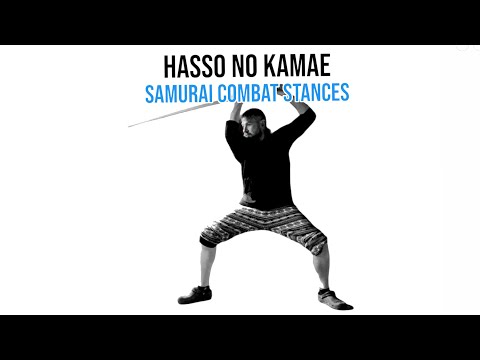
Hasso no kamae is a classical Japanese sword stance appearing in historical Shinkagekyu documentation, particularly the Yagyu Shinkagekyu manuscript tradition dating to approximately 1600, with illustrated descriptions circa 1700. According to Antony Cummins, the stance positions the sword roughly at mid-height near the head, though Cummins presents a nuanced historiographic analysis noting discrepancies between textual descriptions and pictorial representations in original scrolls, suggesting possible hand variations or left-sided (hidaritachi) positioning in certain lineage transmissions. Cummins cites evidence from kata descriptions indicating hasso no kamae functions as both an offensive posture from which to strike downward and a defensive position into which one retreats when threatened by overhead attacks from an opponent also in hasso. He theorizes the stance may involve rhythmic footwork and beat-based exchanges rather than purely static positioning, drawing parallels to competitive fencing exchanges. The instructors emphasize that hasso no kamae's practical application involves responding to attacks on the sword tip by withdrawing slightly and executing downward cuts, and that the stance relates to broader systematic movement principles documented in classical kenjutsu curricula. Cummins notes historical ambiguity persists regarding whether pictorial representations depict starting positions, ending positions, or intermediate moments within techniques.
Сформировано на основе 3 инструкторов
Antony Cummins — Samurai Combat Stances | Hasso no kamae: Provided detailed historical documentation of hasso no kamae's appearance in Yagyu Shinkagekyu texts (1600-1700), analyzed discrepancies between textual and pictorial sources, proposed theories about hand positioning variations and hidaritachi transitions, explained tactical applications including responses to overhead attacks and sword-tip threats, and contextualized the stance within rhythmic exchange frameworks rather than static positions.
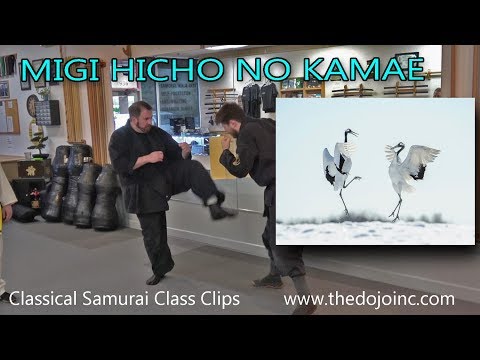
The Dojo Martial Arts Mason Ohio — Hicho no Kamae - Classical Martial Arts Class Clips at The Dojo: While primarily addressing hicho no kamae (rising bird stance), this instructor demonstrated complementary classical stance principles including body positioning, footwork mechanics, and tactical application of leg-based evasion and counterattacking within close-quarters exchanges, providing practical pedagogical context for understanding historical kamae systems.
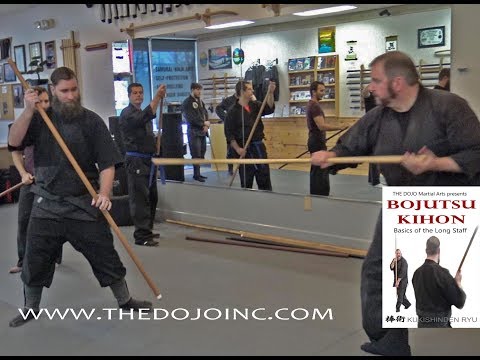
The Dojo Martial Arts Mason Ohio — Bojutsu Stances - Chudan, Heito no Kamae: Instructional material on bo staff stances demonstrating the broader kamae categorization system in classical Japanese martial arts, showing chudan (middle) positioning and heitou no kamae variants, illustrating systematic stance nomenclature applicable across weapon disciplines.
Изучить технику
Учебных курсов по этой технике пока нет.
Войдите, чтобы предложить курс.
Оценки
Уровень опасности
Риск травмы для человека, к которому применяется техника
✓Hasso no Kamae (eight-phase stance) holds the sword upright beside the right shoulder with the blade facing forward — it is a versatile stance used in classical kenjutsu for offensive and defensive purposes (Draeger, Classical Budo, 1973)
✓The name 'eight phases' refers to the ability to attack in eight directions from this position: the stance loads cuts to all angles
✓Hasso is held with the sword vertical, the tsuba (guard) at face height, and the blade facing forward — the cutting edge faces the opponent
✓From Hasso, the primary cuts are: horizontal (yokomen), diagonal descending (kesa), and the men (vertical head cut) — each can be delivered rapidly
✓Hasso is more common in classical kenjutsu than in modern kendo: the classical schools use it for its versatility and deceptive quality
✓The stance resembles the position of a warrior at rest: compact, guarded, and ready — the sword is close to the body and protected
✓Hasso transitions naturally to all other kamae: the upright sword can drop to Chudan, rise to Jodan, or descend to Gedan with equal ease
Типичные ошибки
!Holding the sword too far from the body — the sword in Hasso should be close to the right shoulder for compact readiness
!Facing the blade away from the opponent — the cutting edge must face forward for quick deployment
!Holding Hasso with the sword tilted — the blade should be vertical or near-vertical
!Using Hasso in modern kendo competition — it is primarily a classical technique; understand the context
!Not training cuts from Hasso to all angles — the stance's value is its versatility; develop attacks in all eight directions
!Tensing the shoulders while holding Hasso — the compact position should be relaxed and ready
!Not understanding Hasso's transitional role — it is a versatile hub that connects to all other stances
3Initiate Cut/Thrust — execute the technique with proper edge alignment or point control
4Follow Through (Zanshin) — maintain awareness and readiness after the technique
Источники и ссылки
Основной источник
The Book of Five Rings (Miyamoto Musashi, 1645)
1КнигаThe Book of Five Rings (Musashi, 1645)
Alias sources — [1] Japanese Swordsmanship (Warner & Draeger, 1982) [2] Secrets of the Samurai (Ratti & Westbrook, 1973) [3] Secrets of the Samurai (Ratti & Westbrook, 1973)
2КнигаThe Art of Fencing (Barbasetti, 1932)
Effectiveness sources — [1] All Japan Kendo Federation, Kendo Official Manual (AJKF) [2] Warner, G. & Draeger, D., Japanese Swordsmanship: Technique and Practice (Weatherhill, 1982)
3ДругоеJapanese Martial Arts Standard Terminology (武道用語)
Established Japanese martial arts naming convention — native Japanese term (和語/漢語)
4ЦитатаThe Book of Five Rings (Musashi, 1645)
Alias sources — [1] Japanese Swordsmanship (Warner & Draeger, 1982) [2] Secrets of the Samurai (Ratti & Westbrook, 1973) [3] Secrets of the Samurai (Ratti & Westbrook, 1973)
5ЦитатаThe Art of Fencing (Barbasetti, 1932)
Effectiveness sources — [1] All Japan Kendo Federation, Kendo Official Manual (AJKF) [2] Warner, G. & Draeger, D., Japanese Swordsmanship: Technique and Practice (Weatherhill, 1982)
Сообщество
Атлетизм
Requires
wrist control for edge alignment, grip endurance, footwork precision
Favours
quick wrists, strong forearms, good posture
Key muscles
forearm extensors/flexors, deltoids, core, calves
Часто задаваемые вопросы
How should I position my legs in Hasso no Kamae to protect myself?
You should concentrate on your leg positioning and footwork, keeping your groin protected. The stance teaches body movement and protection principles based on classical armor-based techniques.
Why do I need to stay low in this stance?
You want to be low so you can go high. Like a bird, you cannot lift off if you're standing straight—you need to be in a lowered position to generate upward movement and power.
What's the key thing to watch out for with knee safety in Hasso no Kamae?
You need to build the muscles in your supporting leg so you can support your entire body weight without popping your knee out. Bend that knee as much as possible and be careful with your leg strength development.
How does Hasso no Kamae work defensively?
When an opponent comes in and you move while in the stance, a small deflection using both your leg and arm can open up your opponent's center, creating an opportunity to strike.
Как работает Hasso No Kamae?
Hassō-no-kamae (eight-direction guard) positions the sword vertically beside the right side of the head, with the tsuka at mouth height and the blade pointing upward. This guard radiates threat in all eight directions (hence its name) and is an aggressive posture that facilitates rapid downward and diagonal cuts.
Откуда происходит Hasso No Kamae?
Hassō-no-kamae is one of the five traditional kamae in Japanese kenjutsu, described in numerous koryū manuscripts and in Musashi's Book of Five Rings as the fire guard. It is practised in both koryū kata and in the Nihon Kendō Kata of the AJKF.
Разрешён ли Hasso No Kamae на соревнованиях?
FIK Kendo: разрешён — Legal, valid strike requires correct form (datotsu-bu), spirit (kiai), and fo…
Насколько опасен Hasso No Kamae?
Оценка опасности 9/10. Extreme — edged weapons cause fatal lacerations; historical battlefield mortality rates >30% (Amberger 1999)
Стандартные контрприёмы: Parry (Absetzen) — deflect the incoming blade with a counter-displacement / Void (Step Back) — withdraw from measure to avoid the cutting arc / Counter-Cut (Nachreisen) — strike into the opponent's opening during their attack.
Какие есть варианты Hasso No Kamae?
Распространённые варианты: Standard cut (primary cutting angle from the ready stance); Thrust (tsuki) (straight thrust targeting the throat, chest, or face); Rising cut (kiri-age) (upward diagonal cut from low to high); Diagonal cut (kesa-giri) (downward diagonal cut following the kimono line).
Насколько эффективен Hasso No Kamae на соревнованиях?
Hassō no kamae is practised in kendo kata but is virtually never used in free kendo competition (shiai).
Какие типичные ошибки при выполнении Hasso No Kamae?
Основные ошибки, на которые стоит обратить внимание: Holding the sword too far from the body — the sword in Hasso should be close to the right shoulder for compact readiness / Facing the blade away from the opponent — the cutting edge must face forward for quick deployment / Holding Hasso with the sword tilted — the blade should be vertical or near-vertical / Using Hasso in modern kendo competition — it is primarily a classical technique; understand the context.
Какие ещё названия есть у Hasso No Kamae?
Hasso No Kamae также известен как Hasso, Eight-Phase Stance, Side Guard.