Bojutsu Stances - Chudan, Heito no Kamae
0
Gedan No Kamae·The Dojo Martial Arts - Budo Taijutsu, Mason, Ohio
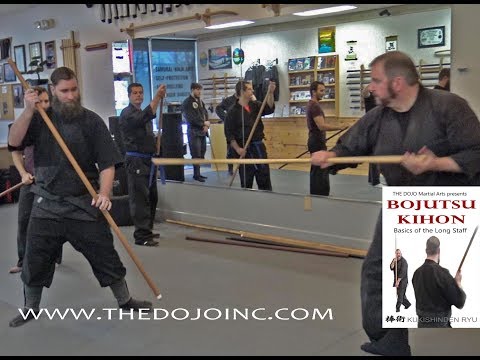
Clip from the Staff (Bo) Basics DVD Order it at: https://www.ebay.com/sch/thedojomartialarts/m.html?item=263991596546&ha…
Перевод: Lower-Level Stance
Gedan-no-kamae (low guard) positions the sword with the tip pointed downward toward the opponent's knees, the tsuka held at hip level. [1] Gedan is a defensive and inviting guard that conceals the wielder's intentions while protecting the lower body and threatening upward cuts. [1],[2] In kenjutsu the low guard is associated with the element of earth (chi) and is used to invite the opponent's attack to the apparently undefended upper body, enabling counter-techniques. [2],[3]
Gedan no kamae is rarely seen in kendo competition as it leaves the upper body exposed, but it is studied as a classical kamae in kendo kata. [1]
Изображений для этой техники пока нет.
Войдите, чтобы предложить изображение.
Clip from the Staff (Bo) Basics DVD Order it at: https://www.ebay.com/sch/thedojomartialarts/m.html?item=263991596546&ha…
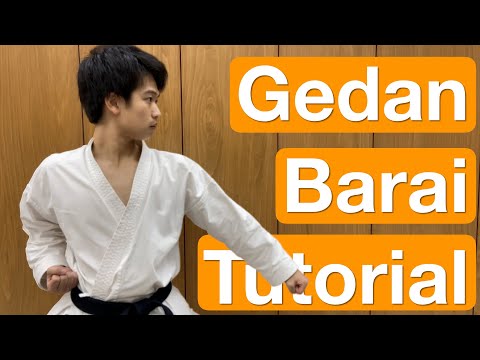
Gedan Barai, or low block is one of the most important blocks of Shotokan karate. You will see it in almost all katas, s…
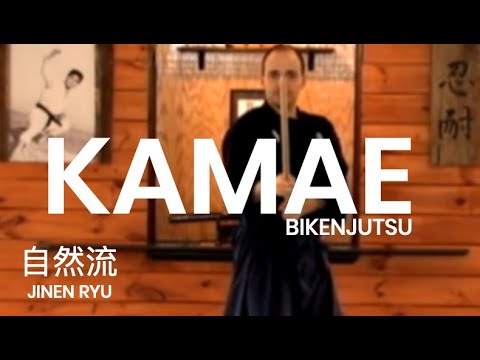
The first part of the Jinen Ryu Bikenjutsu Chi no Maki, is kamae, or stances. As with the scrolls, there are five kenjut…
Gedan no kamae is a lower-level sword stance in Japanese martial arts characterized by the blade directed downward toward the opponent's feet or lower body. According to Yasuragi Dojo, gedan no kamae is executed from seigan no kamae by lowering the weapon's tip to target the toki (top of the opponent's foot), with the strategic purpose of stopping or interrupting the opponent's initiating movement. The stance emphasizes control and defensive positioning rather than immediate offensive action. Karate Dojo waKu references gedan barai (low sweeping block) as a complementary defensive technique applicable across multiple combat scenarios, demonstrating its utility beyond sword work in broader martial arts contexts. The Dojo Martial Arts Mason Ohio confirms gedan as a foundational stance position (ranked third in their weapons training chart) and notes its integration with specific strikes such as ashibatai and suneuchi. All three instructors agree that gedan positions the weapon or blocking arm in the lower register to defend against or intercept lower-body attacks, though their application varies by discipline—kenjutsu emphasizes weight distribution and hip angle, while karate focuses on hip rotation and arm mechanics. The stance serves both as a defensive posture and as a transitional position between other kamae.
Сформировано на основе 3 инструкторов
Учебных курсов по этой технике пока нет.
Войдите, чтобы предложить курс.
Риск травмы для человека, к которому применяется техника
Edged weapons cause fatal lacerations; historical battlefield mortality rates >30% (Amberger 1999)
Уровень мастерства, необходимый для надёжного выполнения техники
Разрешена ли техника по основным соревновательным правилам
The Book of Five Rings (Miyamoto Musashi, 1645)
Alias sources — [1] Japanese Swordsmanship (Warner & Draeger, 1982) [2] The Book of Five Rings (Musashi, trans. Harris, 1974) [3] The Book of Five Rings (Musashi, trans. Harris, 1974)
Effectiveness sources — [1] All Japan Kendo Federation, Kendo Official Manual (AJKF) [2] Warner, G. & Draeger, D., Japanese Swordsmanship: Technique and Practice (Weatherhill, 1982)
Established Japanese martial arts naming convention — native Japanese term (和語/漢語)
Alias sources — [1] Japanese Swordsmanship (Warner & Draeger, 1982) [2] The Book of Five Rings (Musashi, trans. Harris, 1974) [3] The Book of Five Rings (Musashi, trans. Harris, 1974)
Effectiveness sources — [1] All Japan Kendo Federation, Kendo Official Manual (AJKF) [2] Warner, G. & Draeger, D., Japanese Swordsmanship: Technique and Practice (Weatherhill, 1982)
wrist control for edge alignment, grip endurance, footwork precision
quick wrists, strong forearms, good posture
forearm extensors/flexors, deltoids, core, calves
Your hips should start facing front, then snap to the side as you execute the block. Keep your head straight throughout the movement—it should not turn with your hips.
Place your top thumb right behind your ears, then use your lower arm as a guideline to slide the top arm down, turning your wrist at the very end to complete the block.
Make sure the extension of your legs and the block happen simultaneously for proper technique execution.
Turn on your heel as you shift into the stance, and turn your head quickly to follow the movement. Avoid turning your foot inward—keep the rotation on the heel.
Gedan-no-kamae (low guard) positions the sword with the tip pointed downward toward the opponent's knees, the tsuka held at hip level. Gedan is a defensive and inviting guard that conceals the wielder's intentions while protecting the lower body and threatening upward cuts.
Gedan-no-kamae is one of the five classical kamae documented in koryū traditions since the Muromachi period, corresponding to the earth element in the gogyō system. It is used in both kenjutsu kata and certain iaidō forms.
FIK Kendo: разрешён — Legal, valid strike requires correct form (datotsu-bu), spirit (kiai), and fo…
Оценка опасности 9/10. Extreme — edged weapons cause fatal lacerations; historical battlefield mortality rates >30% (Amberger 1999)
Стандартная цепочка подготовки: Assume Guard (Kamae/Hut) → Measure Distance (Ma-ai) → Initiate Cut/Thrust → Follow Through (Zanshin).
Стандартные контрприёмы: Parry (Absetzen) — deflect the incoming blade with a counter-displacement / Void (Step Back) — withdraw from measure to avoid the cutting arc / Counter-Cut (Nachreisen) — strike into the opponent's opening during their attack.
Распространённые варианты: Standard cut (primary cutting angle from the ready stance); Thrust (tsuki) (straight thrust targeting the throat, chest, or face); Rising cut (kiri-age) (upward diagonal cut from low to high); Diagonal cut (kesa-giri) (downward diagonal cut following the kimono line).
Gedan no kamae is rarely seen in kendo competition as it leaves the upper body exposed, but it is studied as a classical kamae in kendo kata.
Основные ошибки, на которые стоит обратить внимание: Using Gedan against a patient opponent — if they don't attack, the low position is disadvantageous / Not preparing the counter before assuming Gedan — the response to the expected attack must be ready / Holding Gedan with the point too far from the centre — the point should still threaten the opponent's lower body / Using Gedan without understanding its purpose — it is a provocation and counter-timing tool, not a resting position.
Gedan No Kamae также известен как Lower Guard, Low Stance, Earth Guard.