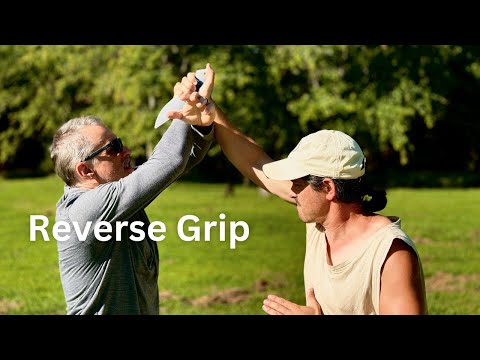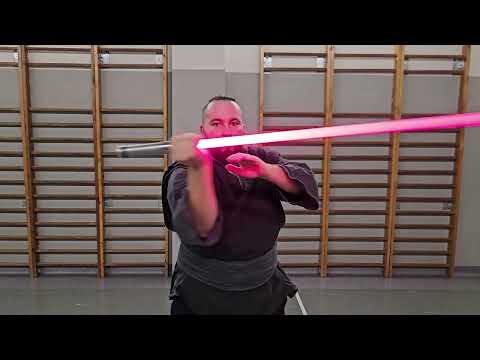
Reverse Grip Lightsaber Techniques
0
Reverse Grip·SaberArts Academy - Lightsaber techniques & choreo
by Force Knights Academy Click a like button to show your love of lightsabers :) SUBSCRIBE AND TURN ON NOTIFICATIONS! …
Перевод: reverse grip
The Reverse Grip (also called icepick grip) holds the knife with the blade extending from the little-finger side of the fist, point downward. [1] This grip excels at close-range downward stabs, hooking cuts, and weapon retention, as the blade is difficult to strip when held this way. [1],[2] Filipino martial arts systems like Pekiti-Tirsia Kali use the reverse grip extensively for close-quarters combat and for pakal (reverse-grip) drills that develop fluid slashing and trapping combinations. [2],[3]
The reverse grip has been used since antiquity for close-range stabbing, as evidenced by depictions in Roman gladiatorial art and medieval European dagger manuscripts. [1] Filipino martial arts formalised reverse-grip training into systematic drill sets, and modern tactical knife instructors have expanded its application. [2],[3]
The reverse (ice-pick) grip, with the blade extending from the bottom of the fist along the pinky side, trades reach for close-range power and hooking capability. [1] It is biomechanically suited for downward stabbing and ripping motions, and provides strong retention against disarming attempts. [2] Its primary limitation is reduced thrusting range compared to the forward grip. [2]
The reverse grip (ice-pick grip, pakal) is favoured in FMA, silat, and kerambit fighting, providing powerful downward stabs and close-range hooking cuts. [1]
Reverse grip fighting is demonstrated at FMA events and some specialised kerambit competitions. [1]
Изображений для этой техники пока нет.
Войдите, чтобы предложить изображение.
by Force Knights Academy Click a like button to show your love of lightsabers :) SUBSCRIBE AND TURN ON NOTIFICATIONS! …
You asked and I'm delivering! Here is a follow-up video to our questions from a previous Kali Knife Fighting video I mad…
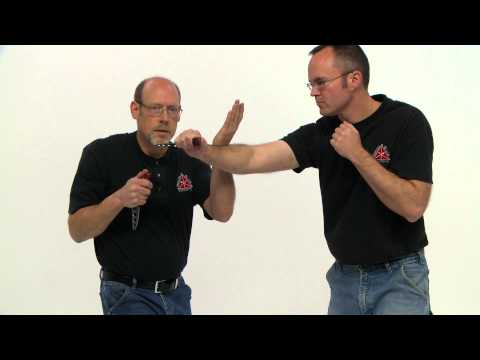
Martial Blade Concepts Volume 5 Reverse-Grip Knife Fighting - The MBC Approach Featuring Michael D. Janich http://www.s…
The reverse grip, also called ice pick grip or earth grip, involves holding the knife with the blade extending from the pinky side of the hand rather than the thumb side (standard grip). Kali Center emphasizes reverse grip applications within the pickle grip framework, teaching hooking and cutting combinations across three primary angles: horizontal thrusts, backhand strikes, and vertical attacks. The hook technique serves to clear defensive obstacles and create cutting opportunities; practitioners learn to drop body weight during vertical hooks to maintain safety and control force direction if defensive resistance suddenly releases. StaySafeMedia's Martial Blade Concepts approach advocates reverse grip with the edge facing outward, contrasting with practitioners who prefer edge-inward orientation. Their methodology centers on the "Cover and Slash" drill as a core asymmetrical training framework, emphasizing checking (typically with the back of the hand) before cutting—reversing the standard grip sequence of cut-then-check. Both instructors stress transitional drilling that develops spontaneous response capability; Kali Center demonstrates multiple target options including blade cuts, pommel strikes, and elbow follow-ups, while StaySafeMedia integrates leg techniques and body pivoting to generate full-body power through cuts. Safety protocols remain paramount across both systems, with emphasis on slow, controlled progression before intensity increases.
Сформировано на основе 3 инструкторов
Учебных курсов по этой технике пока нет.
Войдите, чтобы предложить курс.
Риск травмы для человека, к которому применяется техника
Knives and short blades are the most common weapon in real-world assaults; high lethality
Уровень мастерства, необходимый для надёжного выполнения техники
Разрешена ли техника по основным соревновательным правилам
Bubishi: The Classic Manual of Combat (Patrick McCarthy, 2008)
Alias sources — [1] Filipino Martial Arts (Wiley, 1994) [2] Hoplology (Burton, 1884) [3] Comprehensive Asian Fighting Arts (Draeger & Smith, 1969)
Effectiveness sources — [1] Wiley, M., Filipino Martial Arts (Charles E. Tuttle, 1994) [2] Inosanto, D., The Filipino Martial Arts (Know Now Publishing, 1980)
Established Japanese martial arts naming convention — native Japanese term (和語/漢語)
Alias sources — [1] Filipino Martial Arts (Wiley, 1994) [2] Hoplology (Burton, 1884) [3] Comprehensive Asian Fighting Arts (Draeger & Smith, 1969)
Effectiveness sources — [1] Wiley, M., Filipino Martial Arts (Charles E. Tuttle, 1994) [2] Inosanto, D., The Filipino Martial Arts (Know Now Publishing, 1980)
wrist control for edge alignment, grip endurance, footwork precision
quick wrists, strong forearms, good posture
forearm extensors/flexors, deltoids, core, calves
Dropping your weight generates force and velocity in your cut, and it keeps you safe whether your opponent maintains resistance or removes it. As the Kali Center explains, this weight drop ensures you remain in control regardless of how your opponent responds.
Reverse grip can be used to hook incoming attacks and then strike with either the blade or the pommel, giving you multiple finishing options. The Kali Center also notes you can transition to elbow strikes if needed, making it adaptable for different scenarios.
Cover and Slash is a core asymmetrical training drill in the Martial Blade Concepts system that teaches practitioners to turn their body for structural support when defending, rather than just checking from a static position. This drill provides a framework to practice multiple useful skills within the reverse grip system.
The Reverse Grip (also called icepick grip) holds the knife with the blade extending from the little-finger side of the fist, point downward. This grip excels at close-range downward stabs, hooking cuts, and weapon retention, as the blade is difficult to strip when held this way.
The reverse grip has been used since antiquity for close-range stabbing, as evidenced by depictions in Roman gladiatorial art and medieval European dagger manuscripts. Filipino martial arts formalised reverse-grip training into systematic drill sets, and modern tactical knife instructors have expanded its application.
WEKAF: разрешён — Legal in padded stick competition; HEMA: разрешён — Legal in applicable weapon categories
Оценка опасности 9/10. Extreme — knives and short blades are the most common weapon in real-world assaults; high lethality
Стандартная цепочка подготовки: Ready Position → Distance Control → Execute Technique → Return to Guard.
Стандартные контрприёмы: Parry (Absetzen) — deflect the incoming blade with a counter-displacement / Void (Step Back) — withdraw from measure to avoid the cutting arc / Counter-Cut (Nachreisen) — strike into the opponent's opening during their attack.
Распространённые варианты: Standard cut (primary cutting angle from the ready stance); Thrust (tsuki) (straight thrust targeting the throat, chest, or face); Rising cut (kiri-age) (upward diagonal cut from low to high); Diagonal cut (kesa-giri) (downward diagonal cut following the kimono line).
Reverse grip fighting is demonstrated at FMA events and some specialised kerambit competitions.
Основные ошибки, на которые стоит обратить внимание: Using the reverse grip at long range — this grip sacrifices reach; it is designed for close-quarters combat / Relying only on downward stabbing motions — the reverse grip allows hooks, upward cuts, and forearm-backed slashes / Holding the blade away from the forearm — the blade should lie along the forearm in the guard position for concealmen… / Not using the pommel for strikes — the exposed pommel in reverse grip is an effective striking tool.
Reverse Grip также известен как Sakate-mochi, Pakal Grip, Ice-Pick Grip, Inverted Grip.