Adding Elite & Weapons Classes - Defence Lab Training
0
Standard Defensa·Unleash Self Defence
ELITE Classes (13+ years only): Access to our special ELITE classes where you will get to train: o Techniques not covere…
Перевод: standard defensa
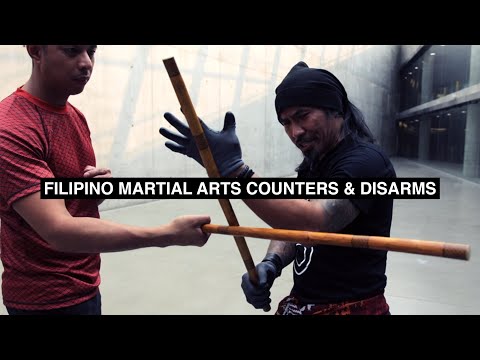
The Standard Defensa executes the fundamental blocking technique by meeting the incoming strike with the stick held in a position corresponding to the angle of attack: a roof block (stick held horizontally overhead) for downward diagonal strikes, a lateral block (stick held vertically to the side) for horizontal strikes, and a downward block for low-line attacks. [1] The standard defensa emphasises meeting the incoming weapon at the optimal interception point — far enough from the body to provide safety margin but close enough to maintain structure and control. [1],[2] After the block, the defender immediately counter-attacks or flows into a disarm or trapping technique, following the Filipino martial arts principle that defence and offence are inseparable. [2],[3]
The standard defensa (block) in Filipino martial arts uses the stick to intercept incoming strikes at specific angles, typically matching the numbered angle system — block one defends against Angle One, block two defends against Angle Two, and so on. [1] FMA blocking technique emphasises meeting the opponent's weapon hand or forearm rather than blade-on-blade contact, which preserves the defender's weapon and damages the attacker's grip. [2]
Standard FMA blocking patterns correspond to the numbered angles of attack, forming the basic defensive curriculum in all major FMA systems. [1]
Standard defensive techniques are fundamental in WEKAF competition. [1]
Изображений для этой техники пока нет.
Войдите, чтобы предложить изображение.
ELITE Classes (13+ years only): Access to our special ELITE classes where you will get to train: o Techniques not covere…
Join this channel to get access to perks: https://www.youtube.com/channel/UC5UHXD7eSL8MGe06z-_dtYw/join 👊 Self Defense…
Learn More About The Filipino Martial Art Pintados: https://budobrothers.tv/pages/pintados The best defense is offense …
The Standard Defensa is a Filipino martial arts blocking technique executed with the single stick (baston) that emphasizes controlling an opponent's weapon arm while maintaining defensive positioning. According to Budo Brothers, the defensa involves a palm-up hand position that can be applied across multiple angles and attack vectors—strikes, thrusts, and various directional approaches. The key principle is body mechanics: by controlling the opponent's stick arm close to the body with proper weight distribution, the defender creates insufficient space for the attacker to withdraw or reposition, enabling immediate disarm and counterattack. Budo Brothers emphasizes that the defensa is situational and adaptable; understanding the craft allows practitioners to disarm from all four corners and angles, with the same mechanics applicable to both sides. The technique functions as a catch-all defense where strikes can occur from any direction and still be neutralized through the same fundamental control mechanism. While Vee AJ Jitsu and Unleash Self Defence address edge weapons and advanced training concepts respectively, they do not directly discuss the defensa block itself. All instructors stress that effective weapon defense requires consistent drilling to build muscle memory and instinctive reaction, supporting the defensa's role as a core Filipino martial arts foundational technique.
Сформировано на основе 3 инструкторов
Учебных курсов по этой технике пока нет.
Войдите, чтобы предложить курс.
Риск травмы для человека, к которому применяется техника
Arnis/Escrima/Kali stick and blade techniques; designed for close-range lethality
Уровень мастерства, необходимый для надёжного выполнения техники
Разрешена ли техника по основным соревновательным правилам
The Filipino Martial Arts (Dan Inosanto, 1980)
Alias sources — [1] Filipino Martial Arts (Wiley, 1994) [2] Filipino Martial Arts (Wiley, 1994) [3] Filipino Martial Arts (Wiley, 1994)
Effectiveness sources — [1] Wiley, M., Filipino Martial Arts (Charles E. Tuttle, 1994) [2] Inosanto, D., The Filipino Martial Arts (Know Now Publishing, 1980)
Standard katakana transliteration of Western martial arts terminology (外来語) — used in Japanese MMA, boxing, and BJJ communities
Alias sources — [1] Filipino Martial Arts (Wiley, 1994) [2] Filipino Martial Arts (Wiley, 1994) [3] Filipino Martial Arts (Wiley, 1994)
Effectiveness sources — [1] Wiley, M., Filipino Martial Arts (Charles E. Tuttle, 1994) [2] Inosanto, D., The Filipino Martial Arts (Know Now Publishing, 1980)
wrist speed, hand coordination (especially double stick), cardiovascular endurance
quick hands, conditioned forearms, coordination
forearms, wrists, shoulders, core rotators
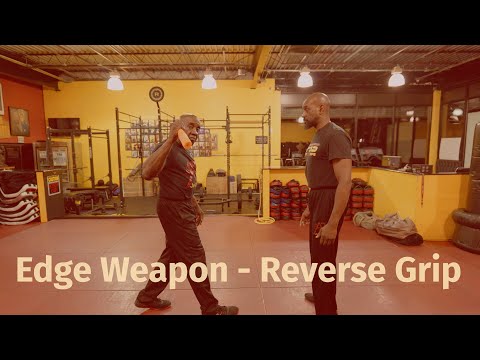
According to Vee AJ Jitsu, your first priorities should be to get off the line of fire and attack what's holding the weapon—the attacker's arm or hand—rather than trying to grab or block the blade itself.
Vee AJ Jitsu teaches that if the attacker evades, you should rake across their backside or use the backward motion of their swing against them by moving to your left—you don't need advanced skills to use this positional advantage.
When drilling knife defense with a partner, make sure they wear shin guards and practice with power; in real-world scenarios, clothing like hoodies, jackets, or coats can be grabbed to control an attacker during defense.
The Standard Defensa executes the fundamental blocking technique by meeting the incoming strike with the stick held in a position corresponding to the angle of attack: a roof block (stick held horizontally overhead) for downward diagonal strikes, a lateral block (stick held vertically to the side) for horizontal strikes, and a downward block for low-line attacks. The standard defensa emphasises meeting the incoming weapon at the optimal interception point — far enough from the body to provide safety margin but close enough to maintain structure and control.
The standard defensa represents the core blocking methodology of Filipino martial arts, passed down through generations of weapon practitioners. The principle of immediately counter-attacking after every block is a defining characteristic of Filipino defensive technique.
WEKAF: разрешён — Legal in padded stick competition; HEMA: разрешён — Legal in applicable weapon categories
Оценка опасности 8/10. Very High — Arnis/Escrima/Kali stick and blade techniques; designed for close-range lethality
Стандартная цепочка подготовки: Grip and Stance → Chamber → Strike → Recovery.
Стандартные контрприёмы: Parry (Absetzen) — deflect the incoming blade with a counter-displacement / Void (Step Back) — withdraw from measure to avoid the cutting arc / Counter-Cut (Nachreisen) — strike into the opponent's opening during their attack.
Распространённые варианты: Angle 1 (forehand diagonal) (downward diagonal strike from the dominant side); Angle 2 (backhand diagonal) (downward diagonal strike from the off side); Angle 5 (thrust) (straight thrust with the tip of the stick); Redonda (continuous) (flowing circular strikes chaining multiple angles).
Standard defensive techniques are fundamental in WEKAF competition.
Основные ошибки, на которые стоит обратить внимание: Meeting the strike at 90 degrees — a perpendicular block absorbs maximum force; the 45-degree angle deflects it / Blocking too late — catching the strike at full power is harder to manage; intercept early in the arc / Not using the live hand to check — the block without a check is only half the technique / Lifting the elbow too high — keep the elbow close to the body for structural strength.
Standard Defensa также известен как Sutandādo Defensa, Basic Defensa, Standard Block, Sangga.