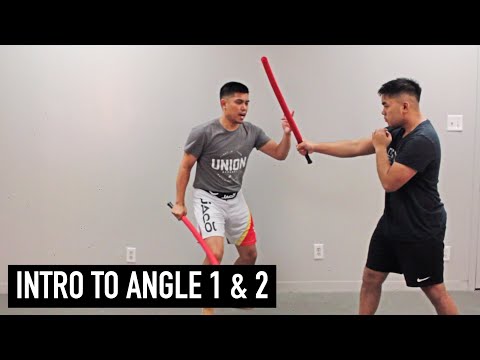
Kali Angles 1 & 2 | Easy Lesson to Begin FMA Training
0
Angle Three Strike·Mark Anastacio
TRAIN AT MY GYM: Union Martial Arts Academy - NW Calgary 102 - 345 Sage Valley Common NW Calgary, AB T3R 1T8 — CONNECT W…
Перевод: angle three strike
The Angle Three Strike is a forehand horizontal strike targeting the opponent's left elbow, ribs, or hip (from the attacker's perspective), travelling horizontally from the attacker's right to left. [1] Angle Three targets the mid-section with a horizontal trajectory, attacking the body rather than the head and exploiting openings below the opponent's guard. [1],[2] In blade application, Angle Three corresponds to a horizontal slash across the midsection or a cut to the weapon arm's elbow — both high-value targets in edged weapon combat. [2],[3]
Angle Three is the third fundamental strike in the Filipino martial arts angle system, targeting the body's midsection to complement the head-level attacks of Angles One and Two. [1] Its horizontal trajectory attacks a different defensive plane, requiring the opponent to adjust their guard from high-line to mid-line defence. [2],[3]
Angle three (forehand strike to the body/ribs) is defined in most FMA systems as the third angle of attack. [1]
Angle three strikes are used in FMA stick-fighting competition. [1]
Изображений для этой техники пока нет.
Войдите, чтобы предложить изображение.
TRAIN AT MY GYM: Union Martial Arts Academy - NW Calgary 102 - 345 Sage Valley Common NW Calgary, AB T3R 1T8 — CONNECT W…
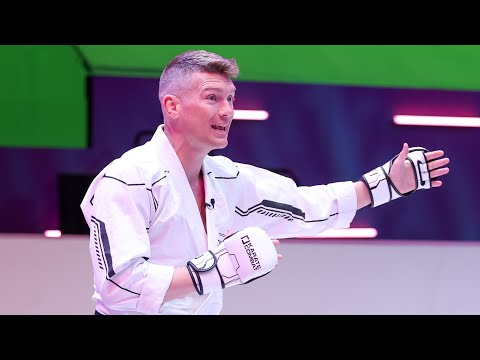
UFC fighter Stephen Thompson teaches how to change angles in a jab step-off w/ KC champ Luiz Rocha. It's time for anoth…
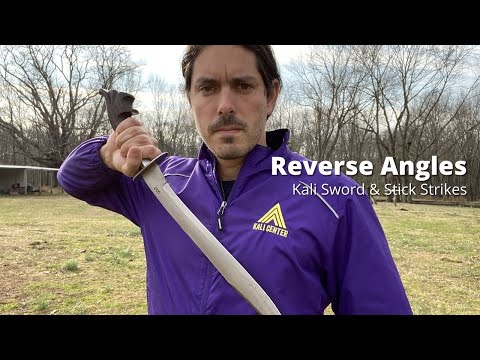
Get the NEW Kali Apex training course here: https://www.kalicenter.training/ And Join the APEX Members for continued tra…
Angle Three Strike is a diagonal striking technique foundational to Filipino martial arts systems, though instructors emphasize varying nomenclature across Kali, Arnis, and Eskrima curricula. Kali Center positions Angle Three within a framework of four basic diagonal angles (1-4), where odd-numbered angles originate from the forehand and even-numbered angles from the backhand; Angle Three rises diagonally along the forehand line as part of an X-pattern with Angle Four on the backhand side. The technique benefits from full-arc execution during initial training, with the striker beginning from chamber position to develop complete control and precision before advancing to tighter manipulations. Mark Anastacio emphasizes that Angle Three exemplifies the principle of continuous circular striking—the infinite strike—where one angle naturally feeds into the next without rechamber, creating flowing combinations. Both Kali Center and Anastacio stress that Angle Three functions as both offensive strike and defensive block simultaneously; in partnered application, understanding line dissection allows practitioners to target the opponent's hand rather than weapon, particularly when the opponent commits to a chambered position. The technique's utility extends across self-defense, sparring, and weapons contexts (stick, sword, or improvised implements). Kali Center teaches reverse Angle Three through a left-hand flip mechanism from the four position, enhancing coordination and weapon transitions. All instructors converge on the pedagogical value of deliberate, slow practice before speed development, establishing technical precision as prerequisite to effective application.
Сформировано на основе 3 инструкторов
Учебных курсов по этой технике пока нет.
Войдите, чтобы предложить курс.
Риск травмы для человека, к которому применяется техника
Arnis/Escrima/Kali stick and blade techniques; designed for close-range lethality
Уровень мастерства, необходимый для надёжного выполнения техники
Разрешена ли техника по основным соревновательным правилам
The Filipino Martial Arts (Dan Inosanto, 1980)
Alias sources — [1] Filipino Martial Arts (Wiley, 1994) [2] Filipino Martial Arts (Wiley, 1994) [3] Filipino Martial Arts (Wiley, 1994)
Effectiveness sources — [1] Wiley, M., Filipino Martial Arts (Charles E. Tuttle, 1994)
Established Japanese martial arts naming convention — native Japanese term (和語/漢語)
Alias sources — [1] Filipino Martial Arts (Wiley, 1994) [2] Filipino Martial Arts (Wiley, 1994) [3] Filipino Martial Arts (Wiley, 1994)
Effectiveness sources — [1] Wiley, M., Filipino Martial Arts (Charles E. Tuttle, 1994)
wrist speed, hand coordination (especially double stick), cardiovascular endurance
quick hands, conditioned forearms, coordination
forearms, wrists, shoulders, core rotators
According to Stephen Thompson, switching between open and closed stances allows you to work the same technique effectively regardless of which side your opponent comes out with—whether they lead with their left or right side.
Stephen Thompson recommends maintaining good distance, then closing the gap by pulling or shuffling forward while throwing a technique to distract or blind your opponent, which allows you to move off to the side and land strikes away from their power hand.
According to Mark Anastacio, the principle is that one strike leads directly into the next without re-chambering—you feed angle 1 into angle 2 and back into angle 1 continuously, allowing you to flow strikes together seamlessly.
Mark Anastacio explains that if you can read your opponent's chamber position, you can move into the right position to 'dissect the line'—hitting their hand or intercepting their strike before it fully develops, essentially staying one step ahead.
The Angle Three Strike is a forehand horizontal strike targeting the opponent's left elbow, ribs, or hip (from the attacker's perspective), travelling horizontally from the attacker's right to left. Angle Three targets the mid-section with a horizontal trajectory, attacking the body rather than the head and exploiting openings below the opponent's guard.
Angle Three is the third fundamental strike in the Filipino martial arts angle system, targeting the body's midsection to complement the head-level attacks of Angles One and Two. Its horizontal trajectory attacks a different defensive plane, requiring the opponent to adjust their guard from high-line to mid-line defence.
WEKAF: разрешён — Legal in padded stick competition; HEMA: разрешён — Legal in applicable weapon categories
Оценка опасности 8/10. Very High — Arnis/Escrima/Kali stick and blade techniques; designed for close-range lethality
Стандартная цепочка подготовки: Ready Position → Distance Control → Execute Technique → Return to Guard.
Стандартные контрприёмы: Parry (Absetzen) — deflect the incoming blade with a counter-displacement / Void (Step Back) — withdraw from measure to avoid the cutting arc / Counter-Cut (Nachreisen) — strike into the opponent's opening during their attack.
Распространённые варианты: Angle 1 (forehand diagonal) (downward diagonal strike from the dominant side); Angle 2 (backhand diagonal) (downward diagonal strike from the off side); Angle 5 (thrust) (straight thrust with the tip of the stick); Redonda (continuous) (flowing circular strikes chaining multiple angles).
Angle three strikes are used in FMA stick-fighting competition.
Основные ошибки, на которые стоит обратить внимание: Dropping the striking hand too low — angle three is a horizontal strike, not an upward diagonal / Not rotating the hips fully — horizontal strikes depend on complete hip rotation for power / Leaving the head exposed during a body-level strike — the guard hand must protect the head when attacking low / Treating angle three as less important than angles one and two — body strikes are tactically crucial for breaking the….
Angle Three Strike также известен как Dai-san Kakudo Uchi, Angle #3, Forehand Horizontal, Numero Tres.