Knife Self Defense Techniques: Against An Angle 1 Attack With A Long Weapon
0
Angle One Strike·USCCA
▶ Gun Law Map (FREE): https://uscca.co/oOyA ▶ Join USCCA: https://uscca.co/Bn62 Thousands of USCCA Members have acted i…
Перевод: angle one strike
The Angle One Strike is a forehand diagonal downward strike targeting the opponent's left temple (from the attacker's perspective), travelling from the attacker's right shoulder to the opponent's left temple or collarbone area. [1] Angle One is universally recognised as the primary strike in Filipino martial arts — it is the most natural and powerful single-stick attack because it follows the dominant hand's strongest biomechanical path, combining gravity and rotational force. [1],[2] In blade application, Angle One corresponds to a diagonal downward cut to the neck or collarbone, one of the most devastating cutting trajectories in edged weapon combat. [2],[3]
Angle One is the foundational strike in virtually every Filipino martial arts system, consistently taught as the first strike in the numbered sequence. [1] Its primacy reflects the universal biomechanical truth that the forehand diagonal is the most powerful and instinctive striking trajectory for a right-handed weapon wielder. [2],[3]
Angle One (forehand diagonal downward strike to the left temple/collarbone) is universally recognised as the most powerful and instinctive single-stick attack because it follows the dominant hand's strongest biomechanical path, combining gravity and rotational torque. [1] In blade application, this angle corresponds to a potentially lethal diagonal cut to the neck/collarbone — one of the most devastating cutting trajectories in edged weapon combat. [2]
Angle One is the foundational first strike in virtually every Filipino martial arts system, including Doce Pares, Balintawak, Modern Arnis, and Pekiti-Tirsia. [1] Dan Inosanto's curriculum, derived from John LaCoste's teachings, uses the same Angle One numbering system that has become the international standard. [2]
In WEKAF and ARPI (Arnis Philippines Inc.) competition, the Angle One strike is the most frequently attempted and most frequently scoring single attack. [1]
Изображений для этой техники пока нет.
Войдите, чтобы предложить изображение.
▶ Gun Law Map (FREE): https://uscca.co/oOyA ▶ Join USCCA: https://uscca.co/Bn62 Thousands of USCCA Members have acted i…
Learn The Filipino Martial Art Pakamut: https://bit.ly/3b16ZDX Using a sword or a machete is foreign to most people. Bu…
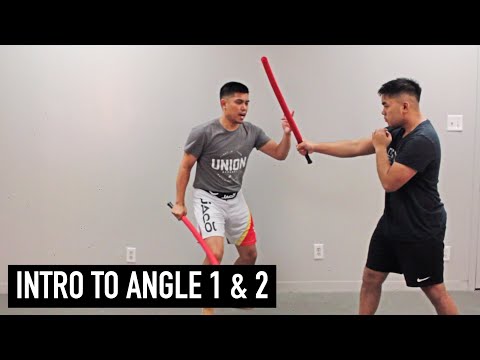
TRAIN AT MY GYM: Union Martial Arts Academy - NW Calgary 102 - 345 Sage Valley Common NW Calgary, AB T3R 1T8 — CONNECT W…
Angle One Strike is a foundational diagonal slash in Filipino martial arts executed from the top right down to the bottom left, forming one half of the universal X-pattern alongside Angle Two. Mark Anastacio emphasizes that Angle One represents a forehand strike originating from the right side toward the centerline, and teaches that these two angles are essential fundamentals that multiple FMA systems recognize despite varying strike taxonomies. The technique embodies the principle that one strike flows continuously into the next without re-chambering—what Anastacio terms an "infinite strike" due to its circular, unbroken momentum. In solo practice, Angle One establishes body mechanics, positioning, and transitions between open and closed stances. When applied with a partner, Anastacio demonstrates that the strike can function offensively or defensively, with practitioners dissecting incoming lines by targeting the opponent's hand rather than meeting stick-to-stick contact. Budo Brothers presents Angle One within a six-count flow drill, showing how the strike integrates into flowing combinations with blocks and counters. USCCA applies Angle One principles to knife self-defense contexts, where a similar diagonal cutting motion (forehand/backhand alternation) provides the biomechanical foundation for managing longer weapons while maintaining safety positioning. All three instructors agree that mastery of Angle One and Two creates a versatile framework from which more complex techniques can be developed.
Сформировано на основе 3 инструкторов
Учебных курсов по этой технике пока нет.
Войдите, чтобы предложить курс.
Риск травмы для человека, к которому применяется техника
Arnis/Escrima/Kali stick and blade techniques; designed for close-range lethality
Уровень мастерства, необходимый для надёжного выполнения техники
Разрешена ли техника по основным соревновательным правилам
The Filipino Martial Arts (Dan Inosanto, 1980)
Alias sources — [1] Filipino Martial Arts (Wiley, 1994) [2] Filipino Martial Arts (Wiley, 1994) [3] Filipino Martial Arts (Wiley, 1994)
Effectiveness sources — [1] Wiley, M., Filipino Martial Arts (Charles E. Tuttle, 1994) [2] Inosanto, D., The Filipino Martial Arts (Know Now Publishing, 1980)
Established Japanese martial arts naming convention — native Japanese term (和語/漢語)
Alias sources — [1] Filipino Martial Arts (Wiley, 1994) [2] Filipino Martial Arts (Wiley, 1994) [3] Filipino Martial Arts (Wiley, 1994)
Effectiveness sources — [1] Wiley, M., Filipino Martial Arts (Charles E. Tuttle, 1994) [2] Inosanto, D., The Filipino Martial Arts (Know Now Publishing, 1980)
wrist speed, hand coordination (especially double stick), cardiovascular endurance
quick hands, conditioned forearms, coordination
forearms, wrists, shoulders, core rotators
According to Mark Anastacio, a key principle of Angle 1 is that one strike leads to the next—you can feed your Angle 1 into your Angle 2, back into your 1, into your 2, and continue this flow without having to re-chamber between strikes.
Mark Anastacio teaches that you want to be quicker and one step ahead of your opponent to dictate the pace. By reading your opponent's chambered position (like a backhand stance), you can predict and intercept their strike before it lands, a concept called 'dissecting the line.'
Mark Anastacio calls them 'moneymakers' when introducing practitioners to Filipino martial arts, as they form the foundation from which all other fancy strikes and circular motions develop.
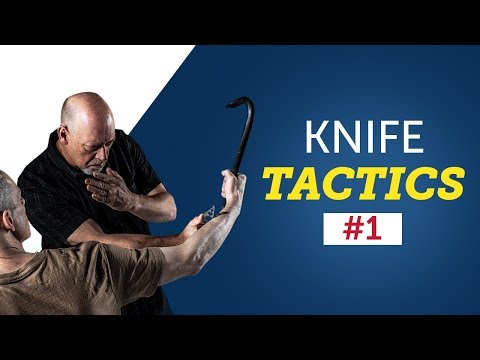
The USCCA method involves a 'cut and check' sequence: cut to allow the weapon to pass safely, then check/control it, making sure you're inside the arc of the strike and can follow up with control techniques.
The Angle One Strike is a forehand diagonal downward strike targeting the opponent's left temple (from the attacker's perspective), travelling from the attacker's right shoulder to the opponent's left temple or collarbone area. Angle One is universally recognised as the primary strike in Filipino martial arts — it is the most natural and powerful single-stick attack because it follows the dominant hand's strongest biomechanical path, combining gravity and rotational force.
Angle One is the foundational strike in virtually every Filipino martial arts system, consistently taught as the first strike in the numbered sequence. Its primacy reflects the universal biomechanical truth that the forehand diagonal is the most powerful and instinctive striking trajectory for a right-handed weapon wielder.
WEKAF: разрешён — Legal in padded stick competition; HEMA: разрешён — Legal in applicable weapon categories
Оценка опасности 8/10. Very High — Arnis/Escrima/Kali stick and blade techniques; designed for close-range lethality
Стандартная цепочка подготовки: Grip and Stance → Chamber → Strike → Recovery.
Стандартные контрприёмы: Parry (Absetzen) — deflect the incoming blade with a counter-displacement / Void (Step Back) — withdraw from measure to avoid the cutting arc / Counter-Cut (Nachreisen) — strike into the opponent's opening during their attack.
Распространённые варианты: Angle 1 (forehand diagonal) (downward diagonal strike from the dominant side); Angle 2 (backhand diagonal) (downward diagonal strike from the off side); Angle 5 (thrust) (straight thrust with the tip of the stick); Redonda (continuous) (flowing circular strikes chaining multiple angles).
In WEKAF and ARPI (Arnis Philippines Inc. ) competition, the Angle One strike is the most frequently attempted and most frequently scoring single attack.
Основные ошибки, на которые стоит обратить внимание: Winding up by pulling the stick behind the head — this telegraphs the strike and slows it down / Striking with the arm only — angle one's power comes from the hips; arm-only strikes lack force / Hitting with the wrong part of the stick — the optimal contact point is the last 4-6 inches of the stick / Not following through on the strike — the stick should continue through the target, not stop on contact.
Angle One Strike также известен как Dai-ichi Kakudo Uchi, Angle #1, Forehand Diagonal, Numero Uno.