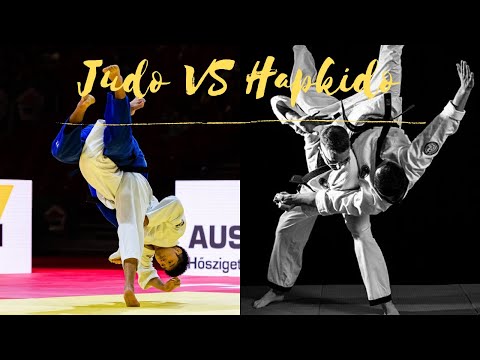
Judo VS Hapkido 합기도 合氣道
0
Hapkido Throw·Chadi
Support me on Patreon: https://www.patreon.com/chadijudo Josh Simon's website/shop https://simonbjj.com/ #Judo #Hapkid…
Перевод: Hapkido throw
The Hapkido Throw family covers throwing techniques from Hapkido, the Korean martial art that synthesises joint locks, throws, kicks, and strikes into a comprehensive self-defence system. [1] Hapkido throws derive primarily from Daito-ryu Aiki-jujutsu brought to Korea by Choi Yong-sool in the 1940s-50s, blended with indigenous Korean kicking and striking traditions. [1],[2] These throws combine elements of aikido-derived circular projections with Hapkido's emphasis on practical self-defence — they often incorporate wrist locks, arm bars, and joint manipulations into the throwing mechanics, meaning the opponent is thrown AND locked simultaneously. [2],[3] Hapkido throws differ from judo throws in their emphasis on self-defence application (against strikes and grabs) rather than sporting competition (against a gripping opponent). [3]
Hapkido throws derive primarily from Daito-ryu Aiki-jujutsu, brought to Korea by Choi Yong-sool (최용술) who trained under Takeda Sokaku in Japan before returning to Korea in the 1940s. [1] Choi Yong-sool combined these Japanese throwing and locking techniques with Korean striking and kicking traditions to create Hapkido (合氣道, 'the way of harmonising energy'). [1],[2] The system was further developed by Choi's students, including Ji Han-jae, who is credited with systematising many of the techniques and naming the art 'Hapkido'. [2],[3]
Hapkido throws are effective in self-defence scenarios against untrained attackers — the combination of throw and joint lock provides both takedown and control simultaneously. [1] Against trained grapplers in a sport context, Hapkido throws have limited competitive track record. [2] Their greatest value is in law enforcement and military applications where controlling an attacker while taking them to the ground is the objective. [3]
Изображений для этой техники пока нет.
Войдите, чтобы предложить изображение.
Support me on Patreon: https://www.patreon.com/chadijudo Josh Simon's website/shop https://simonbjj.com/ #Judo #Hapkid…
Учебных курсов по этой технике пока нет.
Войдите, чтобы предложить курс.
Риск травмы для человека, к которому применяется техника
High — Hapkido throws often incorporate joint locks, meaning the opponent may suffer both throwing impact and joint damage simultaneously; wrist throws can cause wrist sprains and fractures; arm bar throws can hyperextend the elbow
Уровень мастерства, необходимый для надёжного выполнения техники
Разрешена ли техника по основным соревновательным правилам
Hapkido: Traditions, Philosophy, Technique (Marc Tedeschi, 2000)
Description sources — [1] Hapkido: Traditions (Tedeschi, 2000) [2] Choi Yong-sool and Daito-ryu connection [3] Ji Han-jae's systematisation
Description sources — [1] Hapkido: Traditions (Tedeschi, 2000) [2] Choi Yong-sool and Daito-ryu connection [3] Ji Han-jae's systematisation
wrist and forearm strength (applying locks during throws), circular motion coordination, timing with the attacker's force
good proprioception, flexible wrists, coordination
forearms (wrist control and locking), core (rotational throwing), legs (base during throwing)
Каждое движение в любом боевом искусстве обладает рядом универсальных свойств. Комбинируйте параметры ниже, чтобы найти нужный инструмент или сравнить аналоги из разных стилей.
The Hapkido Circular Throw uses the principle of circular motion to redirect the opponent's force and project them in an arc. [1]
The Hapkido Projection Throw uses directional force alignment to project the opponent in the direction of their own momentum. [1]
Hapkido throws appear in 474 passages across 61 books. The Ultimate Guide to Grappling notes: 'Hapkido throws almost always end with a finishing strike, usually executed as the opponent is hitting the ground. The double-shock effect is devastating.' Hapkido throws combine joint manipulation with throwing mechanics. (61 books; Ultimate Guide to Grappling)
Demonstrations often don't reflect reality, so sparring is crucial to develop practical technique. According to Chadi, you need live drilling and sparring to understand how techniques actually work when resisting opponents, rather than relying on choreographed demonstrations.
Chadi explains that repetitive drilling (like grand dori) builds such solid fundamentals that you understand how an opponent will be forced to respond and where they cannot defend. You practice the dangerous elements—joint locks, strikes—extensively in controlled drills before applying them, so your body knows the technique thoroughly even if full-force sparring isn't possible.
Hapkido showcases multiple facets of martial arts training—traditional forms, live drilling, and sparring—whereas judo as an Olympic sport focuses mainly on randori and competition. This broader approach helps create more well-rounded martial artists who understand throws in a complete context.
The Hapkido Throw family covers throwing techniques from Hapkido, the Korean martial art that synthesises joint locks, throws, kicks, and strikes into a comprehensive self-defence system. Hapkido throws derive primarily from Daito-ryu Aiki-jujutsu brought to Korea by Choi Yong-sool in the 1940s-50s, blended with indigenous Korean kicking and striking traditions.
Hapkido throws derive primarily from Daito-ryu Aiki-jujutsu, brought to Korea by Choi Yong-sool (최용술) who trained under Takeda Sokaku in Japan before returning to Korea in the 1940s. Choi Yong-sool combined these Japanese throwing and locking techniques with Korean striking and kicking traditions to create Hapkido (合氣道, 'the way of harmonising energy').
IJF: разрешён — Legal throwing technique; IBJJF: разрешён — Legal at all belt levels; UWW: разрешён — Legal in both freestyle and Greco-Roman; Unified MMA: разрешён — Legal throwing technique; ADCC: разрешён — Legal; FIAS Sport Sambo: разрешён — Legal; FIAS Combat Sambo: разрешён — Legal
Оценка опасности 6/10. Moderate-high — Hapkido throws often incorporate joint locks, meaning the opponent may suffer both throwing impact and joint damage simultaneously; wrist throws can cause wrist sprains and fractures; arm bar throws can hyperextend the elbow
Стандартная цепочка подготовки: Receive Attack → Blend → Apply Lock → Redirect → Project → Control.
Стандартные контрприёмы: Relax the grabbed limb — tension in the grabbed arm provides leverage for the throw; relaxing reduces it / Step with the throw — moving in the direction of the throw reduces impact / Roll on landing — ukemi/breakfalling minimises throwing impact / Grip strip — breaking the Hapkido practitioner's grip before the lock is established.
Распространённые варианты: Wrist throw (sonmok keokki) (projecting the attacker using a wrist lock as the throwin…); Arm bar throw (pal kkochi) (throwing using an arm bar as the lever); Hip throw (similar to judo's o goshi but entered from self-defence s…); Shoulder throw (adapted from aikido's irimi nage or similar techniques); Leg sweep throw (combining a foot sweep with upper body redirection); Projection throw (circular projection using the attacker's momentum); Sacrifice throw (going to the ground while throwing the attacker [2]).
Hapkido competition exists but has no unified international format comparable to judo or wrestling. The art's throwing effectiveness is validated through military and law enforcement use rather than sport competition.
Основные ошибки, на которые стоит обратить внимание: Using strength instead of technique — Hapkido throws rely on redirecting the attacker's force, not overpowering them;… / Not blending with the attack — the throw must begin by accepting and redirecting the attacker's momentum; blocking an… / Losing the joint lock during the throw — the lock must be maintained throughout the throw for both control and techni… / Training only forms without partners — Hapkido throws require live partner practice for timing development.
Hapkido Throw также известен как Hapukidō Nage, Hapkido Throwing Technique, Hapkido Nage, Korean Throw.