Back Step Defense Leg Lift
0
Standard Rear Lift·Great Grappling·Added by Admin
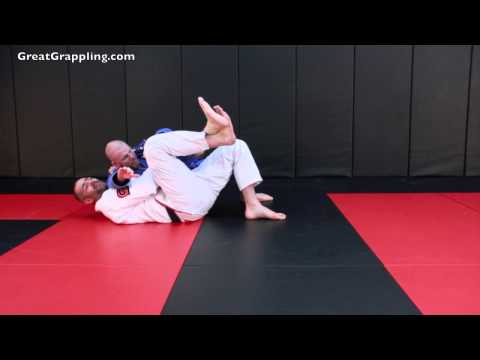
Another great option for defending the Back Step. It's important that we make a distinction between the Back Step and t…
Перевод: standard rear lift
The Standard Rear Lift executes the fundamental rear body lock lift where the attacker clasps the hands around the opponent's waist from behind, drops the hips, and explosively extends the legs and hips to elevate the opponent off the mat. [1] Once airborne, the attacker rotates the opponent and returns them to the mat in a controlled manner, landing in a dominant position. [1],[2] The key mechanical elements are a deep hip position underneath the opponent's centre of mass, a locked grip that prevents slippage during the lift, and explosive triple extension through ankles, knees, and hips. [2] The standard rear lift is one of the most powerful takedowns when executed correctly. [2],[3]
The rear lift is one of Greco-Roman wrestling's most celebrated techniques, with legendary practitioners like Alexander Karelin executing spectacular five-point throw variations from this position. [1] Karelin's reverse body lift became one of the most iconic techniques in wrestling history during the 1990s–2000s. [2],[3]
The rear lift is one of the most dominant takedown techniques when executed with sufficient explosive strength, as the opponent has no base from which to defend once airborne. [1] The technique requires exceptional lower-body power and grip strength. [1] In Greco-Roman wrestling, the rear lift can score the maximum five points when the opponent is thrown with amplitude. [2]
The rear lift is most associated with Alexander Karelin, who used his 'Karelin lift' (reverse body lift from par terre) to devastating effect throughout his career. [1] Karelin won three Olympic gold medals (1988, 1992, 1996) and nine consecutive World Championship titles in Greco-Roman wrestling, largely built on his lifting ability. [1] The standing rear lift shares mechanical principles with Karelin's par terre version. [2]
Alexander Karelin's reverse body lift became the most iconic technique in Greco-Roman wrestling history, contributing to his record of 887 wins against 2 losses in international competition. [1] The rear lift and its variations remain among the highest-scoring techniques in Greco-Roman competition at World and Olympic level. [2]
Изображений для этой техники пока нет.
Войдите, чтобы предложить изображение.
Another great option for defending the Back Step. It's important that we make a distinction between the Back Step and t…
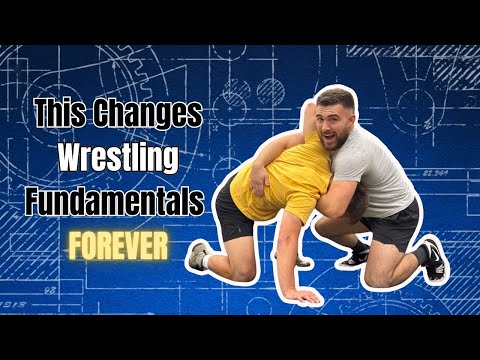
Are you new to wrestling or grappling and feel completely overwhelmed? Whether you’re a wrestler, BJJ athlete, or MMA fi…
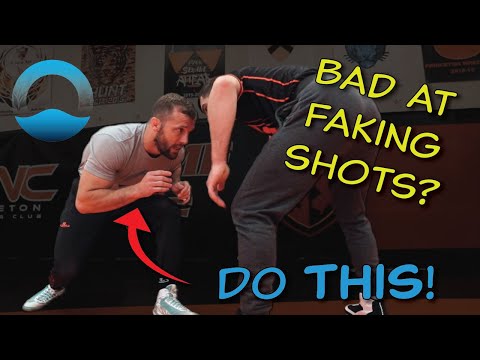
Wrestling setups for shots and takedowns can be one of the most useful and efficient techniques you can incorporate into…
The Standard Rear Lift is a foundational takedown technique executed from a rear body-lock position, with instructors emphasizing distinct technical priorities. Great Grappling focuses on the defensive escape context, detailing how to maintain leg extension through an ankle hook while using the bottom foot (rather than the top foot) to create hip space during a shrimping motion—a counterintuitive approach requiring sustained upward ankle pressure to prevent the opponent from retrieving their knee. Athletes Ocean and Systematic Wrestling prioritize setup and mechanical principles: Athletes Ocean stresses the importance of effective faking (particularly double-leg and high-crotch fakes) to set up positional advantages and read opponent reactions while maintaining athletic stance discipline. Systematic Wrestling emphasizes five core grappling principles—mechanical advantage, dominant angle, timing, off-balancing, and fatigue—as prerequisites to any takedown attempt, including the rear lift. All three instructors agree on maintaining control of the opponent's posture and base: Great Grappling uses four-finger collar control to disrupt posture and create arm-insertion space; Athletes Ocean and Systematic Wrestling stress staying low, achieving angle before entry, and preserving momentum through proper penetration. Where they diverge, Great Grappling addresses the technique from a bottom-position defensive recovery, while Athletes Ocean and Systematic Wrestling approach it from an offensive wrestling stance perspective, with Athletes Ocean emphasizing the read-and-react philosophy and Systematic Wrestling focusing on foundational principles that precede technique execution.
Сформировано на основе 3 инструкторов
Учебных курсов по этой технике пока нет.
Войдите, чтобы предложить курс.
Риск травмы для человека, к которому применяется техника
Rear body lock allows mat return/slam; spinal compression risk
Уровень мастерства, необходимый для надёжного выполнения техники
Разрешена ли техника по основным соревновательным правилам
Japanese amateur wrestling terminology
Japanese amateur wrestling terminology
Standard katakana transliteration of Western martial arts terminology (外来語) — used in Japanese MMA, boxing, and BJJ communities
Standard katakana transliteration used in Japanese wrestling (レスリング)
upper body squeeze strength, lifting power, hip drive
thick chest and arms for tight lock, strong lower back for lifts
pectorals, biceps, erector spinae, glutes
According to Great Grappling, kicking them over won't work because they'll keep scooting their bottom out to defend—you might get 80% of the way there, but you won't come all the way up to complete the technique.
Great Grappling emphasizes threading your hand through with your bicep on the outside and slightly tilting their pelvis away from you, which turns their knees away and keeps them from escaping back to guard.
Athletes Ocean points out that after faking, many wrestlers bounce out of stance and dance around, losing the critical opportunity to capitalize on their opponent's reaction; instead, you should retract back into a solid stance and stay ready to take advantage.
Athletes Ocean advises that every fake should look exactly like the beginning parts of the real shot—your head position, hand placement, and body mechanics should be identical to an actual attack up to the point where your opponent reacts.
The Standard Rear Lift executes the fundamental rear body lock lift where the attacker clasps the hands around the opponent's waist from behind, drops the hips, and explosively extends the legs and hips to elevate the opponent off the mat. Once airborne, the attacker rotates the opponent and returns them to the mat in a controlled manner, landing in a dominant position.
The rear lift is one of Greco-Roman wrestling's most celebrated techniques, with legendary practitioners like Alexander Karelin executing spectacular five-point throw variations from this position. Karelin's reverse body lift became one of the most iconic techniques in wrestling history during the 1990s–2000s.
IJF: разрешён — Legal takedown technique; IBJJF: разрешён — Legal at all belt levels, scored as takedown (2 points); UWW: разрешён — Legal in both freestyle and Greco-Roman; Unified MMA: разрешён — Legal takedown technique; ADCC: разрешён — Legal, scored 2-4 points in second half of match; FIAS Sport Sambo: разрешён — Legal — all takedowns permitted; FIAS Combat Sambo: разрешён — Legal; NCAA Folkstyle: разрешён — Legal, scored as takedown (2 points)
Оценка опасности 6/10. High — rear body lock allows mat return/slam; spinal compression risk
Стандартная цепочка подготовки: Establish Contact → Create Off-Balance → Execute the Takedown → Follow to Ground.
Стандартные контрприёмы: Sprawl — drop hips back and drive weight down to stuff the takedown attempt / Underhook — establish inside position to control distance and prevent the takedown entry / Post and Circle — post on the attacker's head and circle away to break their angle / Level Change Defence — recognize the shot early and react with appropriate hip defence.
Распространённые варианты: Front body lock (securing the lock face-to-face and driving laterally or b…); Rear body lock (securing from behind for mat returns or lifts); Side body lock (angled body lock for trips and throws); Body lock to trip (combining the lock with a foot trip for the finish).
Alexander Karelin's reverse body lift became the most iconic technique in Greco-Roman wrestling history, contributing to his record of 887 wins against 2 losses in international competition. The rear lift and its variations remain among the highest-scoring techniques in Greco-Roman competition at World and Olympic level.
Основные ошибки, на которые стоит обратить внимание: Using the lower back to lift — this causes injury and is far weaker than hip/leg drive / Gripping at the ribcage instead of the hips, making elevation nearly impossible / Not rotating after the lift, slamming them straight down and losing position / Feet planted too narrow, wobbling during the lift.
Standard Rear Lift также известен как Ria Rifuto, Reverse Lift, Karelin Lift, Reverse Body Lock Slam.